
Tag: horse health

In the summer months, it is extremely important to be aware of how the heat and sun can affect our horses. As the summer heats up around the country and especially in Florida, Palm Beach Equine Clinic would like to remind all equine owners to keep their horses in a cool, well-ventilated environment with protection from the hot weather.
There are many problems that can arise in the summer months from overheating, to dehydration, and even equine sunburn that owners should always keep in mind.
Covered Areas to Protect Your Horse
All horses should have access to shade and cool water throughout the day. Any exercise should be scheduled when the temperatures are lower, usually earlier or later in the day. Turnout should be limited to the night or cooler portions of the day, and fans can be provided indoors during extreme heat.
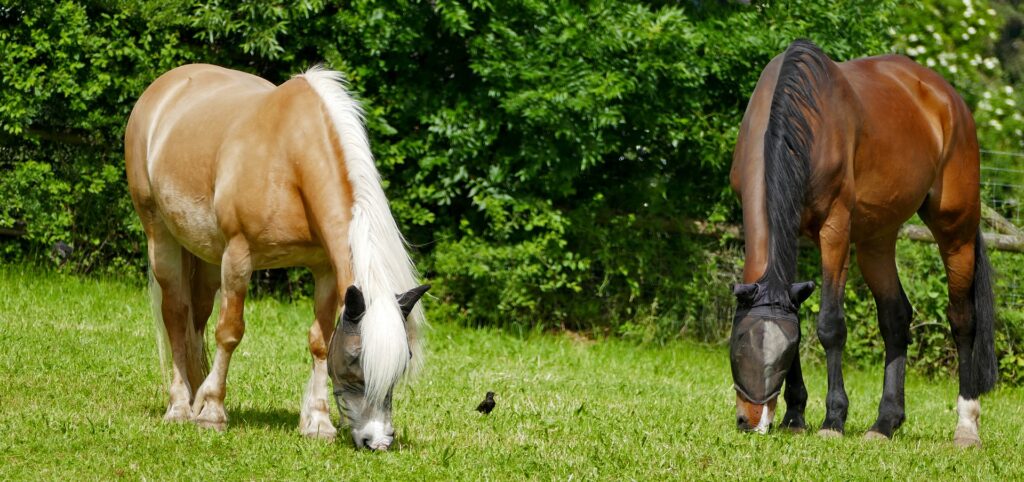
The average horse drinks between 5 to 10 gallons of water per day. It is important to provide clean, fresh water at all times and be aware of increased water necessities during extremely hot days.
Sweat and Sodium Levels
Sodium in your horse’s diet is very important to maintaining proper hydration. Providing a salt block or supplementing with electrolytes can help ensure that your horse is meeting their sodium requirements.
Especially in the extreme summer heat, horse owners should pay attention to the amount of sweat their horse is producing. Anhidrosis, or the inability to sweat normally, can be a common challenge for our equine partners in the summer months, particularly in hot, humid climates. In addition to lack of sweat, signs of Anhidrosis can include increased respiratory rate, elevated temperature, areas of hair loss, or dry, flaky skin. If you notice any of these signs, contact your veterinarian immediately.
Equine Sunburn Tips
Horses with white on their faces or bodies are especially prone to sunburn and should be protected from the harsh UV rays of the sun. Providing shade, covering your horse’s skin with fly sheets or fly masks, and applying sunscreen are all helpful ways to prevent a burn.
Fly masks are now made with extensions to cover the nose and muzzle. There are many different sunscreen products made specifically for horses, but most products approved for human use are also safe for our equine partners. Once again, horses that are particularly prone to sunburn can be kept cool and safe from the sun by staying indoors during the day and being turned out at night.
These are just a few of the important issues to be aware of during the hottest time of the year in Florida and around the country. Remember to keep your horse cool, well-hydrated, and protected from the heat and sun. Contact the veterinarians at Palm Beach Equine Clinic to learn more about precautions that can be taken to keep your horse happy and healthy throughout the summer months.
Today’s competitive sport horses are asked to perform at their absolute best at the most prestigious competitions all over the world. Travel and life at the showgrounds can be extremely stressful for horses. Ulcers can affect any horse, but competitive sport horses with the extra stressors from a life of intensive work and travel are especially prone. Palm Beach Equine Clinic veterinarians want to ensure that your horse remains healthy and ulcer-free. There are many precautions that can be taken to prevent ulcers from developing, but if your horse does develop a problem, Palm Beach Equine Clinic is there to aid in treatment.
Gastric Ulcers and Hindgut Ulcers
There are two different kinds of ulcers – gastric ulcers and hindgut ulcers. The horse can develop one or the other, or both in combination, however gastric ulcers are most common. Gastric ulcers develop in the stomach, which is comprised of two different halves. The lower half of the stomach secretes acid and digestive enzymes to properly digest food. If the acid splashes up to the upper half of the stomach, there is minimal protection and causes painful erosion of the stomach lining.
Increased acidity in the stomach increases the chance of that acid will come in contact with the larger, unprotected portion, resulting in damage to the stomach lining. There are many different factors that can change the environment of the stomach and cause increased acid production, ultimately resulting in ulcers. The most common factors are drastic changes in feeding times or types of feed, undue stress, and corrosive medications.
Ulcer Prevention in Show Horses
For the competitive equine, the stress of traveling and showing, as well as any change in the environment or increased work, can increase the chances of ulcers forming. Abnormal sleep patterns at shows can cause added stress. It is important to ensure that the horse has ample bedding and space to feel comfortable enough to lay down to rest. Joint pain or other physical pain can also cause unnecessary stress to the horse’s system. Joint supplements, routine injections, and alternative therapies such as chiropractic and acupuncture can be used to keep the horse comfortable and stress-free.
Another major cause of gastric ulcers is chronic administration of phenybutazone (bute), banamine, or other nonsteroidal anti-inflammatory drugs (NSAIDs) as these medications can be corrosive to the stomach lining.
Diagnosing Equine Ulcers
Ulcers can be difficult to diagnose as early signs can easily be confused with colic. Many times horses with ulcers show mild, chronic, colic-like symptoms that resolve fairly quickly. Owners and trainers may notice that the horse seems sore after eating, denies feed entirely, or has colic-like symptoms such as upper lip movement, biting at its side, or pawing. If the ulcer is undiagnosed and is given banamine to treat the colic symptoms, ulcers can be exacerbated due to the administration of banamine.
Equine Ulcer Diagnostic Tools
There are several ways to diagnose ulcers. First, if ulcers get severe enough, they can cause the stomach to bleed, and can be tested in a quick blood test to check for a low red blood cell count or anemia. A small amount of dark blood present in the stool can detect bleeding gastic ulcers or the right dorsal colon, but usually it is a microscopic amount and it can be difficult to visualize. A fecal test to test for blood in the stool can be performed but it is not the most specific or reliable method.
The most definitive way to diagnose gastric ulcers is the use of a gastroscope to provide an internal scan. A small camera is inserted down the esophagus and into the stomach, which allows for a clear picture of the separation between the glandular bottom portion and the upper unprotected portion of the stomach. On the gastroscope, ulcers with ranging severity can appear to be a minor red irritation or actual holes, which are depressions of the lining of the stomach. With the gastroscope, you can also visualize the beginning of the small intestine, which is another common area for erosions to occur.
Hindgut ulcers can easily be identified by a non-invasive ultrasound of the colon. With an ultrasound, the veterinarian is able to determine if a specific area of the colon wall is thickened. Thickening of the wall is abnormal and is a primary sign of colonic ulcers. The drugs to treat hind gut ulcers differ from gastric ulcers but the treatment period is still four weeks or more.
Treatment of Equine Ulcers
If ulcers are diagnosed to be present, they are graded as to their location and severity. A treatment plan is determined according to these factors. The gold standard treatment is Omeprazole for four weeks – one tube a day for 28 days. The most common Omeprazole treatment is Gastrogard. Oral supplements, such as calcium, which help to neutralize the stomach acids and act as a buffer to protect the stomach lining, are also sometimes recommended.
If your horse is diagnosed with ulcers, it is important to avoid bute and banamine, if possible. The owner should be careful not to make any significant changes to the horse’s diet. Maintaining a consistent feeding schedule is important to avoid causing any major increases in acid production in the stomach.
Another tip to help keep the pH of the stomach neutral is to add one flake of alfalfa to the horse’s hay per day. It helps to lower the acidity of the stomach. Discuss changes to your horse’s diet with your veterinarian to make sure it will work with your schedule as alfalfa may increase your horse’s energy levels.
Ulcer Prevention
Another way to help prevent ulcers in the future is to prophylactically give Omeprazole a day or two before a stressor. If you know the horse is traveling or going to a show, start administering Omeprazole three to four days prior. Gastric medications can be given every day during the stressor time period, at the show, and then a day or two following the show. It is important to plan ahead and prepare preventative measures that can be very helpful with managing ulcer episodes.
The veterinarians at Palm Beach Equine Clinic are here to help with any concerns for your horse. If you suspect that your horse may have ulcers, or if you want to stay one step ahead and take preventative measures, contact PBEC at 561-793-1599 for more information.
Battling Equine Summer Sores
Summertime is here and along with the summer months in Florida comes humidity and an increase in the fly population. Unfortunately for horse owners, an increase in the fly population creates many problems. One major problem that seems intensify every year is equine summer sores, or medically known as Habronemiasis. Equine summers sores are lesions on the skin caused by worm larvae from the horse’s stomach.
Easy Culprit: Flies
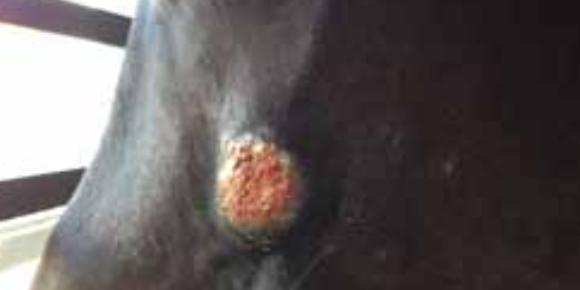
How does the stomach worm larvae end up as a skin lesion? One simple answer is from a fly. The stable fly is a host for these parasites. The worms in the horse’s stomach produce eggs that pass through the digestive tract, which end up in the horse’s manure. After that, the eggs then hatch to develop larvae that attach to the blades of grass.
Chain Reaction
The fly carries the larvae on its extremities and is attracted to mucous membranes or open wounds on the horse. Next, the larvae infect the open wound or a mucous membrane such as the eye or prepuce. This creates a type of allergic reaction within the immune system causing inflammation, discharge, and the production of granulation tissue infected with larvae. One way to tell if you are dealing with a summer sore is the granulation tissue contains small yellow rice like larvae within the skin and a mucopurulent discharge associated with the wound.
Summer Sore Prevention
The best way to avoid equine summer sores is to prevent them. Fly control, proper wound care, and most importantly an effective de-worming program. Habronema species are the source of summer sores. Please call Palm Beach Equine Clinic and discuss with one of our veterinarians a proper de-worming program.
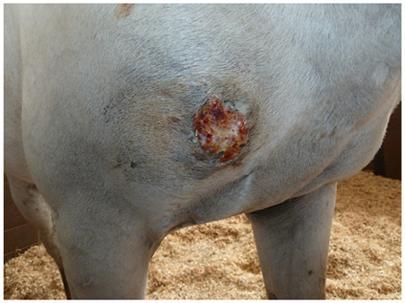
Proper treatment of the lesion is extremely important. Delaying initial treatment may result in an increased cost. Delaying treatment may require surgical excision of the granulation tissue and possible skin grafting. Severe Habronemiasis of the male horse’s sheath may require reconstructive surgery of the prepuce and/or urethra.
Contact Palm Beach Equine Clinic to Treat Equine Summer Sores
At the first sign of an equine summer sore, contact your veterinarian at Palm Beach Equine Clinic at 561-793-1599.