
Down the Centerline: Common Injuries in Dressage Sport Horses
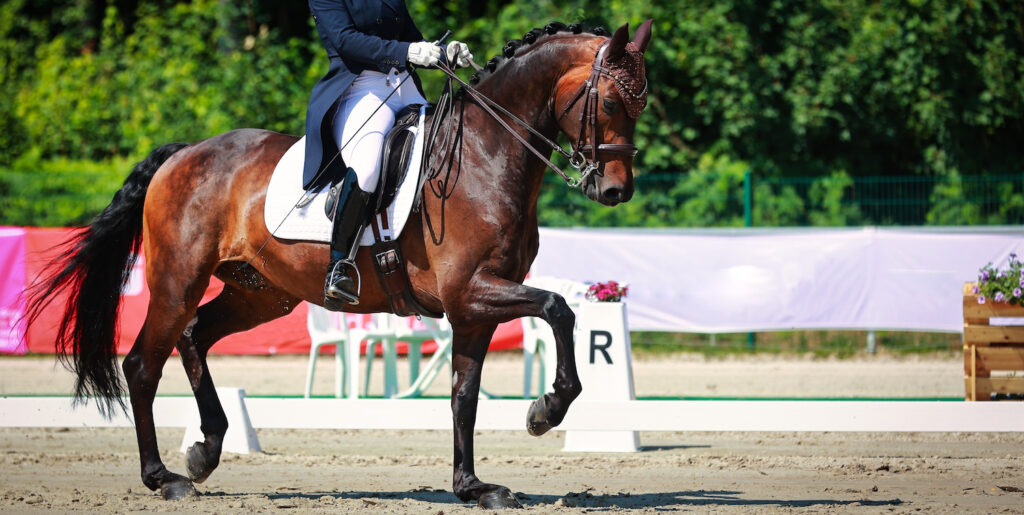
The winter show season in Wellington, FL, showcases incredible horse-and-rider partnerships across various disciplines. On one night, dressage horses will dance under the palm trees at the Adequan Global Dressage Festival – where PBEC is the official veterinarian – and the next, a field of show jumping horses will sail over massive fences.
Behind the scenes, these equine athletes have multidisciplinary teams of professionals working to keep them in top physical condition for competition. Dr. Christopher Elliott and Dr. Emma Newell of Palm Beach Equine Clinic in Wellington, FL, are key members of many of these teams, treating ailments in both dressage and jumping horses.
There are common injuries in sport horses, but typical ailments will vary between jumping and dressage horses due to the different demands of each discipline. “Dressage horses perform repetitive, collected movements that place sustained stress on the limbs and the back,” explained Dr. Elliott.
Ligament and Tendon Strains
The precise movements of dressage put stress on the soft tissues in a horse’s legs, but unlike in jumping sports, soft tissue injuries are commonly observed. Dr. Elliott pointed out, “The most common hind limb ligament injury is the proximal suspensory, and the most common tendon injury of the forelimb is the deep digital flexor tendon. These structures are loaded more for dressage horses than for jumpers, especially during collection, work transitions, and lateral movements.”
These injuries tend to present subtly and are associated with a decline in overall performance, though the rider may also notice inconsistent lameness. A loss of impulsion, difficulty maintaining collection, resistance to performing lateral movements, and other behavioral changes under saddle warrant a visit from the horse’s veterinarian.
The return to full work under saddle can be a lengthy process, beginning with straight-line exercises. The veterinarian may also suggest adjusting other aspects of the horse’s management, including reducing the intensity of the horse’s training in the future, having the horse’s saddle evaluated, improving the rider’s balance, or even reconsidering the type of footing the horse is ridden on.
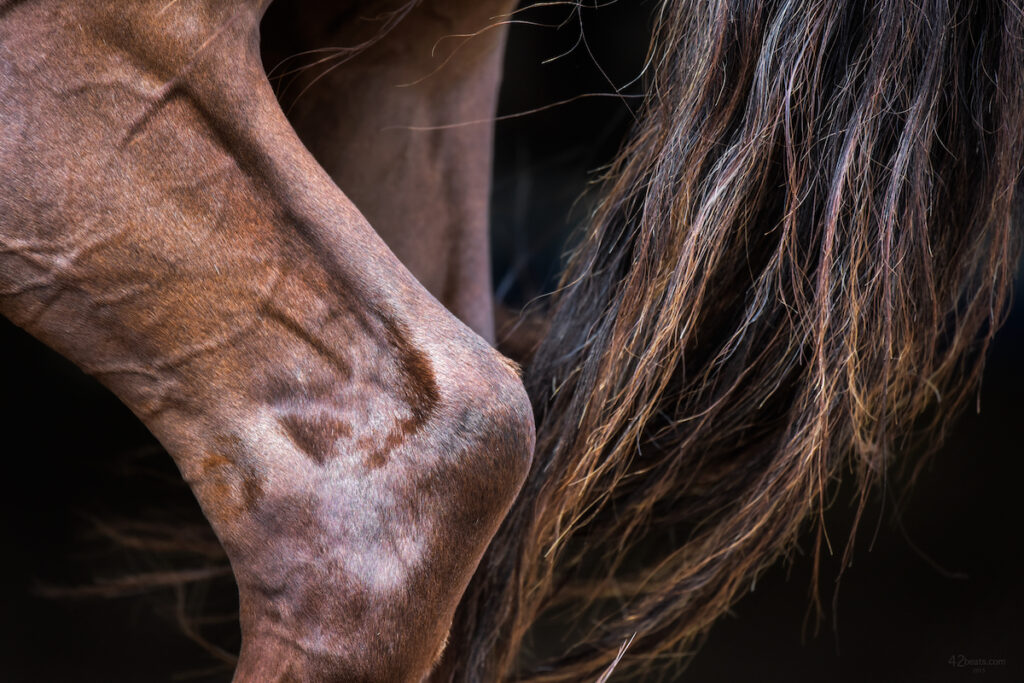
The hocks are often under significant strain during collected movements.
Hock Arthritis
The hocks in a dressage horse carry a substantial load during collected work and are a common site of arthritis. The issue can be identified by stiff movement, resistance to transition or collection work, or a general decline in performance. A veterinarian will confirm this diagnosis with a thorough lameness exam, flexion tests, nerve blocks, and radiographs.
Like joint pain in jumping horses, hock arthritis in dressage horses can be treated with joint injections and anti-inflammatory medication. Reducing the difficulty or quantity of movements performed may be necessary, but regular work is usually still recommended. “Consistent, low-impact exercise is encouraged, rather than prolonged rest, with ongoing management to maintain comfort,” noted Dr. Elliott.
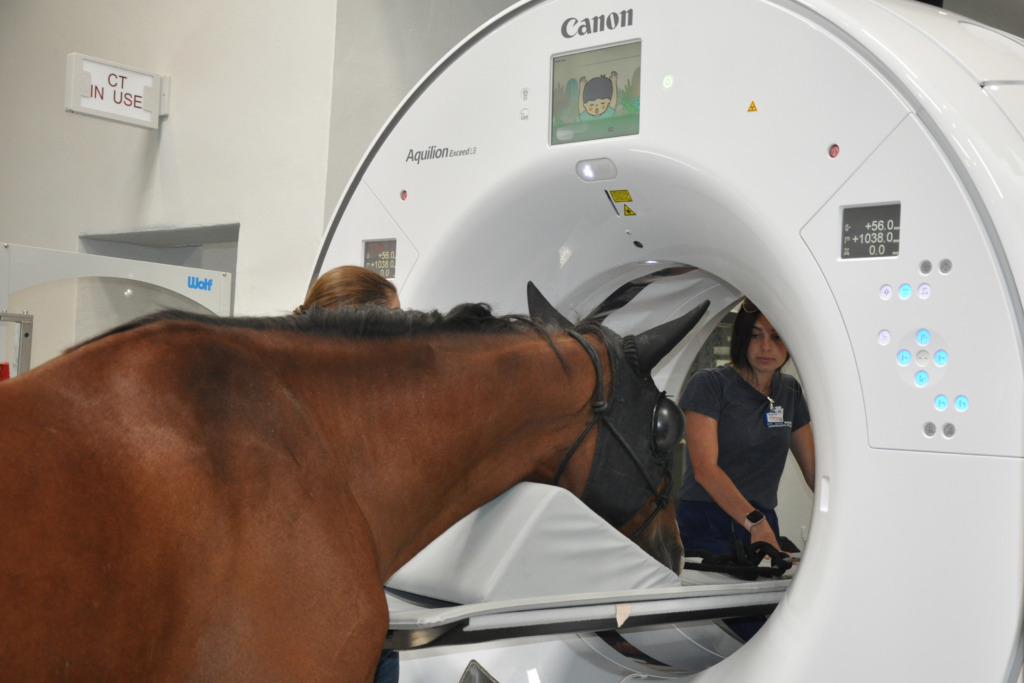
Diagnostic imaging may be necessary to accurately diagnose soundness issues.
Sacroiliac (SI) Pain
The sacroiliac (SI) area in the horse’s back becomes active during collected work when a horse engages its hind end, tilts its pelvis, and brings its hind legs underneath its body. A horse experiencing discomfort in this area may struggle with flying lead changes and exhibit uneven hind-end engagement, reduced impulsion, or behavioral changes under saddle.
“Diagnosing these issues can be challenging and often involves ruling out other sources of hind-end lameness,” admitted Dr. Elliott, adding that diagnostic block and advanced imaging may be necessary to evaluate the horse.
Targeted SI joint injections can improve comfort, while physical therapy exercises aimed at strengthening the horse’s hind end and core muscles are often part of the long-term management plan for the horse.
The Secret to Success
Riders and caretakers play a significant role in maintaining their horses’ health and well-being. Early recognition of subtle lameness signs is essential, and Dr. Newell emphasized, “Knowing your horse and knowing their nuances, I think, is what’s really going to keep our equine athletes in work longer.”
With a full suite of diagnostic equipment and an expert team of veterinarians, PBEC is fully equipped to provide equine patients with a high standard of care. “A highlight of being a veterinarian at PBEC is the ability to conduct a CT, a bone scan, or a standing MRI. We can provide clients in-depth imaging with a quick turnaround on results with the amount of technology we have here at PBEC,” shared Dr. Newell. She also noted that radiographs and ultrasounds can be conducted in the field, eliminating the need to visit the clinic.
Whether your goal is to trot down the centerline at Adequan Global Dressage Festival or make the jump-off at the Winter Equestrian Festival, Palm Beach Equine Clinic is dedicated to helping your horse perform their best. Visit www.EquineClinic.com for more information or call 561-793-1599 to make an appointment.