
Tag: athletic performance
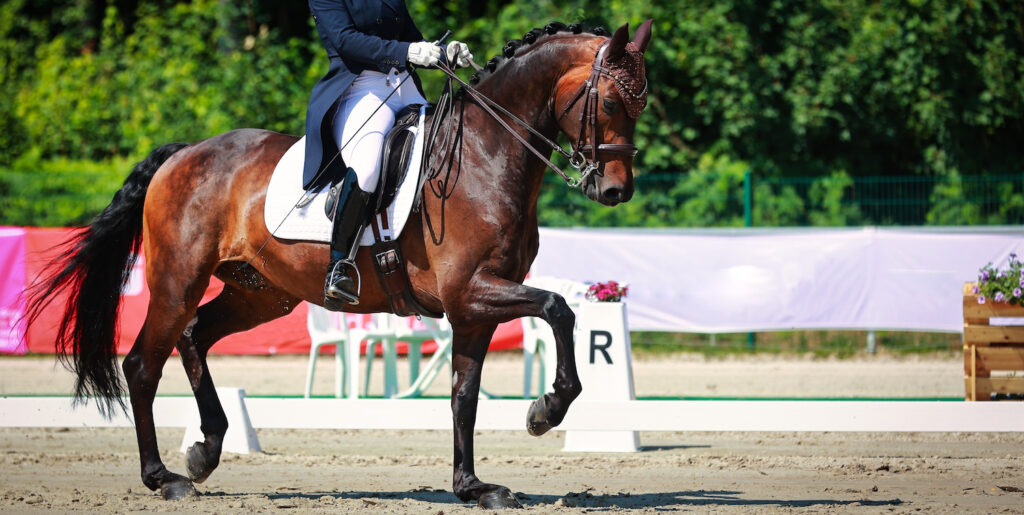
The winter show season in Wellington, FL, showcases incredible horse-and-rider partnerships across various disciplines. On one night, dressage horses will dance under the palm trees at the Adequan Global Dressage Festival – where PBEC is the official veterinarian – and the next, a field of show jumping horses will sail over massive fences.
Behind the scenes, these equine athletes have multidisciplinary teams of professionals working to keep them in top physical condition for competition. Dr. Christopher Elliott and Dr. Emma Newell of Palm Beach Equine Clinic in Wellington, FL, are key members of many of these teams, treating ailments in both dressage and jumping horses.
There are common injuries in sport horses, but typical ailments will vary between jumping and dressage horses due to the different demands of each discipline. “Dressage horses perform repetitive, collected movements that place sustained stress on the limbs and the back,” explained Dr. Elliott.
Ligament and Tendon Strains
The precise movements of dressage put stress on the soft tissues in a horse’s legs, but unlike in jumping sports, soft tissue injuries are commonly observed. Dr. Elliott pointed out, “The most common hind limb ligament injury is the proximal suspensory, and the most common tendon injury of the forelimb is the deep digital flexor tendon. These structures are loaded more for dressage horses than for jumpers, especially during collection, work transitions, and lateral movements.”
These injuries tend to present subtly and are associated with a decline in overall performance, though the rider may also notice inconsistent lameness. A loss of impulsion, difficulty maintaining collection, resistance to performing lateral movements, and other behavioral changes under saddle warrant a visit from the horse’s veterinarian.
The return to full work under saddle can be a lengthy process, beginning with straight-line exercises. The veterinarian may also suggest adjusting other aspects of the horse’s management, including reducing the intensity of the horse’s training in the future, having the horse’s saddle evaluated, improving the rider’s balance, or even reconsidering the type of footing the horse is ridden on.
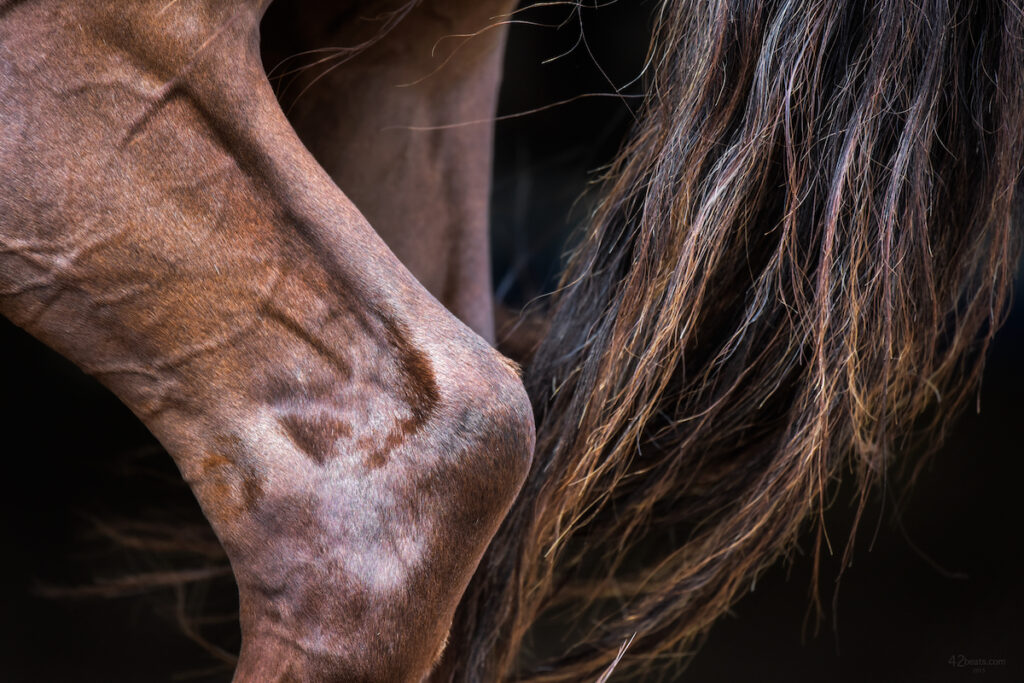
The hocks are often under significant strain during collected movements.
Hock Arthritis
The hocks in a dressage horse carry a substantial load during collected work and are a common site of arthritis. The issue can be identified by stiff movement, resistance to transition or collection work, or a general decline in performance. A veterinarian will confirm this diagnosis with a thorough lameness exam, flexion tests, nerve blocks, and radiographs.
Like joint pain in jumping horses, hock arthritis in dressage horses can be treated with joint injections and anti-inflammatory medication. Reducing the difficulty or quantity of movements performed may be necessary, but regular work is usually still recommended. “Consistent, low-impact exercise is encouraged, rather than prolonged rest, with ongoing management to maintain comfort,” noted Dr. Elliott.
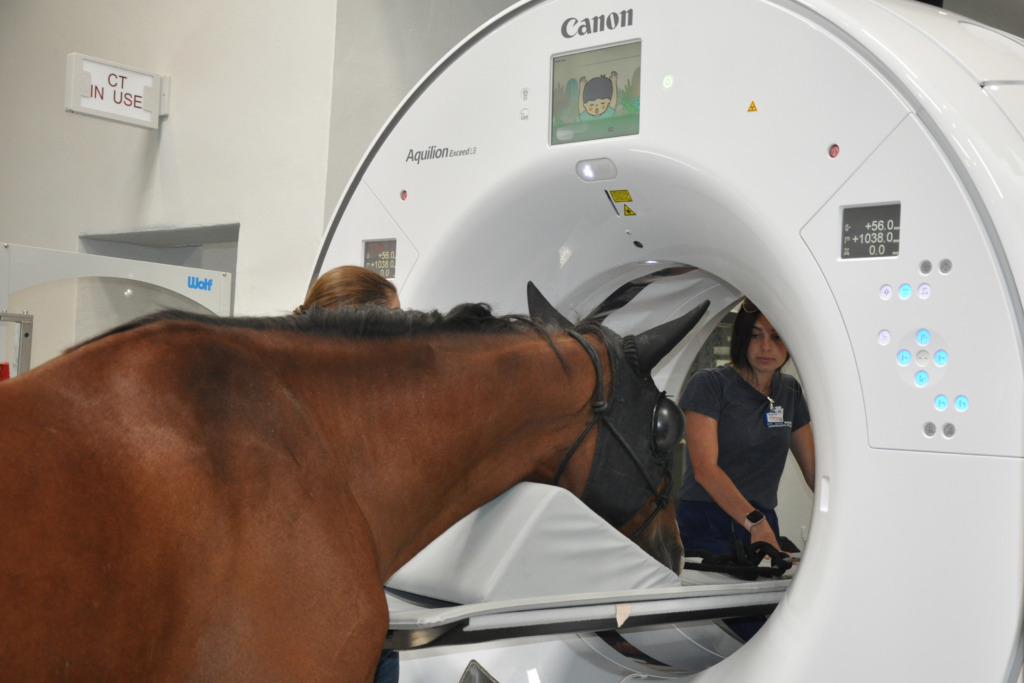
Diagnostic imaging may be necessary to accurately diagnose soundness issues.
Sacroiliac (SI) Pain
The sacroiliac (SI) area in the horse’s back becomes active during collected work when a horse engages its hind end, tilts its pelvis, and brings its hind legs underneath its body. A horse experiencing discomfort in this area may struggle with flying lead changes and exhibit uneven hind-end engagement, reduced impulsion, or behavioral changes under saddle.
“Diagnosing these issues can be challenging and often involves ruling out other sources of hind-end lameness,” admitted Dr. Elliott, adding that diagnostic block and advanced imaging may be necessary to evaluate the horse.
Targeted SI joint injections can improve comfort, while physical therapy exercises aimed at strengthening the horse’s hind end and core muscles are often part of the long-term management plan for the horse.
The Secret to Success
Riders and caretakers play a significant role in maintaining their horses’ health and well-being. Early recognition of subtle lameness signs is essential, and Dr. Newell emphasized, “Knowing your horse and knowing their nuances, I think, is what’s really going to keep our equine athletes in work longer.”
With a full suite of diagnostic equipment and an expert team of veterinarians, PBEC is fully equipped to provide equine patients with a high standard of care. “A highlight of being a veterinarian at PBEC is the ability to conduct a CT, a bone scan, or a standing MRI. We can provide clients in-depth imaging with a quick turnaround on results with the amount of technology we have here at PBEC,” shared Dr. Newell. She also noted that radiographs and ultrasounds can be conducted in the field, eliminating the need to visit the clinic.
Whether your goal is to trot down the centerline at Adequan Global Dressage Festival or make the jump-off at the Winter Equestrian Festival, Palm Beach Equine Clinic is dedicated to helping your horse perform their best. Visit www.EquineClinic.com for more information or call 561-793-1599 to make an appointment.
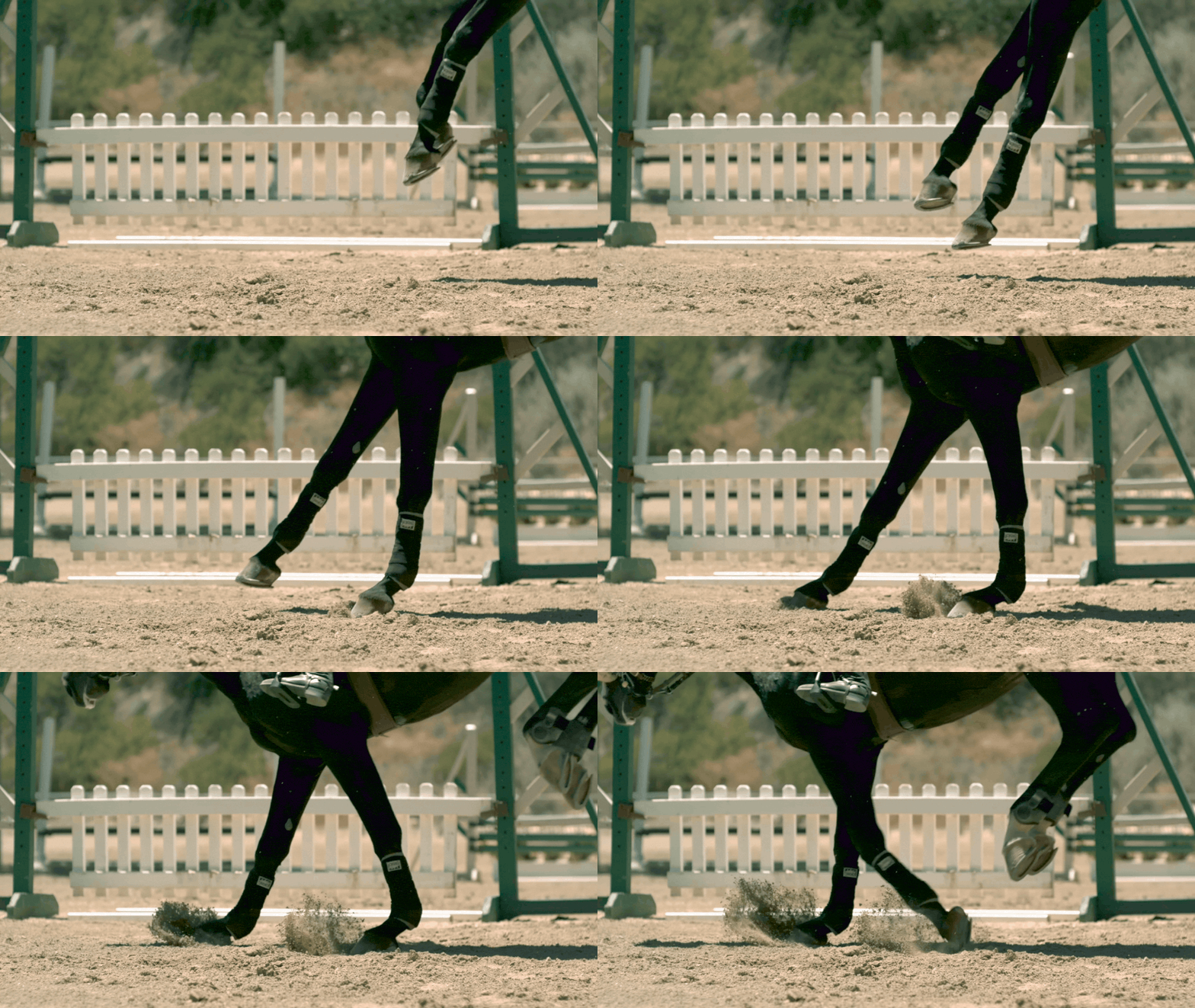
From inside the dressage boards to the jumping arena, the risk of injury for equine athletes always exists. Dr. Christopher Elliott and Dr. Emma Newell of Palm Beach Equine Clinic in Wellington, FL, explained that some riding activities are more closely associated with specific injuries. “The physical demands of each discipline place stress on very different parts of the horse’s body,” noted Dr. Elliott.
In the sport of jumping, the concussive forces of takeoff and landing put strain on the horse’s legs. Joints and soft tissues, such as tendons and ligaments, are designed to absorb this shock, but excessive and repetitive force on these structures can cause problems. Suspensory ligaments, flexor tendons, and joints are three areas Dr. Elliott commonly treats for injuries in jumping horses.
Suspensory Ligaments
The suspensory ligament can become injured through repetitive strain. A lameness exam, nerve blocks, and an ultrasound are used to determine the location and severity of the injury. Clinical signs of a suspensory injury can vary from subtle or intermittent lameness, reluctance to jump, or, potentially, a gradual decline in performance. Overt and persistent lameness can be seen in more significant injuries.
Rest and a controlled exercise rehabilitation program are the cornerstones of treatment. Additional therapies include shockwave and platelet-rich plasma (PRP), which may further support healing.
Dr. Newell reminds horse owners that rehabilitation is tailored to each horse and begins with ground exercises before gradually progressing to ridden work over the course of several months. Regular veterinary check-ups are essential for monitoring progress and making adjustments to the treatment as needed.
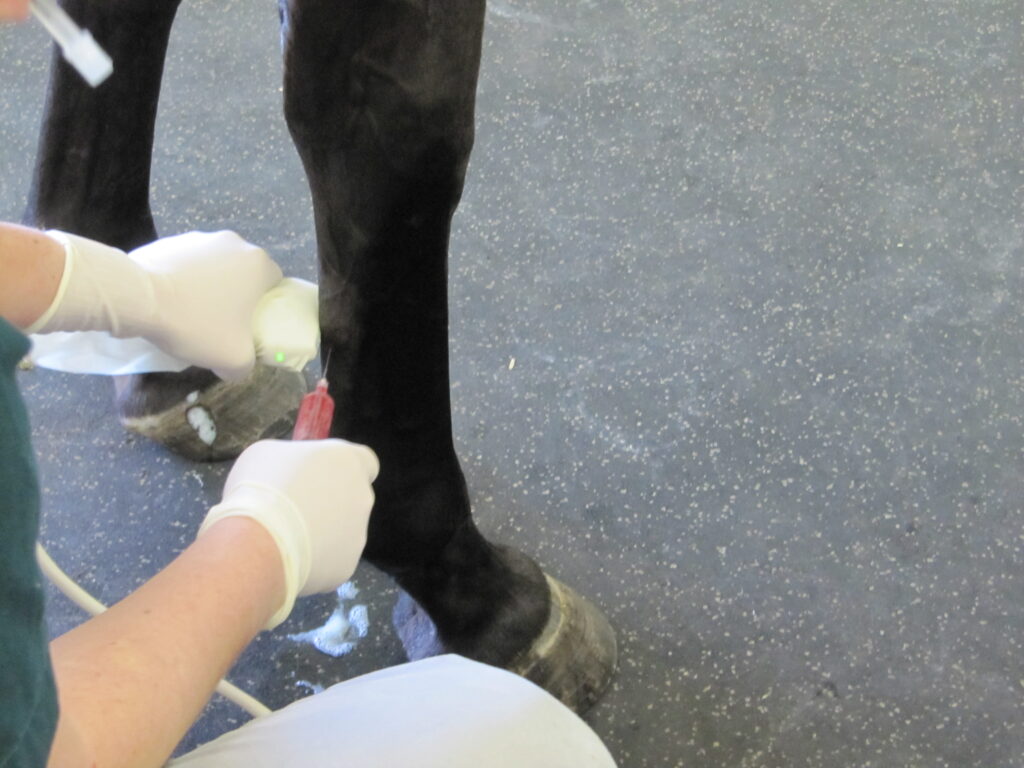
PRP Injections
Flexor Tendons: The DDFT
Flexor tendons, specifically the Deep Digital Flexor Tendon (DDFT), are another common site of injury in jumping horses.
Injury to the DDFT in the jumping horse typically occurs within the hoof capsule. Horses will present with varying degrees of lameness that are eliminated by distal limb nerve blocks. An MRI is required for definitive diagnosis of injury to the DDFT within the hoof.
A horse with this injury will likely be prescribed rest, controlled exercise rehabilitation, and corrective shoeing, with return to previous levels of performance typically being seen between nine and 12 months.
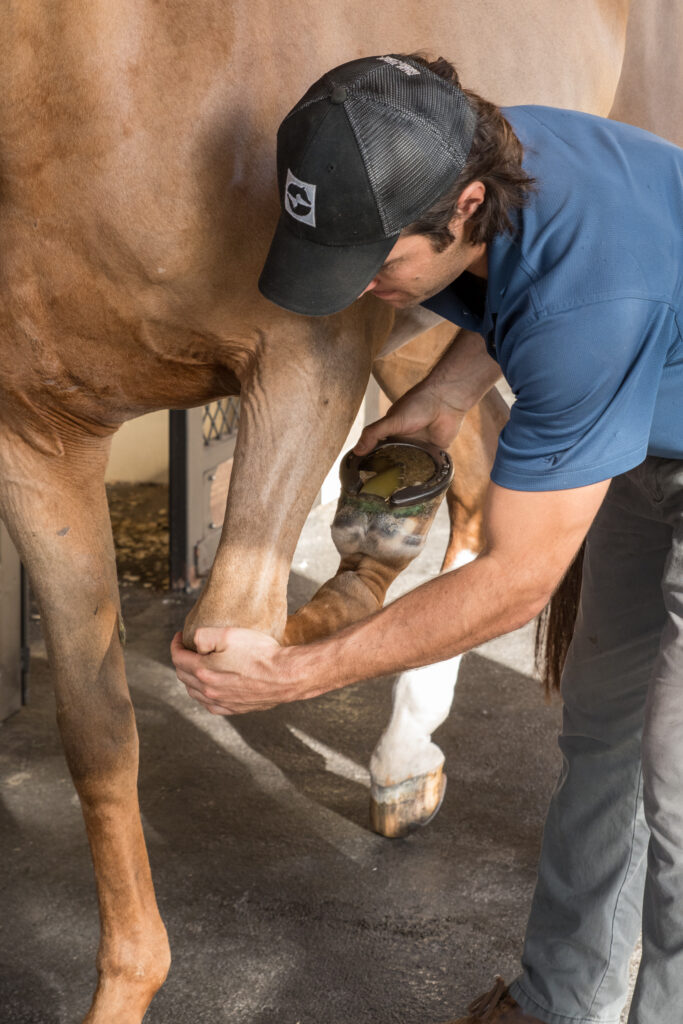
Dr. Santiago Demierre performing a flexion test
Photo courtesy of Jump Media
Joint Pain: Inflammation and Arthritis
Osteoarthritis is one of the most common ailments in competition horses, especially jumping horses. Nearly all of a jumping horses’ distal limb joints undergo repeated strain throughout the course of their careers, with the stifles, hocks, and forelimb coffin joints being common sites of inflammation.
If joint inflammation is suspected, the horse’s veterinarian will conduct a physical evaluation, including limb palpation, watching the horse trot in hand, and often also under saddle. Flexion tests are frequently performed along with nerve blocks and radiographs, if necessary, to pinpoint the area of concern.
Managing osteoarthritis is complex and should be tailored to each horse. Veterinary treatment of joint inflammation typically includes targeted joint injections, either with corticosteroids or biological agents. Other systemic treatments involve nutraceutical supplements (oral and injectable), judicious use of systemic anti-inflammatories, and other targeted complementary therapies.
By paying close attention, owners and riders can detect ailments early, giving their horse the best chance at sustained performance. Dr. Newell advised, “Knowing your horse is the best way to prevent these types of injuries. Working closely with your veterinarian to continually evaluate a horse is the key to success.”
To keep your horse on the right track, contact Palm Beach Equine Clinic at 561-793-1599.
Fernando J. Marqués, DVM, Diplomate ACVIM, Diplomate ACVSMR

The exceptional athletic abilities of horses can be attributed to several factors, including physiological adaptations, some of which are influenced by training. Muscles, and all cells in the body, require energy to function. Energy from food (carbohydrates, fats, and proteins) is not directly transferred to muscles for biological work. Instead, it is converted into an energy-rich substance known as ATP. The oxidation of carbohydrates, fats, and proteins is the process that produces ATP. There are three main energy systems that supply ATP to the cells: the immediate energy system, the short-term energy system, and the long-term energy system.
The immediate energy system relies on high-energy phosphate sources and plays a crucial role during intense physical activities of short duration that require immediate fuel. These high-energy phosphates are quickly depleted, typically within 20 to 30 seconds of maximum exertion, similar to what happens in humans.
The short-term energy system generates ATP mainly from stored muscle carbohydrates called glycogen. This process does not require oxygen, which is why it is referred to as anaerobic metabolism, leading to lactate accumulation within the muscle cells.
The long-term energy system, or aerobic system, produces ATP during prolonged, intense physical activity. This process requires oxygen, hence the name aerobic metabolism. In this system, fats are a significant fuel source.
The contribution of each energy system and fuel source (carbohydrates, fats, and to a lesser extent proteins) varies depending on factors such as exercise intensity and duration, training status, muscle fiber composition, and oxygen supply to the muscles. Understanding these factors is crucial, as exercise is generally categorized into aerobic/endurance (low intensity over a long duration) and power/strength (high intensity over a short duration). In practice, pure endurance or pure strength activities are rare, and most sports combine elements of both.
Additionally, muscles adapt to specific exercises and sports, which triggers the development of particular muscle fibers that utilize different fuel sources and energy systems to produce ATP.
In equestrian sports, no discipline is exclusively anaerobic or aerobic. Most sports require a combination of both energy systems. For example, racehorses and western performance horses engage in high-intensity, fast-paced activities for short periods, primarily relying on anaerobic metabolism. Conversely, show jumping and polo horses mainly engage in aerobic exercise but switch to anaerobic metabolism to meet the intense energy demands of their sport. Eventing and endurance racing horses, on the other hand, rely predominantly on aerobic metabolism to sustain their energy levels over prolonged periods of activity.
Designing an effective training program for a horse requires considering the optimal adaptation of muscle fiber composition to enhance metabolic function and improve performance in the specific sport.
References:
- Hinchcliff K., Geor R., Kaneps A. Equine Exercise Physiology- The Science of Exercise in the Athletic Horse. Saunders
- McArdle W., Katch F., Katch V. Exercise Physiology. Wolters Kluwer, 8th Edition.
- https://equineclinic.com/medical/understanding-energy-support-for-the-performance-horse/