
Tag: interns
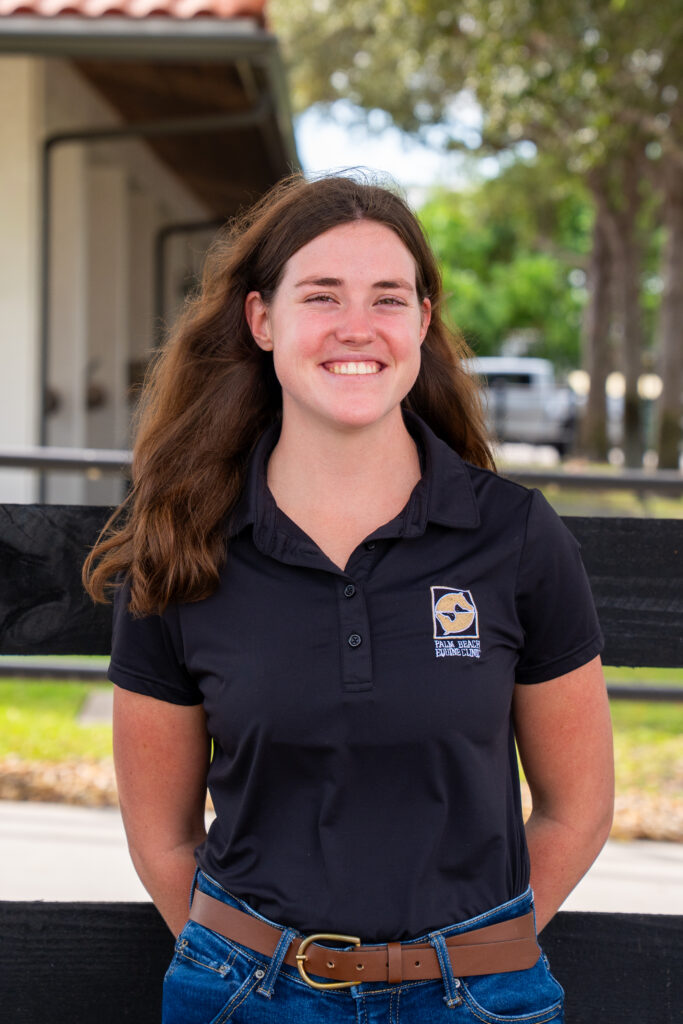
Photo courtesy of NewStyle Digital.
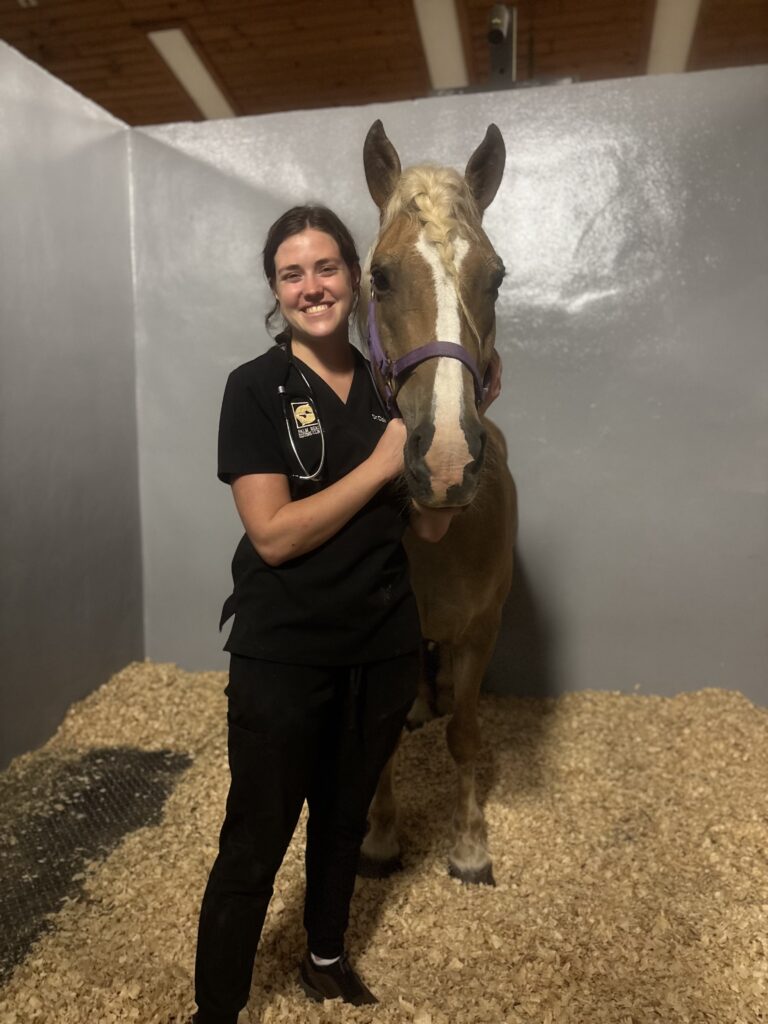
Meet PBEC Veterinary Intern Dr. Claire McDonald
Dr. Claire McDonald grew up in the town of Jefferson City, Missouri. She knew from a young age that she wanted to be a veterinarian. Dr. McDonald completed her undergraduate degree in Biology at William Woods University in Fulton, Missouri where she had excellent mentorship from the university equine veterinarian, sparking her interest in equine practice. Dr. McDonald went on to complete her Doctor of Veterinary Medicine degree at the University of Missouri with Magna Cum Laude honors. Dr. McDonald began her internship at Palm Beach Equine Clinic shortly after graduation. Dr. McDonald loves the variety of caseload here at PBEC and learning about all aspects of equine practice.
Where are you from?
I am from Jefferson City, MO, which is located between St. Louis and Kansas City. You get the best sunsets here, plus all four seasons in their truest form.
Where did you go to school?
I completed my undergraduate degree in biology with a pre-veterinary focus in 2021 at William Woods University in Fulton, MO. The school was unique because it had an equestrian program with western, dressage, hunter/jumper, and saddle seat disciplines. There was no shortage of opportunities to work with and be around a wide range of horses. As part of our pre-vet curriculum, we learned equine anatomy and physiology, as well as the basics of lameness exams, dentistry, and more. It definitely sparked my initial interest in equine veterinary medicine.
From there, I attended the University of Missouri College of Veterinary Medicine, where I was fortunate to have two full years of clinical rotations rather than the standard one year at most schools. This allowed me to rotate through the small animal, farm animal, and equine areas of the hospital and broaden my knowledge.
Have you always known you wanted to be an equine veterinarian? What has your journey been like getting to this point?
From my undergraduate days to my time in veterinary school, I knew equine medicine was something I had to include in my veterinary career. I absolutely love working with these amazing creatures, spending most of the day working outside, and developing lifelong friendships with my clients. Also, there is a severe shortage of equine veterinarians in this country, and I want to help fill that need! As a horse owner, I know how incredibly valuable it is to have access to an equine veterinarian.
What does a typical day as an intern look like?
It depends on the rotation! We all rotate through medicine, surgery, ambulatory, anesthesia, and overnight. My current rotation is medicine, so my typical day starts by getting up a few hours early (sometimes as early as 5 a.m.) and checking on my patient notes from the overnight shift. From there, I go to the clinic between 6 a.m. and 7 a.m. to begin physical examinations and report my findings to the head clinician on the case.
During 8:30 a.m. rounds, we all update each other on our cases and treatment plans for the day. I then perform any necessary treatments throughout the day and update the medical record. At 5 p.m., we all round again to review the day’s activities on our cases, and we round with the overnight intern on what each patient needs overnight.
What’s your favorite part of working at PBEC?
My favorite part of working at PBEC is being able to work alongside so many other veterinarians and specialists. It allows you to get an opinion on any case you have from somebody right down the hall. Although this job can be tough at times, I definitely feel myself growing in my knowledge and confidence every day!
What’s something you hope to learn or accomplish by the end of your internship?
By the end of my internship, I hope to be equipped with the skills and knowledge needed to be a strong general equine practitioner, wherever I end up. I want to be a helpful resource in more rural areas where veterinary care is difficult to find. I also plan to stay in touch with the team at Palm Beach Equine Clinic, and I can reach out anytime I have a question.
What do you find most rewarding about working as an equine vet?
What I find most rewarding is the gratitude from clients when you show up to help their horse. There is also nothing more gratifying than seeing a horse go from being sick and in pain to happily eating and walking out of the hospital healthy. Even though this area of veterinary medicine can be physically demanding and require long hours, it is definitely worth it to me, knowing that I’m making a difference for both the horse and the owner.
What do you do in your free time?
In my free time, I love to explore, whether that involves going to the beach, visiting Disney World or the Keys, or trying out new restaurants with my intern-mates. I also enjoy running and listening to music to clear my mind.
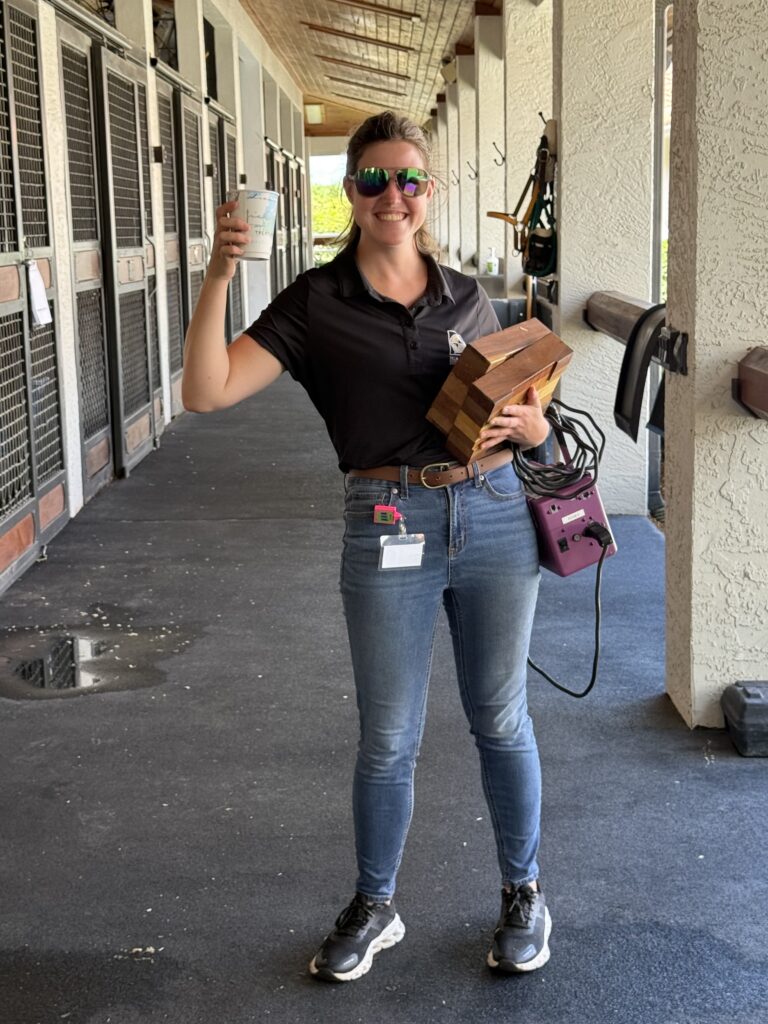
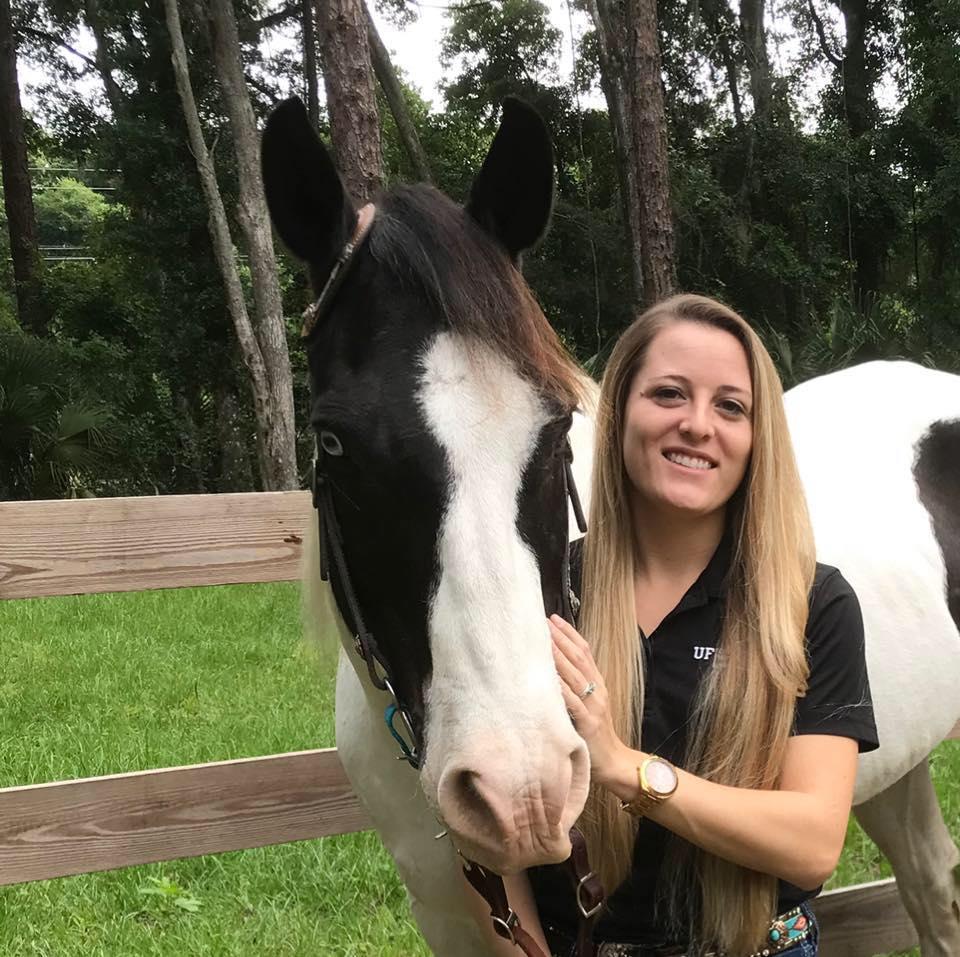
Interns at Palm Beach Equine Clinic are a vital part of keeping the day-to-day operations running smoothly, whether assisting the veterinarians, caring for the horses in the hospital, or attending farm calls. Hailing from Lake Worth, FL, Sidney Chanutin, 26, is a Florida Atlantic University alumni and recent graduate of the University of Florida College of Veterinary Medicine and joined Palm Beach Equine Clinic as an intern this year.
Learn more about Sidney:
How did you first get involved with horses?
I have always had a passion for horses. I remember as a kid, I was always bugging my parents for riding lessons and to buy my sister and me a pony. I got my first horse when I was eight years old and have been hooked ever since.
What led you to study equine veterinary medicine?
Since before I can remember, my goal has always been to become an equine veterinarian. As a South Florida native, being able to watch the vets at Palm Beach Equine Clinic take such great care of my own horses played a big role in my desire to practice equine veterinary medicine.
Aside from my passion for horses and general happiness when I am around them, I love being able to work outside. The thought of working a nine-to-five job in the same office every day did not suit me. I love being able to travel from farm to farm and see new people every day.
What are your day-to-day responsibilities at Palm Beach Equine Clinic?
As an intern, I am responsible for looking after inpatients, running anesthesia for surgeries, assisting in emergencies, and helping senior doctors with various exams and procedures.
What do you enjoy most about being part of the Palm Beach Equine Clinic team?
The Palm Beach Equine Clinic team is just that, a team. It is amazing to me how all of these people from so many different backgrounds all come together with a common goal—to help horses. That is one of the reasons I chose to do my internship here. Everyone looks out for one another, whether it’s just lending a helping hand or giving advice on a difficult case. I am blessed to have the opportunity to learn from each member of the Palm Beach Equine Clinic staff.
Do you have any stand-out cases that you have really enjoyed working on while at Palm Beach Equine Clinic?
It is hard for me to pick any one case, but I would say that working with the more intensive care patients, such as surgical colics, has been the most rewarding for me. These patients are very sick and require around-the-clock care, so it becomes hard not to become emotionally invested. That being said, having a strong emotional connection to the patients makes the cases where we have good outcomes that much more rewarding. There is no one in the world who gets more excited about bowel movements than a veterinarian who is caring for a patient with colic!
What branch of equine medicine do you enjoy the most?
I am very interested in both sports medicine and rehabilitation as well as ophthalmology.
What can we find you doing when you are not working?
I have two Quarter Horses, “Bolo” and “Ruby,” that I love to take on trail rides. I love spending my time outdoors, so when I’m not riding or taking care of my horses, you can find me fishing with my fiancé.
Equine Internships and Externships for Veterinary Students and Graduates
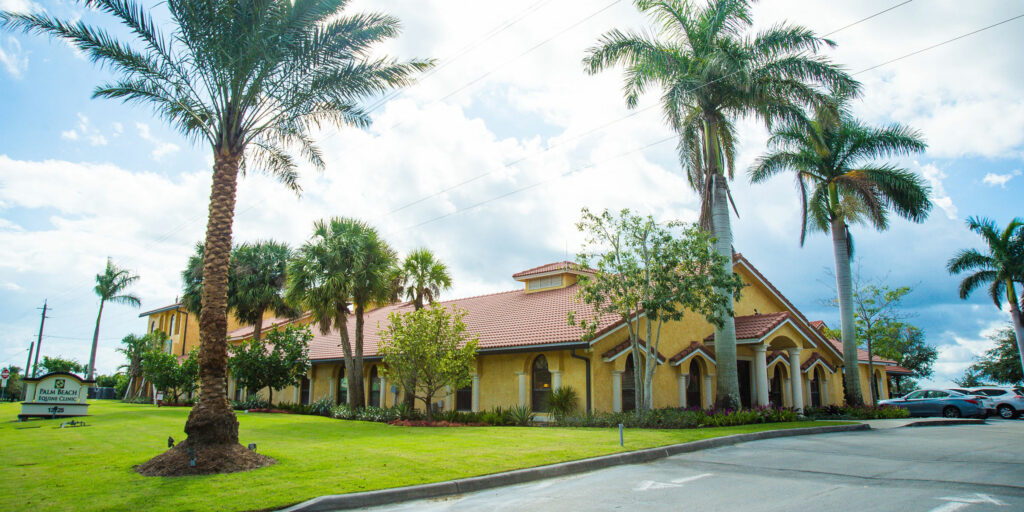
While Palm Beach Equine Clinic may be known for the 28 superb veterinarians who call it home, they are also a driving force in educating the next generation of equine medical professionals. Through world-renowned equine internship and externship programs, Palm Beach Equine Clinic molds new veterinarians every day.
Each year, equine interns work with Palm Beach Equine Clinic veterinarians for a 12-month period. Whether from externships that usually last up to two weeks and serve as an introduction to the practice or by references from top veterinarians across the U.S. and abroad, Palm Beach Equine Clinic attracts the most promising young veterinarians in the field.
Educating Equine Veterinary Students and Graduates From Around the World
Currently, Palm Beach Equine Clinic is host to recently graduated veterinary students from Oklahoma, Scotland, and Argentina. According to Palm Beach Equine Clinic veterinarian and board-certified surgeon Dr. Weston Davis who leads the Internship program, South Florida attracts only the best.
“We really have the cream of the crop because they have big opportunities here,” said Dr. Davis. “A lot of equine internships can offer work with one or two veterinarians, but what’s cool at Palm Beach Equine Clinic is they can pick from the collection of doctors we have.”
Palm Beach Equine Clinic interns rotate through three phases, including hands-on application of hospital anesthetization, imaging – both from ambulatory duty and elective – and working with a doctor of their choice based on their specific interests.

Dr. Davis has been with Palm Beach Equine Clinic for two years and immediately took interest in making the equine internship program the best it could be. In two years, he has made one of the world’s best programs even better.
Benefits of an Equine Internship
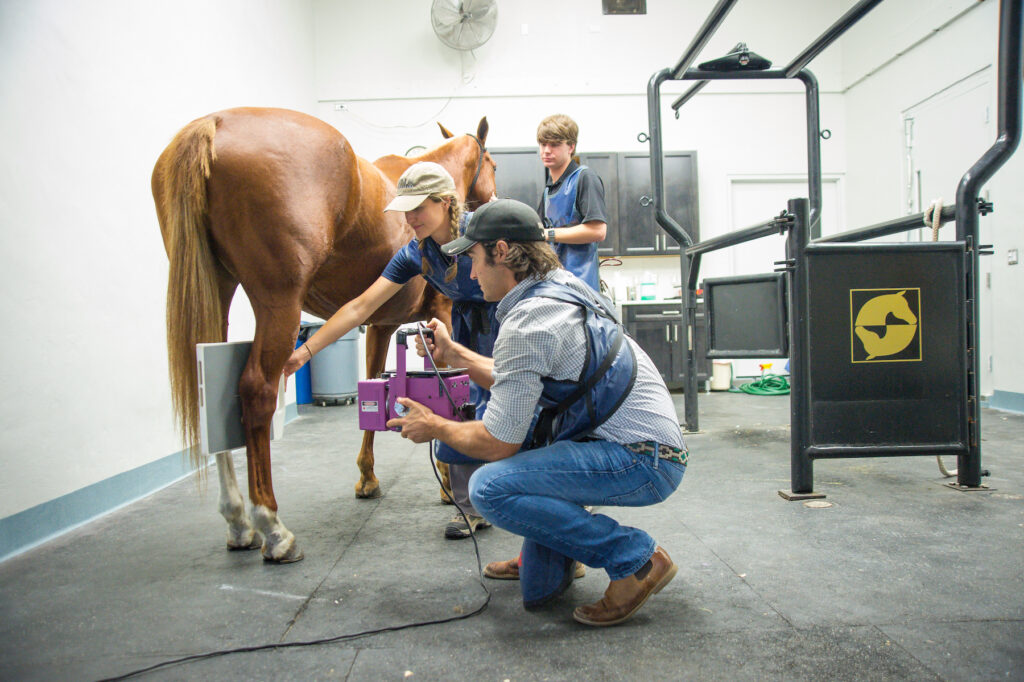
“I wanted to make it as organized and structured as it could be so they can get as much out of that year as possible,” he said. “The general rule is that doing a one-year equine internship puts you three to five years ahead of those that come out of school and start out on their own. Interns come out of school with a handle on book knowledge and the internships give them a good clinical appreciation for those same topics. They see a lot and do a lot under the supervision of seasoned veterinarians while they are here.”
While Palm Beach Equine internships offer obvious perks for the interns themselves, it also has added benefit for the veterinarians already at the clinic.
“The value for the interns is they get to see a tremendous amount of cases in short time, but it’s also valuable for us because they come out of school with fresh knowledge, new ideas, and keep us current and on our toes,” said Dr. Davis.
Traditionally veterinary students will fulfill their equine internship requirements and move on to find a full-time position at other practices. Dr. Davis himself did just that after graduating from the University of Florida College Of Veterinary Medicine and interning at Oakridge Equine Hospital in Oklahoma. But, the experiences available at Palm Beach Equine Clinic keep its interns staying put.
Equine Internships Kickstart Veterinary Careers
History has proven that many interns who work for Palm Beach Equine Clinic as interns go on to accept full-time positions at the clinic. One of those veterinarians is Dr. Ryan Lukens. After earning his DVM from The Ohio State University College of Veterinary Medicine, he began an internship with Palm Beach Equine Clinic in 2012.
“I am so pleased that I did my internship with Palm Beach Equine,” said Dr. Lukens. “It was basically another year of school where I got to focus on exactly what I wanted to do.”
Dr. Lukens specialized in sports medicine, lameness, and diagnostic imaging, which is a passion he inherited from his father, a fellow veterinarian. His experience with Palm Beach Equine Clinic solidified that concentration thanks to the latest in veterinary technology.
“When I came to Palm Beach Equine Clinic, I had access to all the newest equipment. That gave me more tools to improve my skills under the direction of a full network of senior veterinarians,” added Dr. Lukens. “When you leave vet school, you have a question every hour of the day, and I had a number of veterinarians who were a phone call away to answer those questions. I never had to second-guess myself because they were there to help me learn. But, there also isn’t always one way to do something correctly. I learned the opinions of so many veterinarians who do things just a little differently, and it helped me to find my own way and what’s best for the horses I treat.”

Thanks to Palm Beach Equine Clinic, horse owners in South Florida and beyond have access to well-educated veterinarians with hands-on experience that is unmatched.