
Tag: jumping
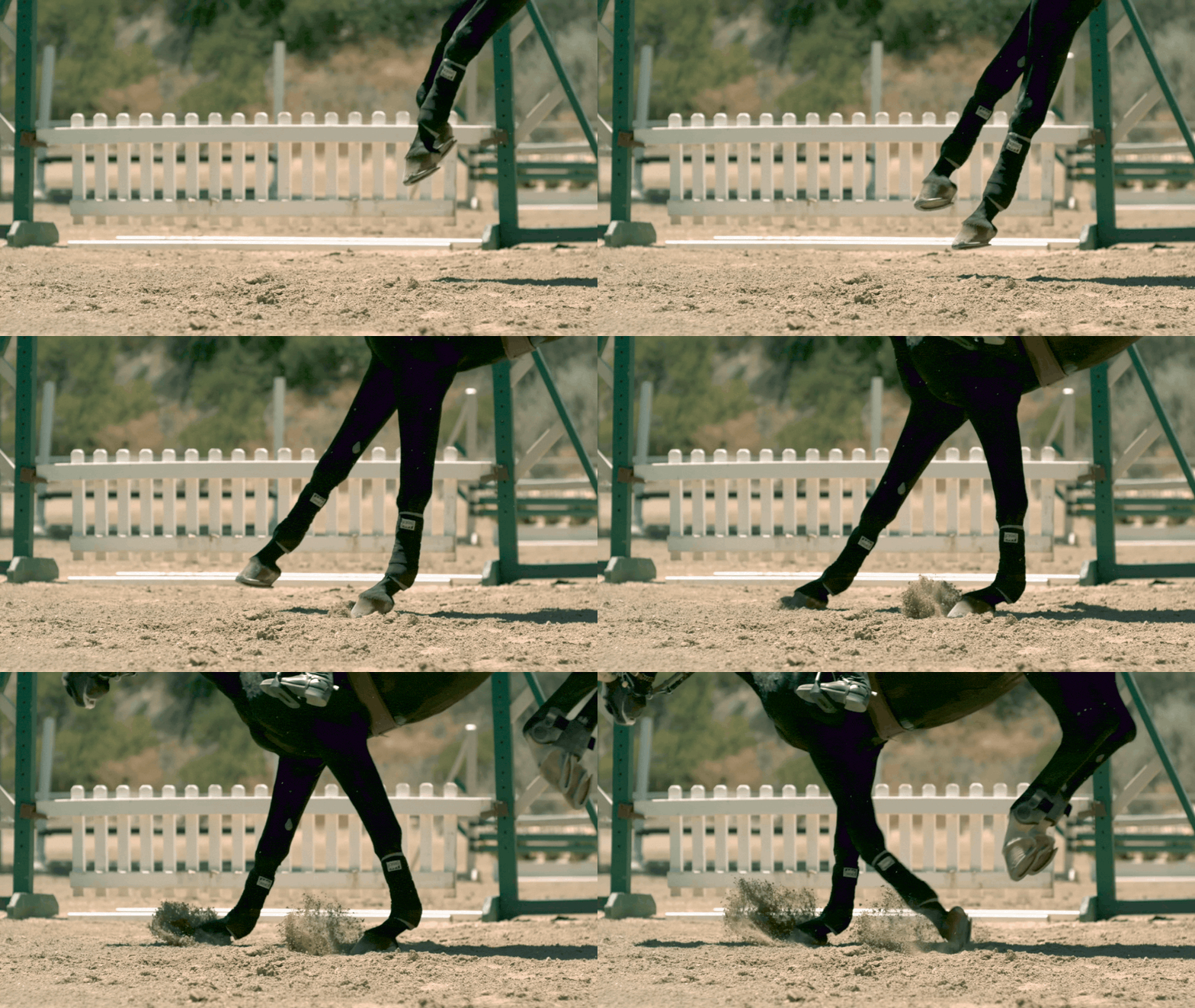
From inside the dressage boards to the jumping arena, the risk of injury for equine athletes always exists. Dr. Christopher Elliott and Dr. Emma Newell of Palm Beach Equine Clinic in Wellington, FL, explained that some riding activities are more closely associated with specific injuries. “The physical demands of each discipline place stress on very different parts of the horse’s body,” noted Dr. Elliott.
In the sport of jumping, the concussive forces of takeoff and landing put strain on the horse’s legs. Joints and soft tissues, such as tendons and ligaments, are designed to absorb this shock, but excessive and repetitive force on these structures can cause problems. Suspensory ligaments, flexor tendons, and joints are three areas Dr. Elliott commonly treats for injuries in jumping horses.
Suspensory Ligaments
The suspensory ligament can become injured through repetitive strain. A lameness exam, nerve blocks, and an ultrasound are used to determine the location and severity of the injury. Clinical signs of a suspensory injury can vary from subtle or intermittent lameness, reluctance to jump, or, potentially, a gradual decline in performance. Overt and persistent lameness can be seen in more significant injuries.
Rest and a controlled exercise rehabilitation program are the cornerstones of treatment. Additional therapies include shockwave and platelet-rich plasma (PRP), which may further support healing.
Dr. Newell reminds horse owners that rehabilitation is tailored to each horse and begins with ground exercises before gradually progressing to ridden work over the course of several months. Regular veterinary check-ups are essential for monitoring progress and making adjustments to the treatment as needed.
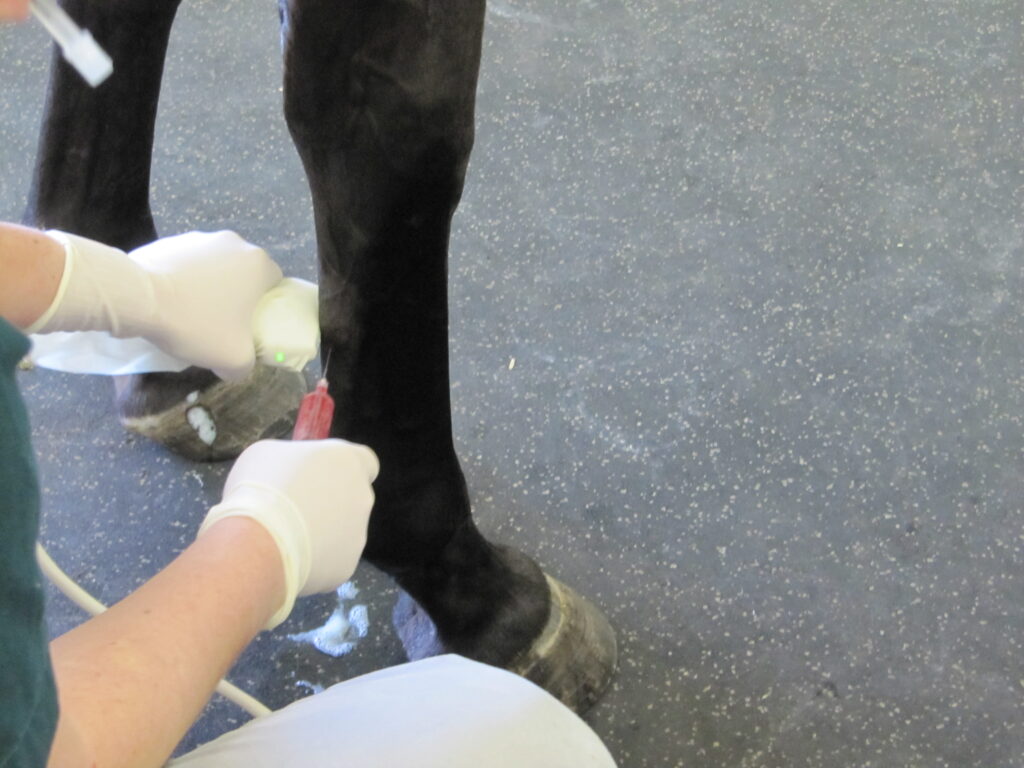
PRP Injections
Flexor Tendons: The DDFT
Flexor tendons, specifically the Deep Digital Flexor Tendon (DDFT), are another common site of injury in jumping horses.
Injury to the DDFT in the jumping horse typically occurs within the hoof capsule. Horses will present with varying degrees of lameness that are eliminated by distal limb nerve blocks. An MRI is required for definitive diagnosis of injury to the DDFT within the hoof.
A horse with this injury will likely be prescribed rest, controlled exercise rehabilitation, and corrective shoeing, with return to previous levels of performance typically being seen between nine and 12 months.
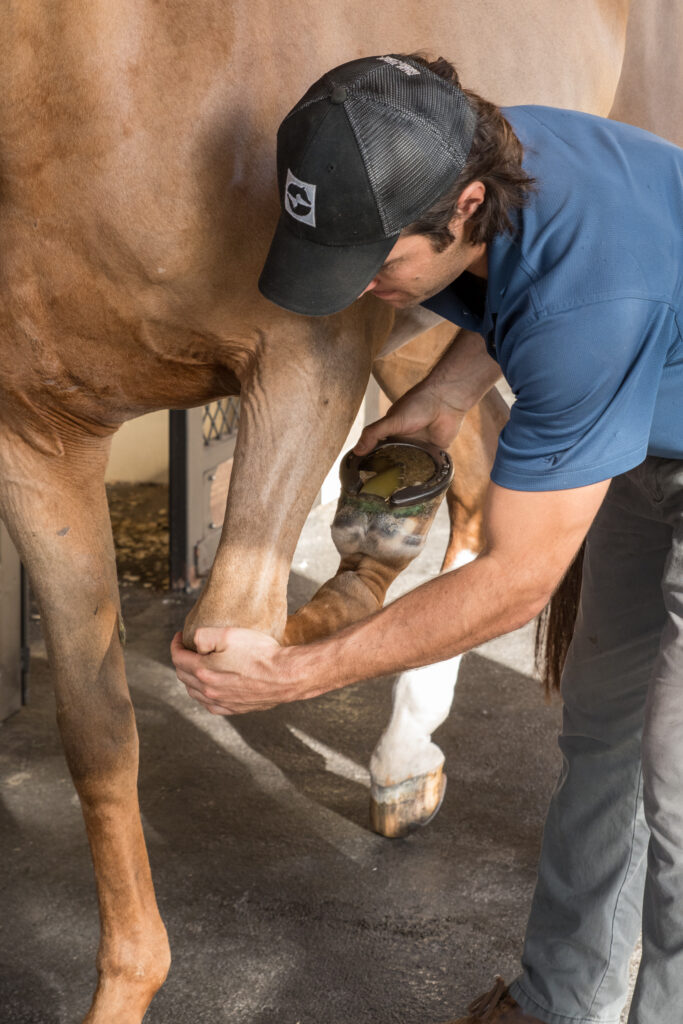
Dr. Santiago Demierre performing a flexion test
Photo courtesy of Jump Media
Joint Pain: Inflammation and Arthritis
Osteoarthritis is one of the most common ailments in competition horses, especially jumping horses. Nearly all of a jumping horses’ distal limb joints undergo repeated strain throughout the course of their careers, with the stifles, hocks, and forelimb coffin joints being common sites of inflammation.
If joint inflammation is suspected, the horse’s veterinarian will conduct a physical evaluation, including limb palpation, watching the horse trot in hand, and often also under saddle. Flexion tests are frequently performed along with nerve blocks and radiographs, if necessary, to pinpoint the area of concern.
Managing osteoarthritis is complex and should be tailored to each horse. Veterinary treatment of joint inflammation typically includes targeted joint injections, either with corticosteroids or biological agents. Other systemic treatments involve nutraceutical supplements (oral and injectable), judicious use of systemic anti-inflammatories, and other targeted complementary therapies.
By paying close attention, owners and riders can detect ailments early, giving their horse the best chance at sustained performance. Dr. Newell advised, “Knowing your horse is the best way to prevent these types of injuries. Working closely with your veterinarian to continually evaluate a horse is the key to success.”
To keep your horse on the right track, contact Palm Beach Equine Clinic at 561-793-1599.