
Author: Aaron Taylor
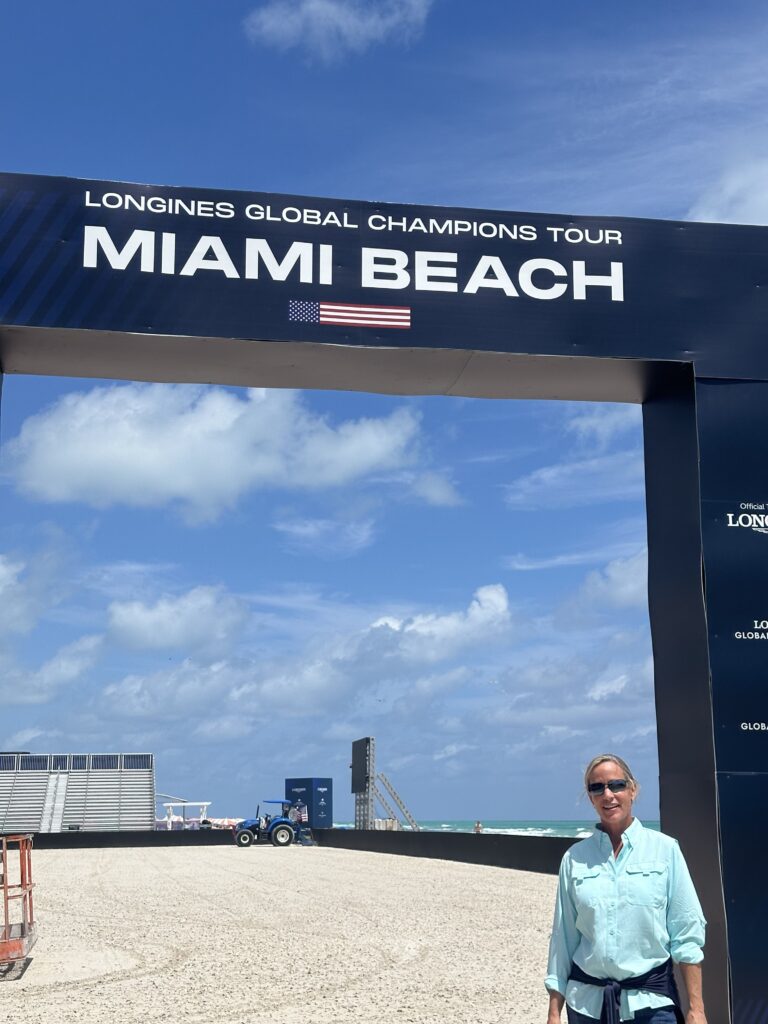
Dr. Kathleen Timmins at LGCT Miami Beach.
Photo courtesy of Palm Beach Equine Clinic.
As the foremost equine clinic in South Florida, Palm Beach Equine Clinic is often called upon for its veterinary services at the most prestigious equestrian competitions. Having just finished the renowned World Equestrian Festival and Adequan® Global Dressage Festival – where PBEC serves as the Official Veterinarian – a team of PBEC veterinarians is moving south to assist at the Longines Global Champions Tour (LGCT) Miami CSI5* on April 1-4, 2026.
Dr. Kathleen Timmins, Dr. Sarah Allendorf, Dr. Rachael Davis, and Dr. Christopher Elliott provide around- the-clock veterinary supervision for European and North American contenders from the moment they arrive for the Miami leg of the LGCT. Dr. Kathleen Timmins is a 1993 graduate of the Ohio State University School of Veterinary Medicine and completed an internship in equine medicine and surgery at the Illinois Equine Hospital near Chicago. She began practicing equine veterinary medicine in Aiken, South Carolina.
Dr. Timmins joined Palm Beach Equine Clinic in 1996. She was a member of the United States Polo Association (USPA) Equine Welfare Committee and the Drugs and Medication Sub-Committee, which authored the USPA Drugs and Medications Rules Book. Dr. Timmins is an Official FEI Veterinary Delegate for jumping, dressage, and para dressage, and she treats patients from all riding disciplines.
Dr. Timmins enjoys cooking and cheering on her daughter, Schuyler, as she follows in her footsteps competing in the jumper ring.
What are your responsibilities at LGCT Miami?
We oversee U.S. Department of Agriculture (USDA) regulations for horses from Europe with a Contagious Equine Metritis (CEM) waiver. These horses are kept in a quarantine bubble to prevent contact with North American horses and to maintain our disease-free status. We oversee the movement of horses as they arrive and during their activities at the facility throughout the event. We also ensure the facilities meet USDA standards and that everything is properly recorded. I will act as a treating vet as needed and help with the FEI horse arrival exams.
What is the arrival process for horses that compete at LGCT Miami, and how do you interact with them?
The horses from Europe flew in on Monday, March 30, and arrived at the beach on Tuesday and Wednesday. The European horses arrive at the showgrounds from the airport and quarantine facility in Miami. The U.S.-based horses arrived on Tuesday and Wednesday. The FEI Veterinary Delegate, the LGCT vets, and I act on behalf of the USDA to check in all of the horses.
How many times have you worked at LGCT Miami?
This is my first year! It is beautiful and looks pretty fun. I’ve been to Miami Beach for polo tournaments before, so it will be great to see jumpers here too.
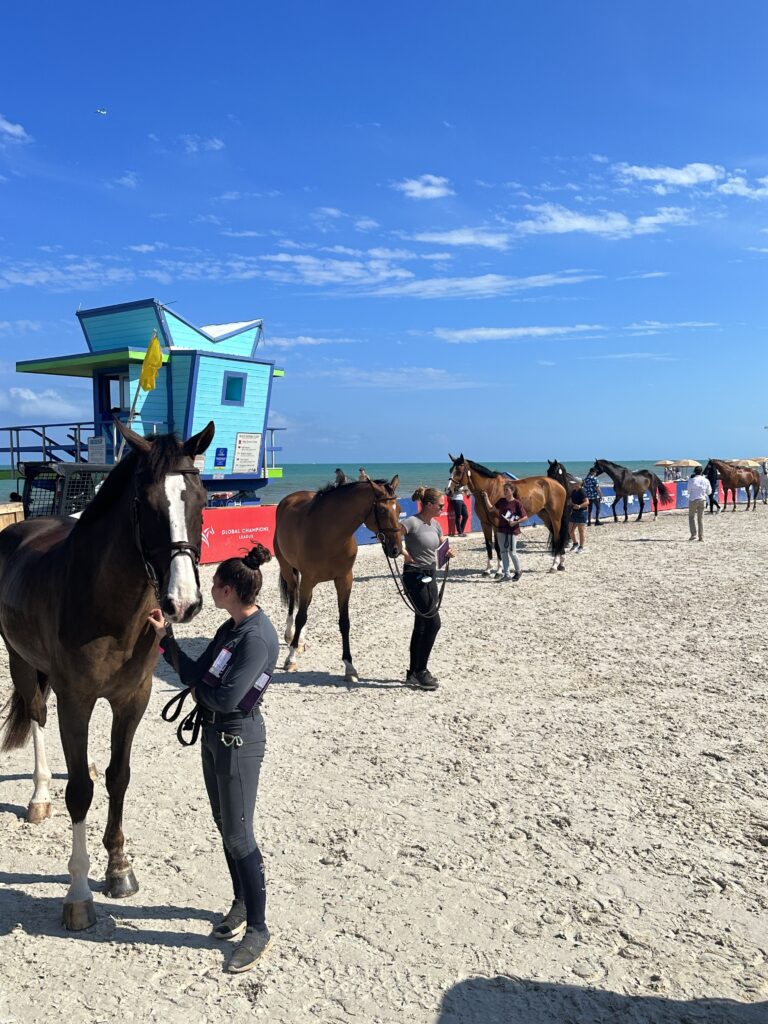
LGCT Miami Beach Jog.
Photo courtesy of Palm Beach Equine Clinic.
What is your typical day like at the show?
Although I haven’t worked at this particular show before, it will be similar to previous competitions. The days are long and start early. Between the stewards and I, we are assigned to observe the CEM horses at all times to ensure that the European horses and the American horses don’t commingle. As a treating vet, I can also handle minor needs, such as giving fluids to a horse. We also administer medications such as Legend or Adequan as requested. Dr. Sarah Allendorf will be here each day to attend to clients as well.
Do you stay in Miami for the week?
I will be staying there. That’s part of the requirement; you must be able to reach the venue quickly if necessary, in case a horse has an overnight emergency. Plus, who wants to be commuting to Miami at 5 a.m., or anytime, frankly!
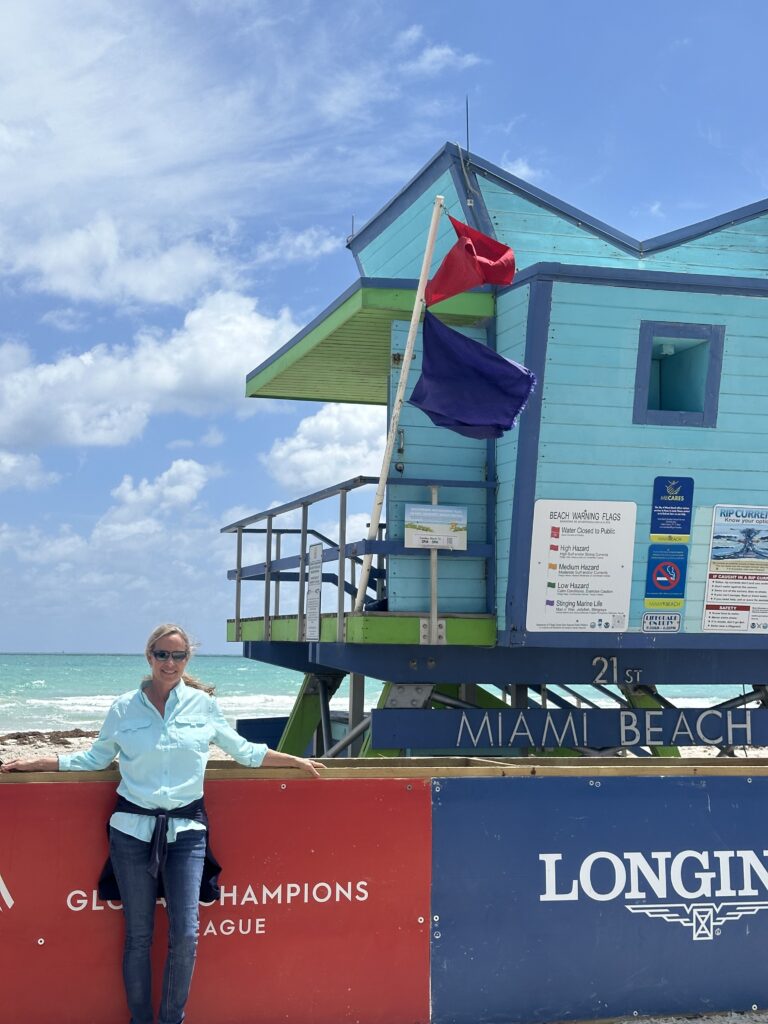
Dr. Kathleen Timmins at LGCT Miami Beach.
Photo courtesy of Palm Beach Equine Clinic
What is the most challenging part of the job at a show like this?
I think the most challenging thing at this show is the logistics. There are a lot of moving parts between the horses flying in and those trailering in. It’s very tight driving in Miami Beach, too. There is a lot of traffic, and the roads are small.
What are you looking forward to?
I’m really looking forward to seeing the competition and the beautiful venue.
To see more about PBEC’s experience at Longines Global Champions Tour Miami, visit our Instagram page at @pbequineclinic. Learn more about Palm Beach Equine Clinic and our team of veterinarians at www.EquineClinic.com.
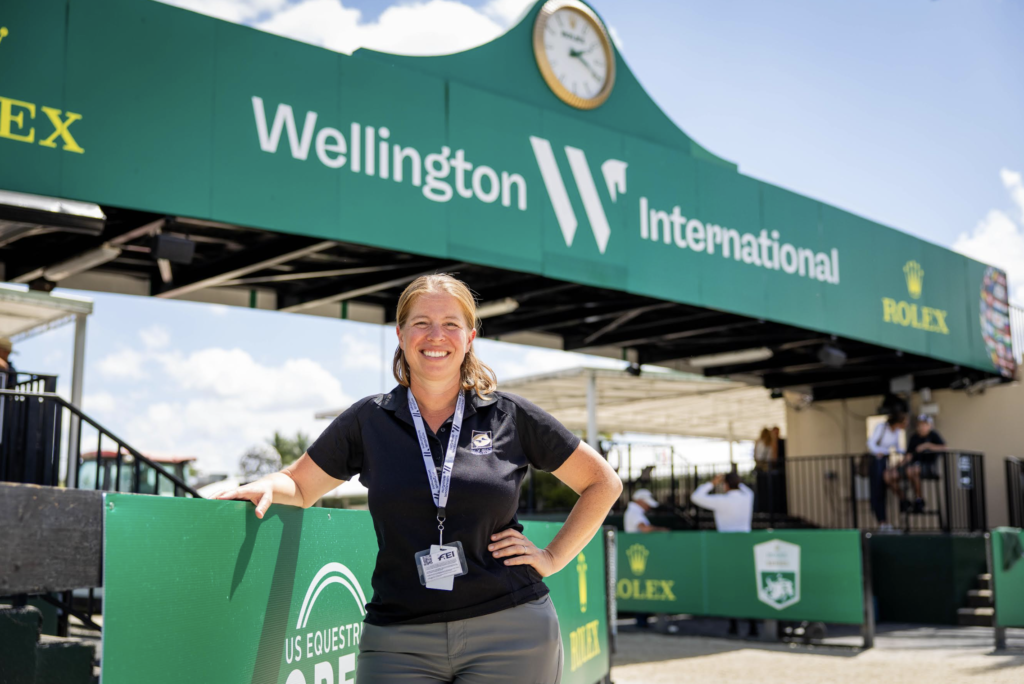
Dr. Janet Greenfield at WEF
© Devyn Ivy Media
Originally from northern California, Dr. Janet Greenfield-Davis grew up competing on the hunter circuit, which sparked her interest in equine veterinary medicine. She completed her undergraduate degree at California Polytechnic State University and then attended veterinary school at the University of Glasgow.
After completing an internship at Palm Beach Equine Clinic in 2010, she studied traditional Chinese veterinary medicine at the Chi Institute. In addition to providing Western medicine, Dr. Greenfield-Davis uses Eastern medicine as a certified veterinary acupuncturist and Chinese herbal medicine expert. Dr. Greenfield-Davis is certified in equine rehabilitation and performance medicine.
When not seeing patients, Dr. Greenfield-Davis enjoys enthusiastically cheering on her clients at competitions, swing dancing, and spending quality time with her husband and two daughters.
What are your official duties at WEF for Rolex Series week?
My official duties this week are monitoring the CEM waiver tent for WEF week 12. I make sure the participants abide by the U.S. Department of Agriculture (USDA) guidelines set to keep our country CEM free.
Contagious Equine Metritis (CEM) is a sexually transmitted bacterial infection that can cause infertility in mares and is carried by stallions. While endemic in Europe, the disease is not currently in the U.S., so testing and quarantine for horses entering the country from areas with confirmed cases are essential to maintain that disease-free status.
Are any other PBEC vets working with you that week?
The PBEC veterinarians who are on show duty will help me, along with the FEI Veterinary Delegate, the FEI stewards, and our local USDA veterinarian. I have lots of help! I am a very small piece of a very big event, and I enjoy the part I get to play in making it happen.
Can you describe your typical day at the show?
I like to pop in to the show in the morning to ensure everything is running smoothly with the FEI steward and security. I note which of the monitored horses are showing and whether there is enough staff to walk the horses to the arena. It is quite a distance from the FEI stabling to the International Arena, and the horses must be accompanied to and from the ring. I always wear my sneakers during week 12. I will also check in the evening to make sure everyone is happy. Meeting with the USDA and addressing any concerns is also part of my job.
How many years have you been working at WEF for PBEC?
I have been at PBEC for 15 years and have been participating at the show in one veterinary capacity or another the entire time.
What makes Rolex Series week at WEF special?
The fanfare, horses, and the competitors make it very special. You can feel the crowd’s excitement to see all the big names, and the competition is always electric.
What are you looking forward to?
Saturday night, of course!
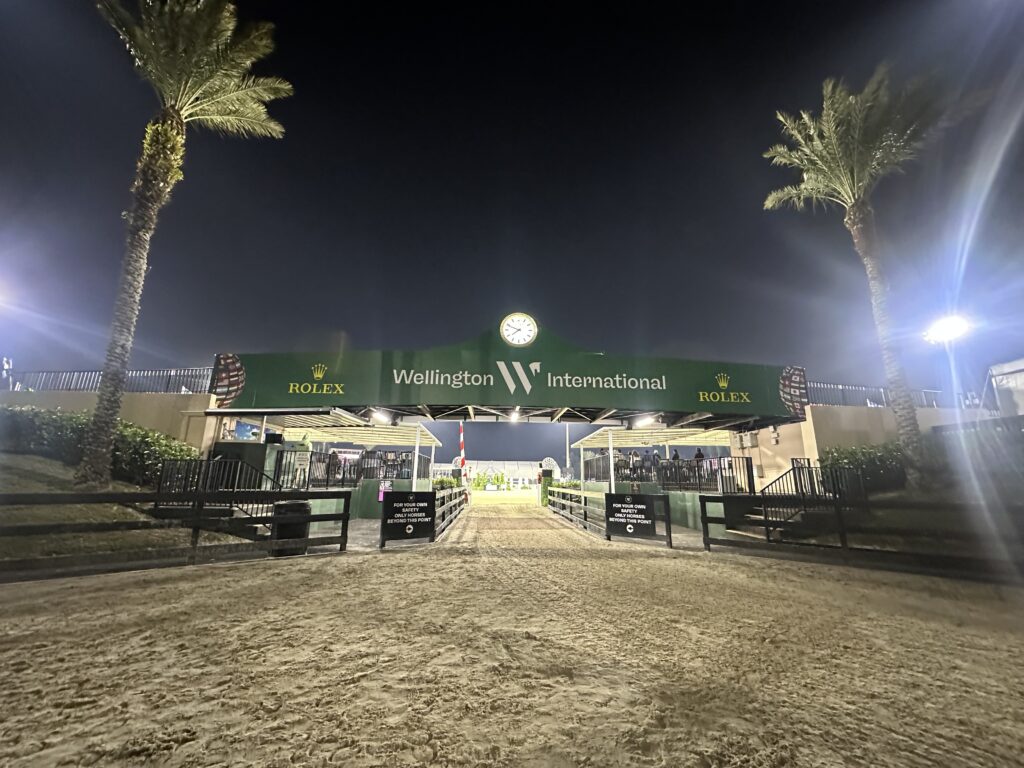
WEF Bridge at Night
Photo courtesy of Palm Beach Equine Clinic
This spring, Palm Beach Equine Clinic in Wellington, FL, isn’t just attending the biggest stages in North American sport; it’s caring for the best equine athletes in the game.
From Winter Equestrian Festival Rolex CSI5* Week (March 23–29) to the electric beachfront setting of the Longines Global Champions Tour Miami (April 1–4), and culminating at the prestigious FEI World Cup™ Finals (April 8–13), PBEC veterinarians are at the center of the action, ensuring the world’s top equine athletes perform at their best.
The momentum begins in Ocala during the Longines League of Nations Ocala, where the sport’s elite converge. As international horses transition from USDA CEM quarantine in Ocala to Wellington, PBEC plays a critical role in their care. Under the leadership of Dr. Janet Greenfield, the team oversees the veterinary needs of these elite athletes within Wellington’s tightly managed competition “bubble,” as they prepare for the Winter Equestrian Festival’s Rolex CSI5* week, which hosts the US Equestrian Open Jumping Final.
While fans focus on the spotlight in the arena, PBEC works tirelessly behind the scenes. As horses arrive for the Miami leg of the Longines Global Champions Tour, Dr. Kathleen Timmins and Dr. Sarah Allendorf provide around-the-clock veterinary supervision for European and North American contenders from the moment they arrive.
The circuit doesn’t stop there. Dr. Christopher Elliott heads to Fort Worth, TX, to serve as the veterinary service manager at the FEI World Cup™ Finals, one of the sport’s most prestigious international championships. PBEC’s expertise extends into the dressage arena, where Dr. Weston Davis and Dr. Sidney Chanutin support top horses, including those representing Zen Elite Equestrian Center, title sponsor of the FEI Dressage World Cup™ Final.
Across disciplines and every level of elite competition, PBEC is a constant — trusted by the best, present at the biggest moments, and integral to the success of world-class equestrian sport.
This spring, when the stakes are highest, Palm Beach Equine Clinic is exactly where you’d expect to find them: at the epicenter of excellence.
LGCT Miami Beach Jog.
Photo courtesy of Palm Beach Equine Clinic.
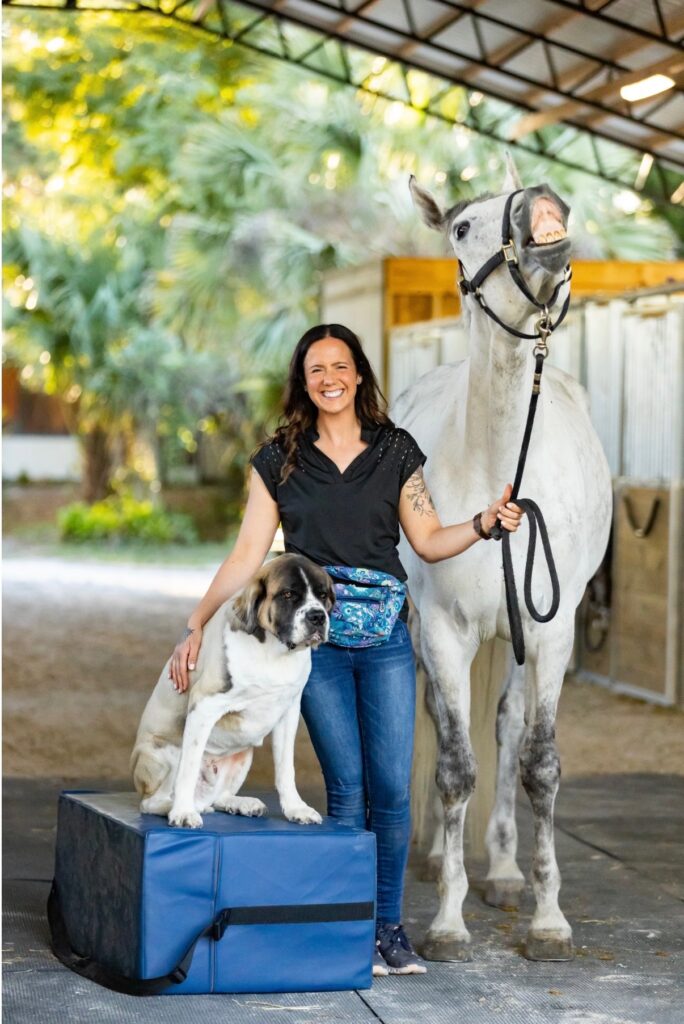
Dr. Jamie Klements joins the Palm Beach Equine Clinic in Wellington, FL, from the Midwest, where she operated her own practice as an equine chiropractor and acupuncturist. With a passion for learning, Dr. Klements has a wealth of knowledge on equine wellness and comes to the clinic to apply her skills to sports medicine alongside PBEC’s Dr. Bill Patterson.
Q: What made you want to become an equine veterinarian?
A: I was one of those kids who was born loving horses. My family didn’t own horses, but I took riding lessons and worked in barns as much as I could. I rode in the hunters as a hobby, but never as a professional. I was pre-med for most of my undergrad schooling. I started spending time with my horse’s veterinarian during my junior year of college after a summer job at the Cleveland Clinic determined human medicine wasn’t for me. I love horses and medicine, and the switch made sense. Today I am still grateful I get to work with horses for my job.
Q: What’s your background in veterinary medicine?
A: I’m grew up in Ohio and attended Miami University in Ohio for my undergraduate degree. I went to vet school at Iowa State University. After graduating from vet school, I worked at Lebanon Equine Clinic in Ohio for two years. In 2017, I started my practice called Midwest Veterinary Chiropractic and Wellness that focuses on chiropractic care and acupuncture treatment for horses. I am located near the World Equestrian Center in Wilmington, OH. I have worked as a show veterinarian and see my clients at their home farms or at the horse show for acupuncture and chiropractic care.
Q: What drew you to equine chiropractic and acupuncture, and what was the training process like for these specialties?
A: I’ve always had dachshunds, and while I was in vet school, I had one that needed back surgery. There was a vet at the practice who did acupuncture on him, and it helped him so much with his rehabilitation. Seeing how positively the treatment affected him made me interested in learning how to do it for my own patients.
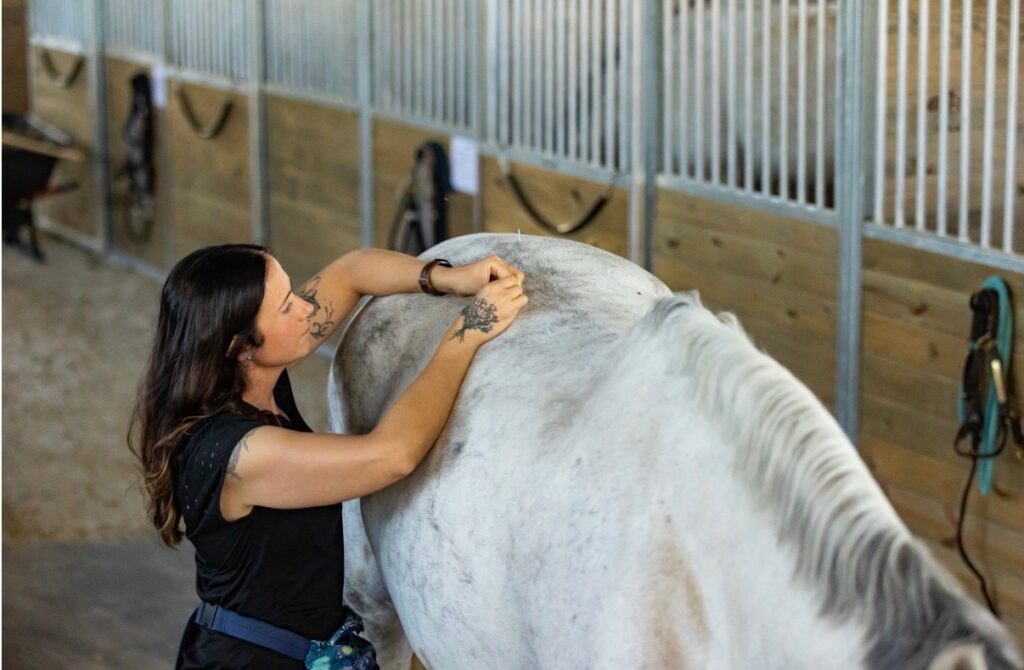
Currently, neither acupuncture nor chiropractic is a boarded specialty but a certification training program that is available after you are a veterinarian. I completed my acupuncture training immediately out of vet school. I attended the Chi University that is outside of Ocala, FL. I started my chiropractic training at Parker University in Dallas, TX, which is a human chiropractic school that also offers an animal certification. I have studied with a professor at the Health Pioneer Institute near Chicago, IL, who focuses on the neurology related to chiropractic. Finally, I just completed a master’s degree in Equine Integrated Veterinary Medicine from the Chi University, which covered spinal manipulation (chiropractic), rehabilitation, pain management, and acupuncture for horses.
Q: Why is continuing your education as a veterinarian important to you?
A: I’m an education junkie. I want to help my patients as much as I can, so I enjoy always learning something new. I decided to come down to Palm Beach Equine Clinic to learn more about sports medicine. I have known Dr. Bill Patterson for a while, and he practices sports medicine related to how the whole horse moves and specifically the back and neck. I am here to work with him to learn how to combine sports medicine with the Traditional Chinese Medicine that I’ve been focused on.
Q: What benefits do you think Traditional Chinese Medicine provides for equine athletes?
A: Learning Eastern or Chinese medicine helps with paying attention to the horse as a whole being and how their environment, job, and personality can affect their health. It has taught me additional signs to watch for when examining a horse and deciding on a diagnosis. Show horses are limited in the medication they can receive for pain and discomfort, but we can offer acupuncture or massage if a horse needs some care before the competition. I have been a part of helping horses with a lameness or health care issue using Chinese medicine when Western medicine hasn’t been successful or had a good answer.
Q: How has it been living and working in Wellington so far?
A: I’m still settling into my role at PBEC, but I’m excited to be here. If someone is interested in sports medicine, working here is the dream because you get to learn about every specialty all in one place. Everyone comes to Wellington to work and learn from the best in the sport horse industry. I think this is the equestrian equivalent of moving to Los Angeles to be in the movies. I love Florida. There is so much wildlife, it’s beautiful, and I can garden in the winter!
I’ll be working seasonally at PBEC. My partner and I bought a farm in Loxahatchee, near Wellington, a year and a half ago. I still see clients in Ohio and Kentucky, so I currently go back and forth. I plan to spend most of the winter in Wellington and travel to Ohio and Kentucky in the summer to see clients.
Q: How has it been working with Dr. Patterson and the team at PBEC?
A: It’s a dream come true. I’ve learned so much from Dr. Patterson and seeing more complex cases has been really interesting. Everyone at the clinic has been helpful and friendly. I am excited to get to work with and learn from the best in the industry.
Q: What does a typical week look like for you right now?
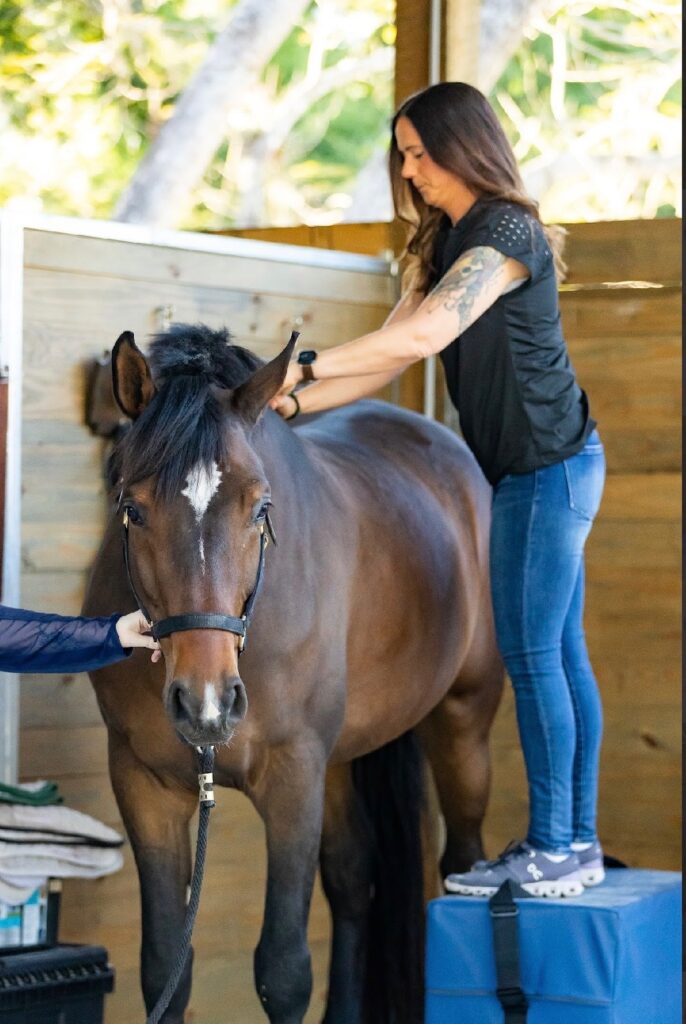
A: I often see patients for acupuncture or chiropractic treatment at the start of the week when the horses have some downtime away from the horse show. Monday is usually my busiest day and favorite day to work. A lot of barns are closed, and the horses enjoy how quiet it is while I’m working on them.
For the rest of the week, I usually ride around with Dr. Patterson and help with lameness cases as they pop up. I am also going to cover some shifts at the horse show on weekends, which I like because I get to see my clients succeeding in the ring after I’ve helped them.
Q: What do you enjoy doing in Wellington when you’re not working?
A: I ride when I can. I also love the ocean. My partner, Steve, and I like to go offshore fishing. I also enjoy spending time with my dogs. We have a dachshund named Phoebe and a St. Bernard named Bruno, which covers both ends of the size spectrum!
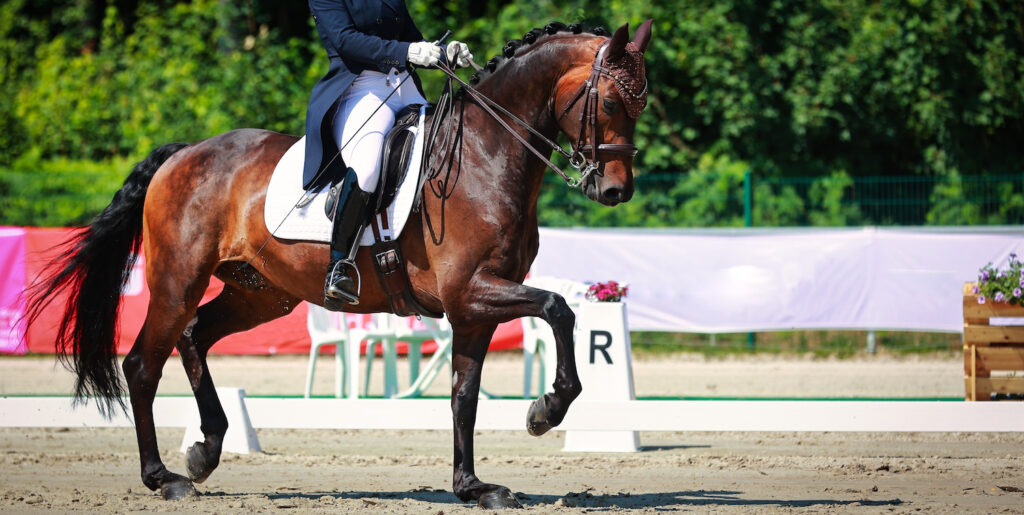
The winter show season in Wellington, FL, showcases incredible horse-and-rider partnerships across various disciplines. On one night, dressage horses will dance under the palm trees at the Adequan Global Dressage Festival – where PBEC is the official veterinarian – and the next, a field of show jumping horses will sail over massive fences.
Behind the scenes, these equine athletes have multidisciplinary teams of professionals working to keep them in top physical condition for competition. Dr. Christopher Elliott and Dr. Emma Newell of Palm Beach Equine Clinic in Wellington, FL, are key members of many of these teams, treating ailments in both dressage and jumping horses.
There are common injuries in sport horses, but typical ailments will vary between jumping and dressage horses due to the different demands of each discipline. “Dressage horses perform repetitive, collected movements that place sustained stress on the limbs and the back,” explained Dr. Elliott.
Ligament and Tendon Strains
The precise movements of dressage put stress on the soft tissues in a horse’s legs, but unlike in jumping sports, soft tissue injuries are commonly observed. Dr. Elliott pointed out, “The most common hind limb ligament injury is the proximal suspensory, and the most common tendon injury of the forelimb is the deep digital flexor tendon. These structures are loaded more for dressage horses than for jumpers, especially during collection, work transitions, and lateral movements.”
These injuries tend to present subtly and are associated with a decline in overall performance, though the rider may also notice inconsistent lameness. A loss of impulsion, difficulty maintaining collection, resistance to performing lateral movements, and other behavioral changes under saddle warrant a visit from the horse’s veterinarian.
The return to full work under saddle can be a lengthy process, beginning with straight-line exercises. The veterinarian may also suggest adjusting other aspects of the horse’s management, including reducing the intensity of the horse’s training in the future, having the horse’s saddle evaluated, improving the rider’s balance, or even reconsidering the type of footing the horse is ridden on.
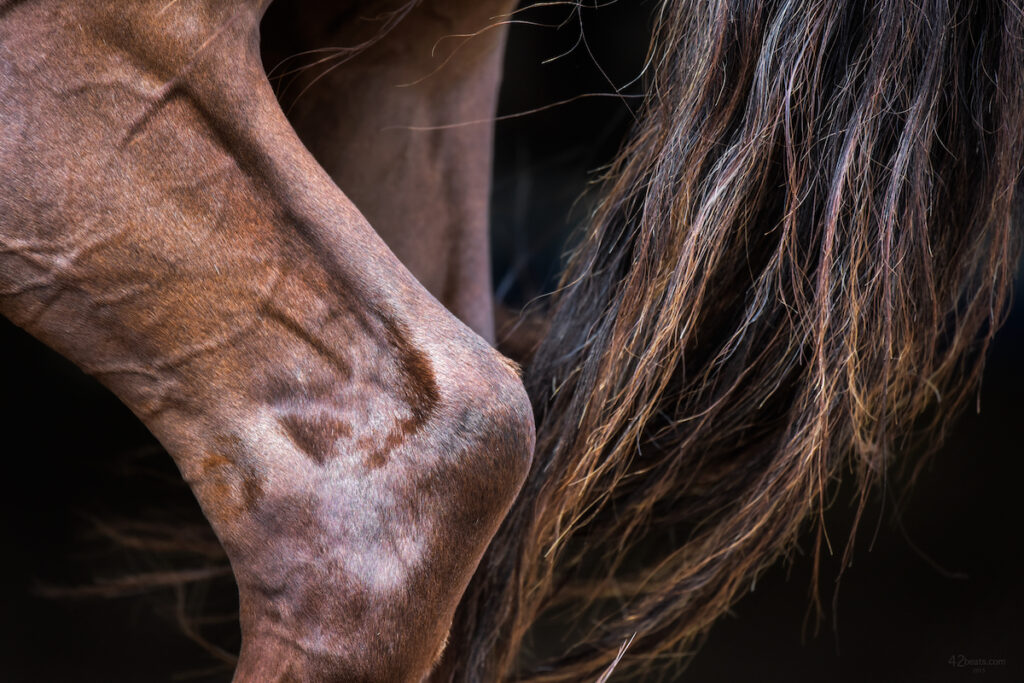
The hocks are often under significant strain during collected movements.
Hock Arthritis
The hocks in a dressage horse carry a substantial load during collected work and are a common site of arthritis. The issue can be identified by stiff movement, resistance to transition or collection work, or a general decline in performance. A veterinarian will confirm this diagnosis with a thorough lameness exam, flexion tests, nerve blocks, and radiographs.
Like joint pain in jumping horses, hock arthritis in dressage horses can be treated with joint injections and anti-inflammatory medication. Reducing the difficulty or quantity of movements performed may be necessary, but regular work is usually still recommended. “Consistent, low-impact exercise is encouraged, rather than prolonged rest, with ongoing management to maintain comfort,” noted Dr. Elliott.
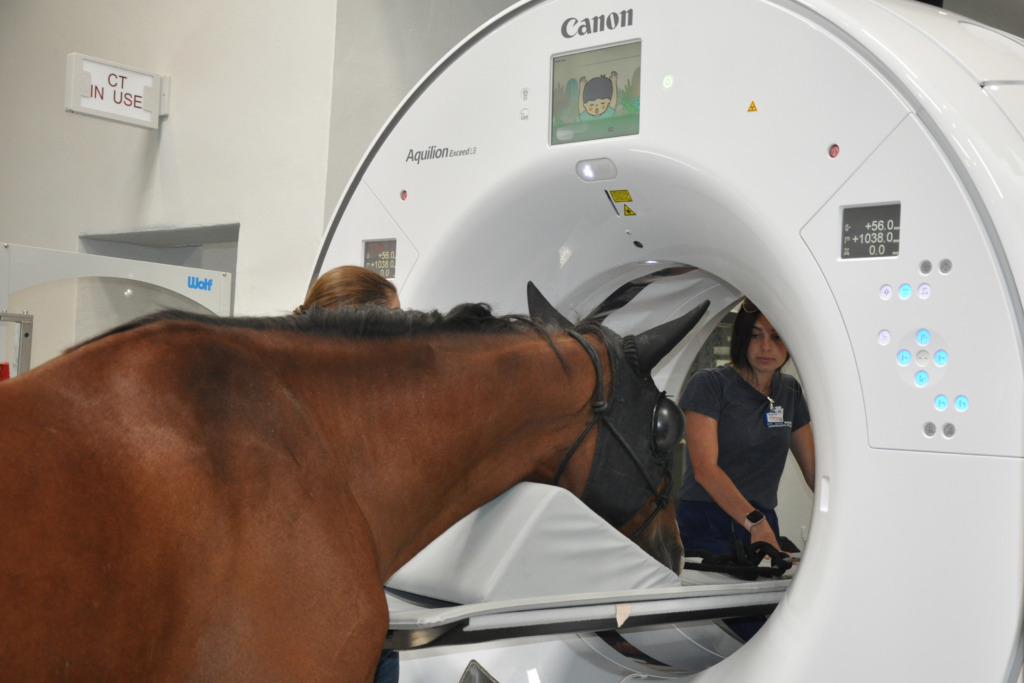
Diagnostic imaging may be necessary to accurately diagnose soundness issues.
Sacroiliac (SI) Pain
The sacroiliac (SI) area in the horse’s back becomes active during collected work when a horse engages its hind end, tilts its pelvis, and brings its hind legs underneath its body. A horse experiencing discomfort in this area may struggle with flying lead changes and exhibit uneven hind-end engagement, reduced impulsion, or behavioral changes under saddle.
“Diagnosing these issues can be challenging and often involves ruling out other sources of hind-end lameness,” admitted Dr. Elliott, adding that diagnostic block and advanced imaging may be necessary to evaluate the horse.
Targeted SI joint injections can improve comfort, while physical therapy exercises aimed at strengthening the horse’s hind end and core muscles are often part of the long-term management plan for the horse.
The Secret to Success
Riders and caretakers play a significant role in maintaining their horses’ health and well-being. Early recognition of subtle lameness signs is essential, and Dr. Newell emphasized, “Knowing your horse and knowing their nuances, I think, is what’s really going to keep our equine athletes in work longer.”
With a full suite of diagnostic equipment and an expert team of veterinarians, PBEC is fully equipped to provide equine patients with a high standard of care. “A highlight of being a veterinarian at PBEC is the ability to conduct a CT, a bone scan, or a standing MRI. We can provide clients in-depth imaging with a quick turnaround on results with the amount of technology we have here at PBEC,” shared Dr. Newell. She also noted that radiographs and ultrasounds can be conducted in the field, eliminating the need to visit the clinic.
Whether your goal is to trot down the centerline at Adequan Global Dressage Festival or make the jump-off at the Winter Equestrian Festival, Palm Beach Equine Clinic is dedicated to helping your horse perform their best. Visit www.EquineClinic.com for more information or call 561-793-1599 to make an appointment.
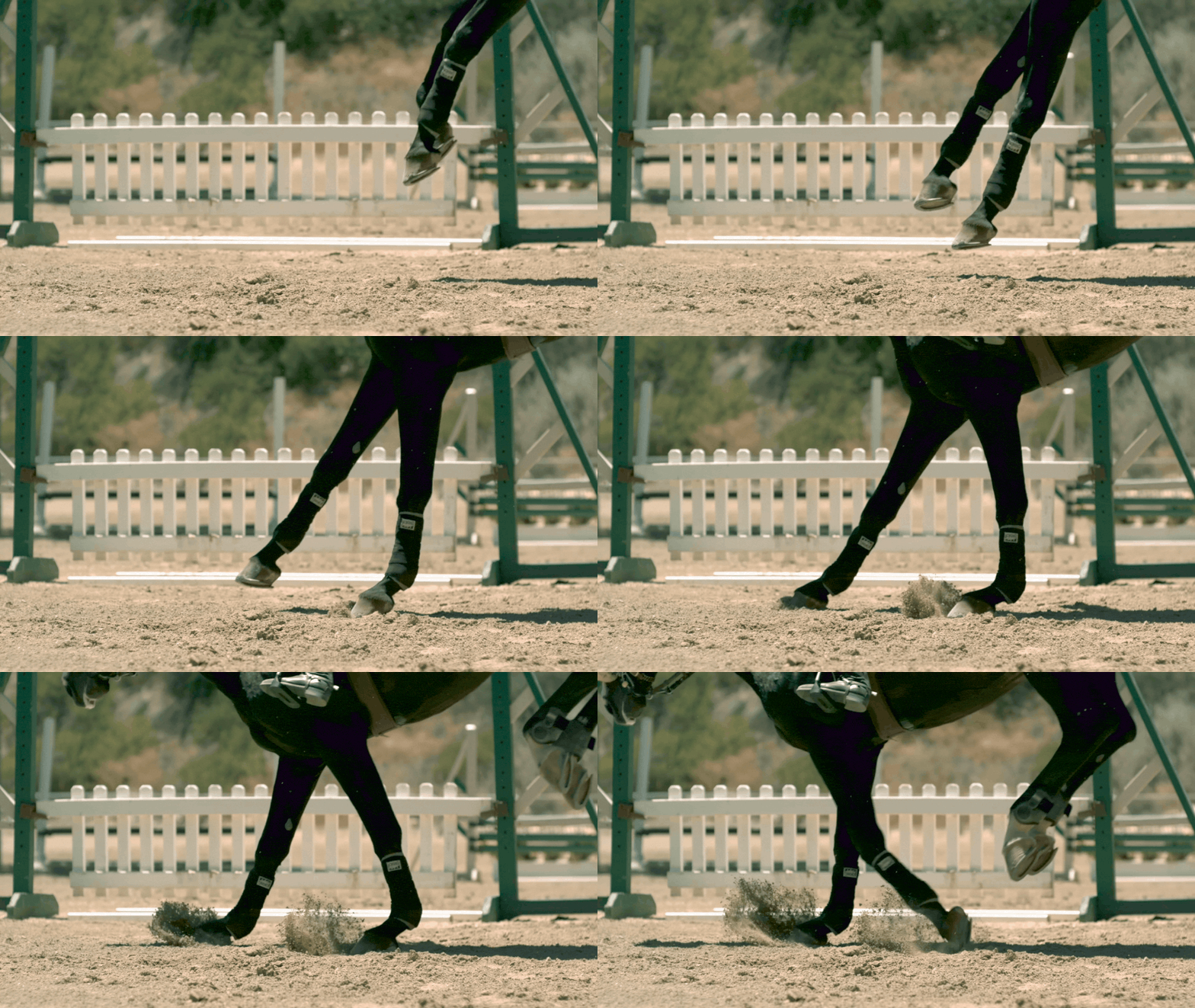
From inside the dressage boards to the jumping arena, the risk of injury for equine athletes always exists. Dr. Christopher Elliott and Dr. Emma Newell of Palm Beach Equine Clinic in Wellington, FL, explained that some riding activities are more closely associated with specific injuries. “The physical demands of each discipline place stress on very different parts of the horse’s body,” noted Dr. Elliott.
In the sport of jumping, the concussive forces of takeoff and landing put strain on the horse’s legs. Joints and soft tissues, such as tendons and ligaments, are designed to absorb this shock, but excessive and repetitive force on these structures can cause problems. Suspensory ligaments, flexor tendons, and joints are three areas Dr. Elliott commonly treats for injuries in jumping horses.
Suspensory Ligaments
The suspensory ligament can become injured through repetitive strain. A lameness exam, nerve blocks, and an ultrasound are used to determine the location and severity of the injury. Clinical signs of a suspensory injury can vary from subtle or intermittent lameness, reluctance to jump, or, potentially, a gradual decline in performance. Overt and persistent lameness can be seen in more significant injuries.
Rest and a controlled exercise rehabilitation program are the cornerstones of treatment. Additional therapies include shockwave and platelet-rich plasma (PRP), which may further support healing.
Dr. Newell reminds horse owners that rehabilitation is tailored to each horse and begins with ground exercises before gradually progressing to ridden work over the course of several months. Regular veterinary check-ups are essential for monitoring progress and making adjustments to the treatment as needed.
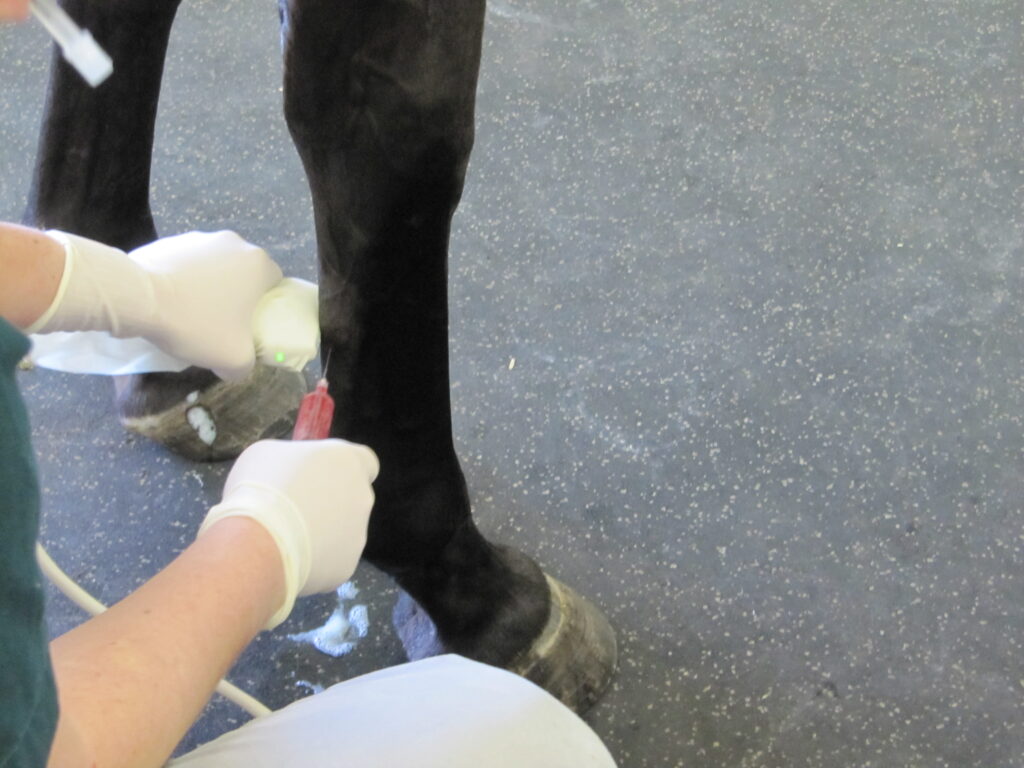
PRP Injections
Flexor Tendons: The DDFT
Flexor tendons, specifically the Deep Digital Flexor Tendon (DDFT), are another common site of injury in jumping horses.
Injury to the DDFT in the jumping horse typically occurs within the hoof capsule. Horses will present with varying degrees of lameness that are eliminated by distal limb nerve blocks. An MRI is required for definitive diagnosis of injury to the DDFT within the hoof.
A horse with this injury will likely be prescribed rest, controlled exercise rehabilitation, and corrective shoeing, with return to previous levels of performance typically being seen between nine and 12 months.
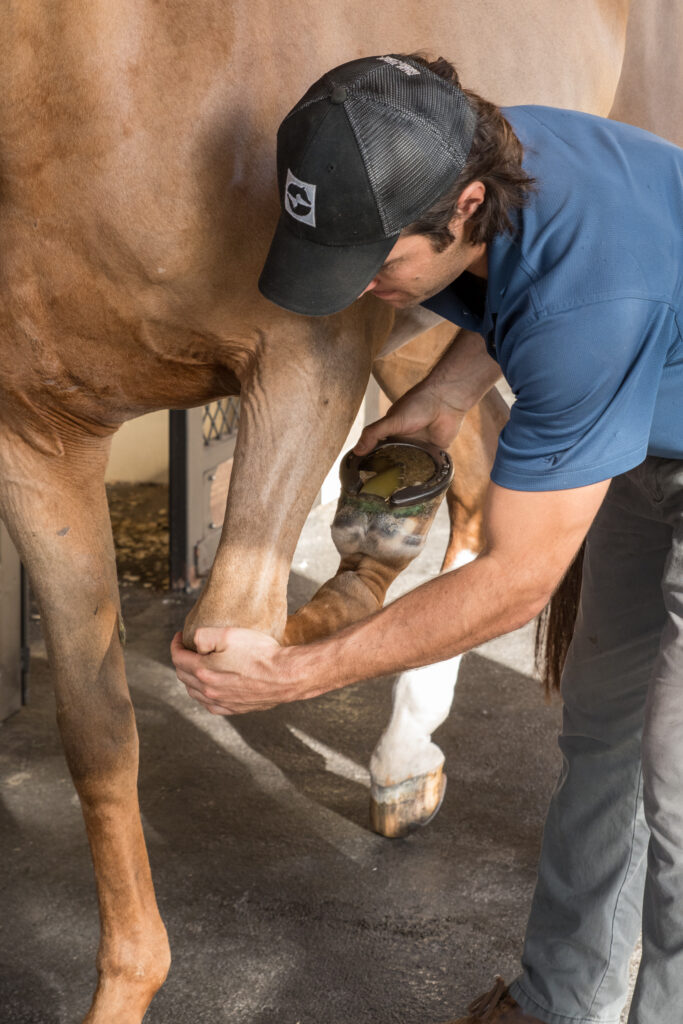
Dr. Santiago Demierre performing a flexion test
Photo courtesy of Jump Media
Joint Pain: Inflammation and Arthritis
Osteoarthritis is one of the most common ailments in competition horses, especially jumping horses. Nearly all of a jumping horses’ distal limb joints undergo repeated strain throughout the course of their careers, with the stifles, hocks, and forelimb coffin joints being common sites of inflammation.
If joint inflammation is suspected, the horse’s veterinarian will conduct a physical evaluation, including limb palpation, watching the horse trot in hand, and often also under saddle. Flexion tests are frequently performed along with nerve blocks and radiographs, if necessary, to pinpoint the area of concern.
Managing osteoarthritis is complex and should be tailored to each horse. Veterinary treatment of joint inflammation typically includes targeted joint injections, either with corticosteroids or biological agents. Other systemic treatments involve nutraceutical supplements (oral and injectable), judicious use of systemic anti-inflammatories, and other targeted complementary therapies.
By paying close attention, owners and riders can detect ailments early, giving their horse the best chance at sustained performance. Dr. Newell advised, “Knowing your horse is the best way to prevent these types of injuries. Working closely with your veterinarian to continually evaluate a horse is the key to success.”
To keep your horse on the right track, contact Palm Beach Equine Clinic at 561-793-1599.
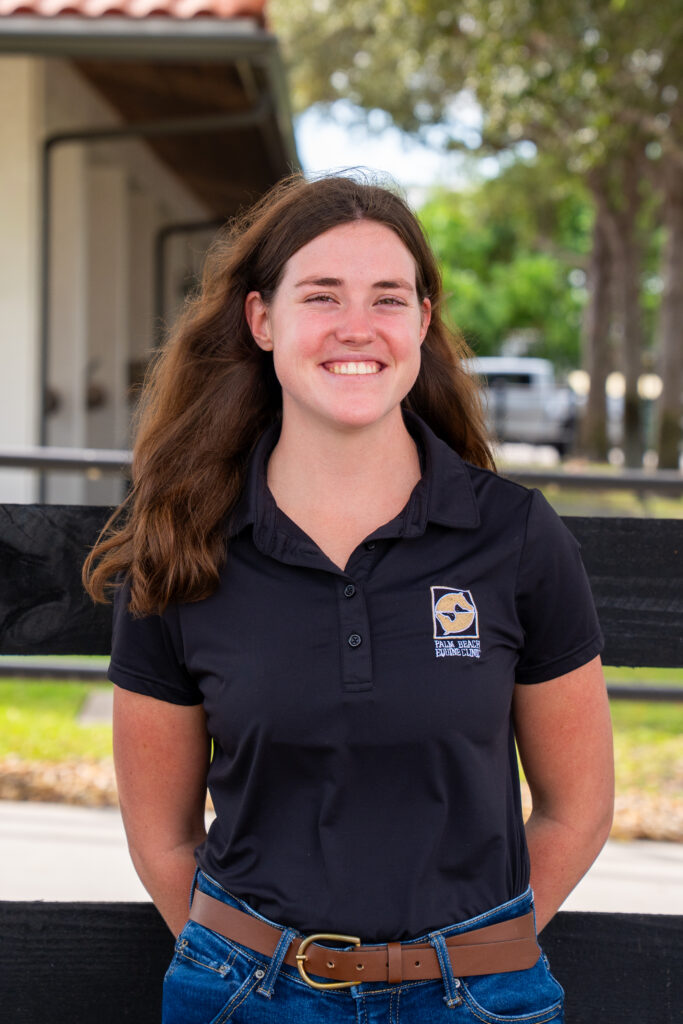
Photo courtesy of NewStyle Digital.
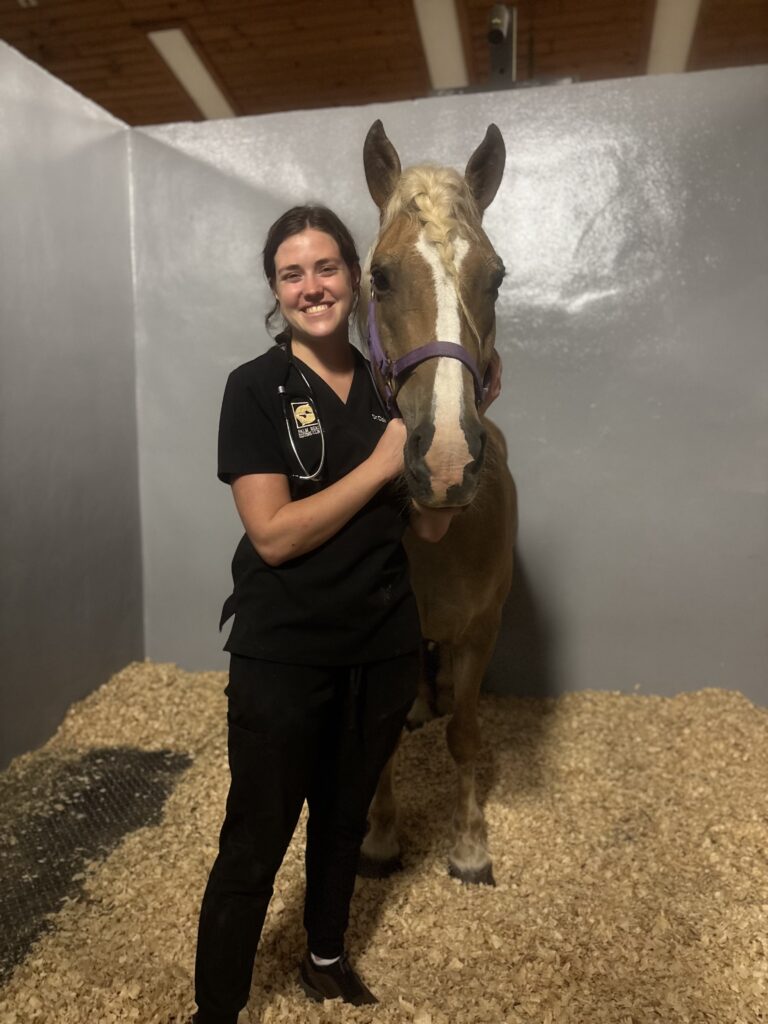
Meet PBEC Veterinary Intern Dr. Claire McDonald
Dr. Claire McDonald grew up in the town of Jefferson City, Missouri. She knew from a young age that she wanted to be a veterinarian. Dr. McDonald completed her undergraduate degree in Biology at William Woods University in Fulton, Missouri where she had excellent mentorship from the university equine veterinarian, sparking her interest in equine practice. Dr. McDonald went on to complete her Doctor of Veterinary Medicine degree at the University of Missouri with Magna Cum Laude honors. Dr. McDonald began her internship at Palm Beach Equine Clinic shortly after graduation. Dr. McDonald loves the variety of caseload here at PBEC and learning about all aspects of equine practice.
Where are you from?
I am from Jefferson City, MO, which is located between St. Louis and Kansas City. You get the best sunsets here, plus all four seasons in their truest form.
Where did you go to school?
I completed my undergraduate degree in biology with a pre-veterinary focus in 2021 at William Woods University in Fulton, MO. The school was unique because it had an equestrian program with western, dressage, hunter/jumper, and saddle seat disciplines. There was no shortage of opportunities to work with and be around a wide range of horses. As part of our pre-vet curriculum, we learned equine anatomy and physiology, as well as the basics of lameness exams, dentistry, and more. It definitely sparked my initial interest in equine veterinary medicine.
From there, I attended the University of Missouri College of Veterinary Medicine, where I was fortunate to have two full years of clinical rotations rather than the standard one year at most schools. This allowed me to rotate through the small animal, farm animal, and equine areas of the hospital and broaden my knowledge.
Have you always known you wanted to be an equine veterinarian? What has your journey been like getting to this point?
From my undergraduate days to my time in veterinary school, I knew equine medicine was something I had to include in my veterinary career. I absolutely love working with these amazing creatures, spending most of the day working outside, and developing lifelong friendships with my clients. Also, there is a severe shortage of equine veterinarians in this country, and I want to help fill that need! As a horse owner, I know how incredibly valuable it is to have access to an equine veterinarian.
What does a typical day as an intern look like?
It depends on the rotation! We all rotate through medicine, surgery, ambulatory, anesthesia, and overnight. My current rotation is medicine, so my typical day starts by getting up a few hours early (sometimes as early as 5 a.m.) and checking on my patient notes from the overnight shift. From there, I go to the clinic between 6 a.m. and 7 a.m. to begin physical examinations and report my findings to the head clinician on the case.
During 8:30 a.m. rounds, we all update each other on our cases and treatment plans for the day. I then perform any necessary treatments throughout the day and update the medical record. At 5 p.m., we all round again to review the day’s activities on our cases, and we round with the overnight intern on what each patient needs overnight.
What’s your favorite part of working at PBEC?
My favorite part of working at PBEC is being able to work alongside so many other veterinarians and specialists. It allows you to get an opinion on any case you have from somebody right down the hall. Although this job can be tough at times, I definitely feel myself growing in my knowledge and confidence every day!
What’s something you hope to learn or accomplish by the end of your internship?
By the end of my internship, I hope to be equipped with the skills and knowledge needed to be a strong general equine practitioner, wherever I end up. I want to be a helpful resource in more rural areas where veterinary care is difficult to find. I also plan to stay in touch with the team at Palm Beach Equine Clinic, and I can reach out anytime I have a question.
What do you find most rewarding about working as an equine vet?
What I find most rewarding is the gratitude from clients when you show up to help their horse. There is also nothing more gratifying than seeing a horse go from being sick and in pain to happily eating and walking out of the hospital healthy. Even though this area of veterinary medicine can be physically demanding and require long hours, it is definitely worth it to me, knowing that I’m making a difference for both the horse and the owner.
What do you do in your free time?
In my free time, I love to explore, whether that involves going to the beach, visiting Disney World or the Keys, or trying out new restaurants with my intern-mates. I also enjoy running and listening to music to clear my mind.
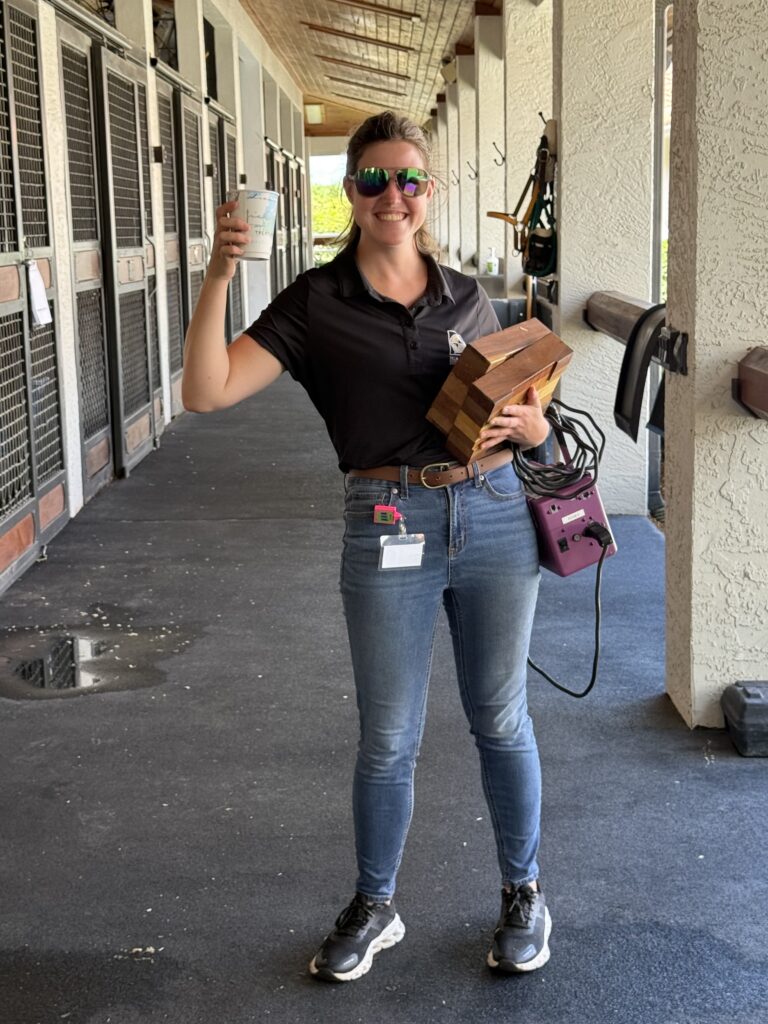
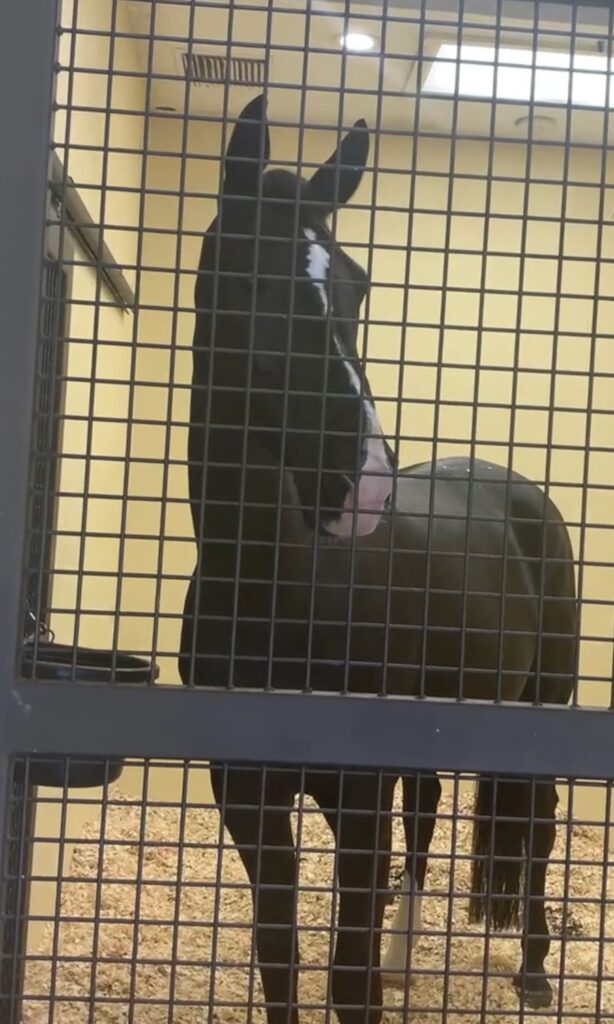
Photo courtesy of Jennifer Chaszar
When 17-year-old Oldenburg gelding Madison Avenue (by Madison x Olympic Ferro), known as “G6” in the barn, developed recurring fevers and concerning bloodwork in September 2025, his owner, Jennifer Chaszar, knew something wasn’t right. His primary veterinarian, Dr. John Lockamy, had been monitoring him closely at home at Lady Jean Ranch in Jupiter, FL, but as his inflammation markers climbed and his fever returned, Dr. Lockamy recommended a deeper look.
“G6 had developed a fever that returned after initial treatment, he had a low white blood cell count, and his serum amyloid A (SAA) level was elevated at 3,000 in his bloodwork,” Chaszar recalled. “Dr. Lockamy referred us to Palm Beach Equine Clinic (PBEC) because we didn’t want to overlook a more serious underlying issue.”
SAA is the major acute phase protein in horses and is produced during the acute phase response, which is a nonspecific systemic reaction to any type of tissue injury. While usually very low or close to zero, that number will rapidly and dramatically increase with a systemic infection.
A Critical Revisit
G6 was initially treated at PBEC in Wellington, FL, in 2023 when he had recurring colic symptoms. What was initially thought to be ulcers was diagnosed through gastroscopy as delayed gastric emptying by Dr. Jordan Lewis. A change in diet, with an emphasis on the portion size at each feeding, helped increase motility in his digestive tract and eliminate symptoms for a time, but those returned two years later.
G6 arrived at PBEC on September 21, 2025, where he was evaluated by internal medicine specialist Dr. Emilee Lacey and intern veterinarian Dr. Rachael Davis. G6 had been experiencing intermittent fevers, lethargy, and colic signs. An abdominal ultrasound soon revealed a left dorsal displacement of his large colon, which thankfully resolved with supportive care.
However, his bloodwork told a more complicated story. With inflammation still present, the PBEC team performed a gastroscopy to visualize the stomach lining. “The gastroscopy showed a few ulcerations of the squamous mucosa of the stomach and a nodular mass in the pyloric region,” said Dr. Davis. “The duodenum (first part of the small intestine) was mottled in appearance. Biopsy samples from both the pyloric mass and the duodenum were collected and submitted for histopathological analysis, which revealed evidence of inflammatory bowel disease.”
Chaszar remembered the relief she felt when the biopsy results returned. “The biopsies came back negative for malignancy,” she reported. “There was no evidence of cancer — just inflammatory changes. That provided tremendous relief and allowed us to focus on healing and recovery.”
G6 remained bright, cooperative, and comfortable during his stay, a testament to the attentive nursing and veterinary care he received.
Healing at Home
Dr. Lacey prescribed a thoughtful treatment plan that included gastroprotectants, dietary changes, and careful monitoring at home.
“Due to his known diagnosis of delayed gastric emptying and the suspicion of inflammatory bowel disease (IBD), we recommended trialing a diet that excluded wheat and his known allergies of corn, oats, rice bran, and carrots,” explained Dr. Lacey. “IBD has been loosely associated with gluten intolerance (wheat) in horses.”
Back home, Chaszar followed PBEC’s instructions closely to help support G6’s recovery. “His diet was modified to include softer, easily digestible forage and smaller, more frequent meals,” she noted. “I monitored his temperature, appetite, and demeanor every day to be sure he was progressing.”
Dr. Lacey and Dr. Davis also stressed the importance of daily exercise to promote normal gastrointestinal motility, hydration, and close communication with the veterinary team. They also wanted to see G6 back in 30 days for an examination.
Photo courtesy of Jennifer Chaszar
A Promising Recheck
Exactly one month later, G6 returned to PBEC for a scheduled recheck gastroscopy. Chaszar described this visit as a hopeful milestone. “His second visit was a one-day appointment designed to see how the pyloric nodule and inflammation had responded to treatment,” she said.
The news could not have been better. Dr. Lacey reported that the previously seen ulceration had completely resolved, and the pyloric nodule had reduced by about 75%, indicating that the treatment plan was working.
With that progress confirmed, G6 discontinued the gastroprotectants and continued with supportive nutrition and management. “It was wonderful to see that improvement,” said Chaszar. “His appetite has returned to normal, and his energy is strong. G6 is back to acting like a four-year-old! When I lead him to the arena, he nickers under his breath and then shows me the Spanish walk and downward dog tricks that he does before we move on to the serious part of work.”
A Testament to Exceptional Care
Chaszar credits PBEC’s team not only for their medical expertise but also for the warmth and professionalism that defined every interaction. “The entire PBEC team, from the front desk to the technicians, nurses, interns, and veterinarians, has been exceptional,” she shared. “They are proactive and collaborative in their approach, and their compassion, communication, and attention to detail are truly remarkable.”
She added that PBEC’s dedication sets the standard for equine veterinary medicine in South Florida. “Seeing G6 healthy, thriving, and back to himself reminds me of the incredible work PBEC does every day. I am especially grateful to Dr. Lacey and Dr. Davis for their thoroughness and dedication throughout his journey.”
Why Owners Trust Palm Beach Equine Clinic
For Chaszar, the most valuable part of the experience was PBEC’s collaborative, transparent approach. “Every veterinarian and staff member took the time to explain each step,” she said. “They even shared images from his scopes so I could fully understand his care. Their organization, genuine care, and follow-up are second to none. I am deeply thankful for their continued support.”
G6 is back to his regular routine, and his recovery journey highlights not only his resilience but also the power of skilled veterinary care and commitment to excellence.
Horse owners seeking a clinic that blends top-tier medicine with genuine empathy will find exactly that at Palm Beach Equine Clinic. G6’s story stands as one more shining example of the exceptional work they do every day. If you need first-class care for your horse or have questions, contact Palm Beach Equine Clinic at 561-793-1599. Visit www.EquineClinic.com for more information.
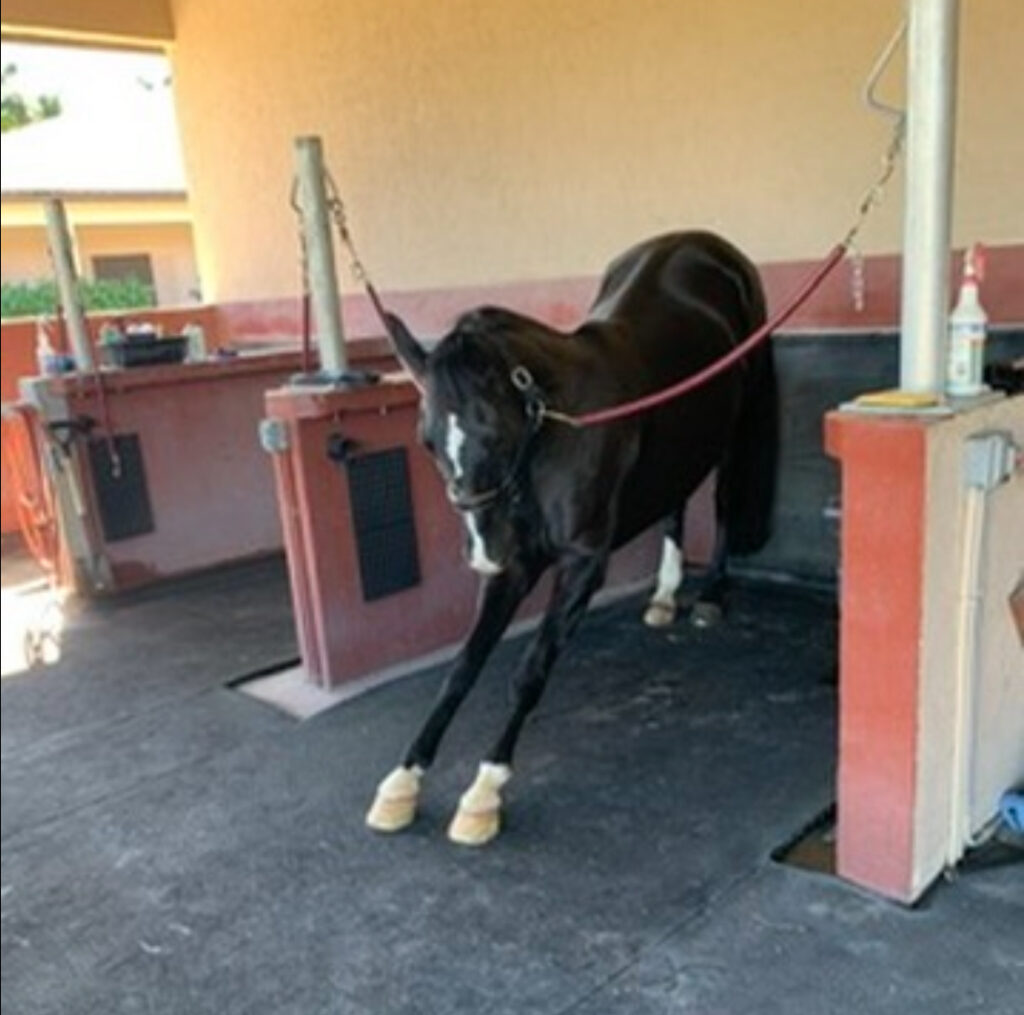
Photo courtesy of Jennifer Chaszar
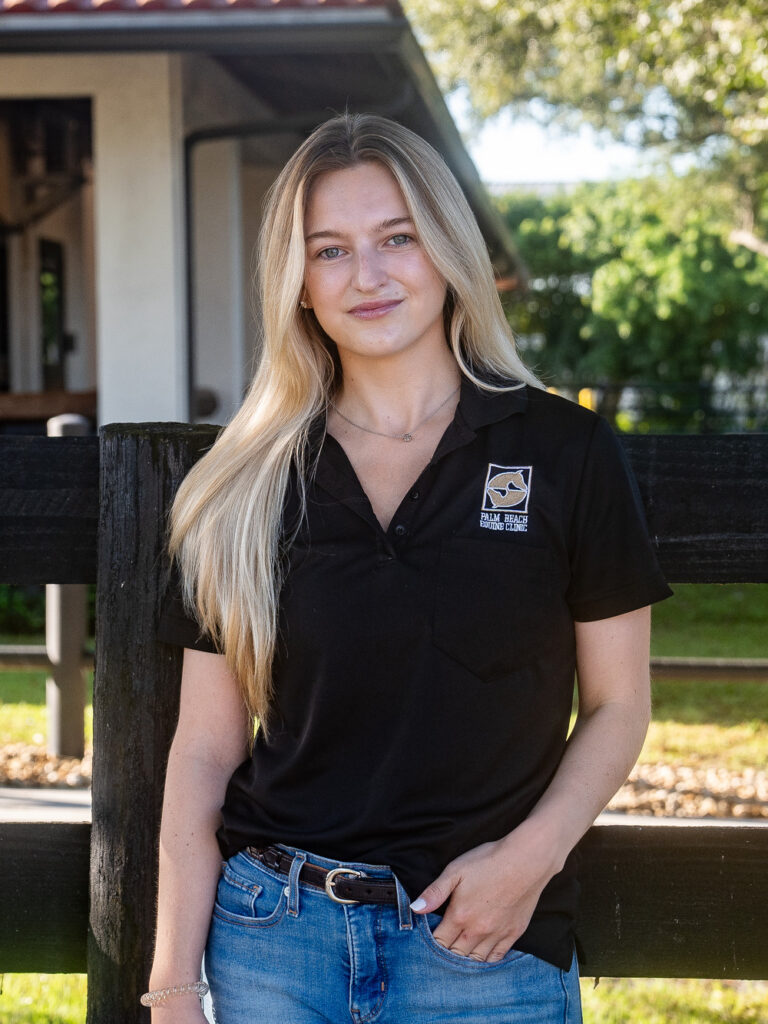
Photo courtesy of NewStyle Digital.
Meet PBEC Veterinary Intern, Dr. Emma Newell, Palm Beach Equine Clinic’s New Internal Medicine Specialist
Dr. Newell earned her veterinary degree from the Royal Veterinary College in 2025 after completing her Animal Science (Pre-Vet) studies at Auburn University, where she graduated Summa Cum Laude in 2021. Growing up in the hunter/jumper community in Connecticut inspired her lifelong passion for equine health and her interest in sports medicine. She is dedicated to advancing her clinical skills and providing high-quality care to equine patients.
Outside of work, Dr. Newell enjoys staying active and returning to Connecticut whenever possible to spend time with her horse.
What has been your journey to becoming an equine veterinarian?
I grew up in the hunter/jumper industry, primarily showing ponies, and that’s where I discovered my passion for sports medicine. I attended an agricultural high school in Connecticut, where I was able to major in equine sciences. That experience drove me to study at Auburn University for my undergrad, majoring in animal science on the pre-veterinary track. I graduated Summa Cum Laude in 2021, and, from there, moved to London for school at the Royal Veterinary College. Being from Connecticut, and then moving down to Alabama, I got to see the differences in the horse industry throughout the country, and I wanted to take it to an international level.
What was it like adjusting to life in the United Kingdom, and what differences did you notice in veterinary medicine there versus the United States?
I had experienced London in earlier stages of my life, so the transition wasn’t hard for me. I loved the lifestyle and living over there. The horse care and equestrian community in the U.K. are both so strong that attending that school was a great decision for me.
I think some of our methods of treating sport horses are very different, like how we view the use of antimicrobials and medications. Having that perspective when treating sport horses here in the U.S. is important because it provides insight into the veterinary care they received overseas before being imported.
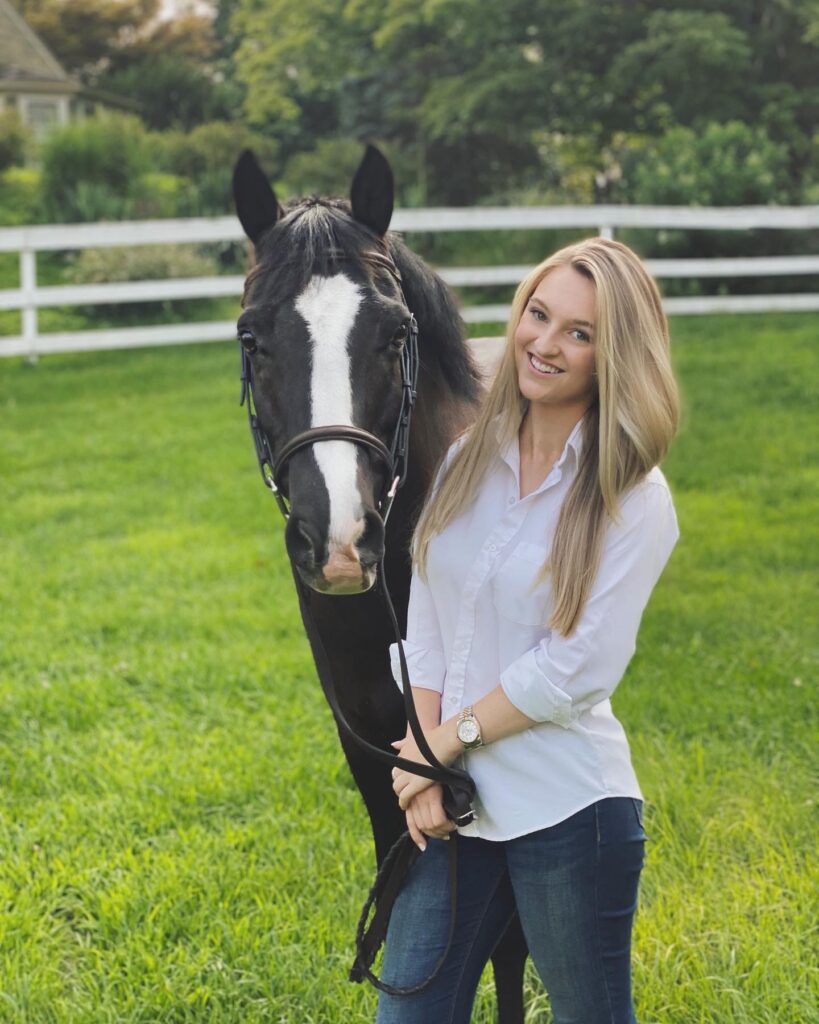
Photo courtesy of Emma Newell.
What interests you most about sports medicine?
I love performing lameness exams, and I love providing care to equine athletes. When I was showing, I was very driven, so bringing that mindset to veterinary medicine and seeing patients able to perform at the top level really motivates me.
What was the process for applying to become a PBEC intern?
The process includes completing an externship at PBEC, submitting your paperwork — which consists of your CV and letters of reference — and then participating in the interview phase.
What responsibilities does an intern have at PBEC?
As an intern, you do two-week rotations throughout the hospital. Rotations include anesthesia, surgery, ambulatory, and overnights, giving you experience working in all different environments, from surgical cases to in-depth internal medicine cases. During the anesthesia rotation, you are solely in charge of providing anesthesia to patients, whether that’s standing or general anesthesia for surgical patients – that’s quite interesting. For the surgery rotation, you are responsible for patient care in the hospital prior to and post-op, and you get subbed to scrub into surgeries. Ambulatory is my favorite rotation, and you’re on the road with vets who primarily provide ambulatory care, which is a great experience.
What’s it been like working with the team and the other interns at PBEC?
The team at Palm Beach Equine Clinic was something I was really excited about coming into this internship. We have a great, well-rounded group of veterinarians with diverse experiences and passions, which allows us to learn different things from each person. It’s the same with our intern team; we’re all well-rounded and have different strengths, and I think that that really pushes me as an individual to grow.
What advice would you give to students interested in equine veterinary medicine?
Take every chance to get hands-on experience. Put yourself out there and look for opportunities to learn under different equine veterinarians. Everyone has different life experiences and points of view, which is essential to making you into a well-rounded vet. As we all know, the horse world is quite small, so building connections throughout the community is definitely something that will help you.
By Lindsay Berreth / Jump Media
If you have a performance mare that you wish to breed without interrupting her career, embryo transfer is a viable option. Palm Beach Equine Clinic (PBEC) in Wellington, FL, offers an extensive range of assisted and advanced reproductive procedures, including embryo transfer. With spring fast approaching, now is the time to plan.

PBEC President Dr. Scott Swerdlin highlights the advantages of the embryo transfer process, which has been utilized since the 1970s. This method is especially beneficial for sport horse mares that cannot afford to take time off for pregnancy. By using embryo transfer, you can continue riding your best mare while simultaneously breeding for your future champions. Additionally, embryo transfer is a viable option for mares with high genetic merit who cannot carry a foal. Some mares may have orthopedic issues that would be exacerbated by the extra weight of pregnancy, while others may have significant reproductive challenges, such as chronic uterine infections or a fibrotic uterus, which hinder their ability to conceive or support a developing pregnancy.
The first step in the embryo transfer process is embryo production. For this article, we are focusing on traditional in vivo embryo production vs in vitro embryo production. In vivo embryo production requires the donor mare to be bred, conceive, and produce an embryo that can then be transferred to a recipient mare. This necessitates the mare being off any hormones like Regumate® (altrenogest) or long-acting progesterone as they suppress the mare’s estrus cycle.

Strategic breeding management is essential to minimize disruptions to a mare’s training and competition schedule. This may include hormonal manipulation of the mare’s reproductive cycle, a series of reproductive examinations performed using transrectal palpation and ultrasound, a uterine culture and cytology, and breeding the mare by artificial insemination or via natural cover. It is also crucial to document the day and time of ovulation. Whether using fresh, cool-shipped, or frozen-thawed semen, the day and time of ovulation need to be documented to plan for the second and third steps of the process: embryo flush and transfer.
“Knowing the day of ovulation is important,” explained Dr. Swerdlin. “In the mare, fertilization and conception occur in the oviduct, where an embryo will remain for approximately 6 to 6.5 days before migrating to the uterus. Not knowing the day of ovulation might mean that the embryo is still in the oviduct at the time of the uterine flush. Conversely, if the embryo is further along in development, it becomes larger and more fragile, which decreases the chances of a successful outcome.”

To minimize disruptions to the mare’s schedule, most of the process can be performed on-farm, or owners can elect to come to PBEC on an outpatient basis. Veterinarians will closely monitor the mare’s estrus cycle to determine the optimum time for breeding, maximizing the chance of achieving a pregnancy.
“To improve our chance for success, once we determine that the mare is ready, the dominant pre-ovulatory follicle is stimulated to release the oocyte (egg) by administering an ovulatory agent,” stated Dr. Swerdlin. “This ovulatory agent mimics the mare’s naturally occurring hormonal process, and when used appropriately, the majority of mares will ovulate within 24 to 48 hours post-administration.
“Timing the insemination in relation to ovulation is key to success,” he continued. “This is especially true when using frozen semen. For mares that will be inseminated with frozen-thawed semen, we suggest that they arrive at the clinic the same day that the ovulatory agent is administered. This ensures that we can inseminate the mare as close to the point of ovulation as possible.”


The next step is embryo recovery, which is performed 6.5 to 8 days post-ovulation. “The mare will come to the clinic, and the process takes about an hour,” said Dr. Swerdlin. “During this procedure, the donor mare’s uterus is flushed with several liters of embryo flush media. This fluid is recovered and filtered through a special embryo filter to capture the embryo.”
After the embryo is retrieved, it is washed and graded to determine embryo quality. Embryos are graded on a 4-point scale, which 1 indicating excellent quality and 4 indicating a degenerate or dead embryo. Finally, the embryo is prepared for either direct transfer into a recipient mare, shipment to a recipient herd, or frozen for future use.
The final step in the process is the embryo transfer, which requires careful coordination. The success of this procedure is heavily dependent on selecting a suitable recipient mare, taking into account factors such as the mare’s age, size, maternal behavior, synchronization, and overall reproductive health.

“Owners can provide their own recipient mare, but we often recommend that mare owners utilize a leased recipient mare,” noted Dr. Swerdlin. “Numerous recipient herds are located throughout the country, with the closest ones being in the Ocala area. Currently, recipient mares are in very high demand, and each herd has a limited number of contracts available per year. One key advantage of using a recipient herd is that it allows multiple mares to be synchronized to match your individual mare’s ovulation date rather than relying on a single client-owned recipient. For those who prefer to use their own mare, our reproductive specialists at PBEC can manage the synchronization of the recipient mare and perform the embryo transfer.”
The embryo transfer procedure takes place at the clinic. The recipient mare is gently restrained in stocks with the aid of mild sedation. The embryo is carefully loaded into a transfer gun, which is guided trans-cervically into the mare’s uterus. Once the position has been confirmed, the embryo is deposited into the base of the uterine horn. A reproductive ultrasound is performed between three to seven days afterward to assess the uterine environment and confirm that the embryo is developing properly. Recipient herds will often report pregnancies between day seven to nine after transfer.

Dr. Swerdlin noted that the success rate for embryo recovery varies based on the type of semen used and the donor mare. “When using fresh and cool-shipped semen, embryo production rates can reach between 70% and 90%,” he said. “With frozen-thawed semen, the rates are lower, ranging from 50% to 60%. Overall, the success rate of the embryo transfer ranges from 70% to 90%, depending on the quality of both the recipient mare and the embryo.”
Embryo transfer provides an effective and practical solution for sport horse owners and breeders. As the demand for top sport horses increases, it continues to be a valuable tool for those looking to breed that special mare.
For more information on embryo transfer and other reproductive services offered at PBEC, visit www.equineclinic.com or call 561-793-1599.