
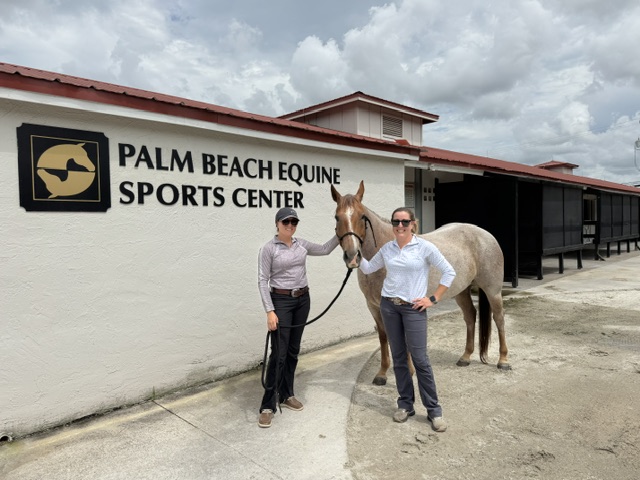
Dr. Sidney Chanutin and Dr. Sierra Chanutin
Photo courtesy of Palm Beach Equine Clinic
Local Florida natives Dr. Sidney Chanutin and Dr. Sierra Chanutin have always aspired to become veterinarians. The twin sisters have been immersed in the equine industry their whole lives. Throughout middle school, high school, and undergraduate studies, the sisters dedicated their free time to shadowing and working at Palm Beach Equine Clinic in Wellington, FL. Sidney and Sierra earned their Doctor of Veterinary Medicine degrees at the University of Florida.
Afterward, Sidney returned to her hometown to complete a yearlong rotating equine internship at PBEC. She then remained at PBEC as an associate veterinarian and completed her residency in equine sports medicine and rehabilitation under the mentorship of Dr. Chris Elliott. She is a diplomate of the American College of Veterinary Sports Medicine and Rehabilitation (ACVSMR).
Outside the hospital, Sidney enjoys time in the saddle, riding her personal horses, or out on the ocean with her husband, George.
After graduation, Sierra pursued advanced clinical training, completing an internship at Texas Equine Hospital and a surgical fellowship at Equine Sports Medicine and Surgery in Weatherford, TX. She later returned to Florida to continue her specialized training, earning a Master of Science in Veterinary Medicine while completing a large animal surgery residency at the University of Florida.
In March 2026, Sierra rejoined PBEC as an American College of Veterinary Surgeons board-certified large animal veterinary surgeon after completing her Phase II board examination.
Outside her clinical work, Sierra enjoys spending time with her beagle, Cassie, and riding her Quarter Horse, Ruby.
Can you detail your history at PBEC? When did you start working there?
Sidney: Growing up in South Florida with our own horses, Sierra and I trusted PBEC to care for them. We also spent countless hours shadowing many of the doctors throughout high school and undergrad, and we returned for externships during veterinary school. After graduating from veterinary school, I completed a yearlong internship and then stayed on as an associate with surgeon Dr. Weston Davis. When sports medicine specialist Dr. Chris Elliott joined PBEC, he approached Dr. Davis and me about starting a sports medicine and rehabilitation residency, and the pieces fell into place.
Sierra: Sidney and I spent many years shadowing veterinarians at PBEC throughout middle school, high school, and our undergraduate studies. My path back to PBEC after veterinary school was longer, including an internship and a surgical fellowship in Texas, followed by a surgical residency at the University of Florida. Afterward, I returned to the clinic, joining Sidney and bringing my additional training and experience.
What made you choose to become a veterinarian?
Sidney: Caring for animals has been my passion since before I can even remember. Becoming a veterinarian has always been my goal; I guess since the womb.
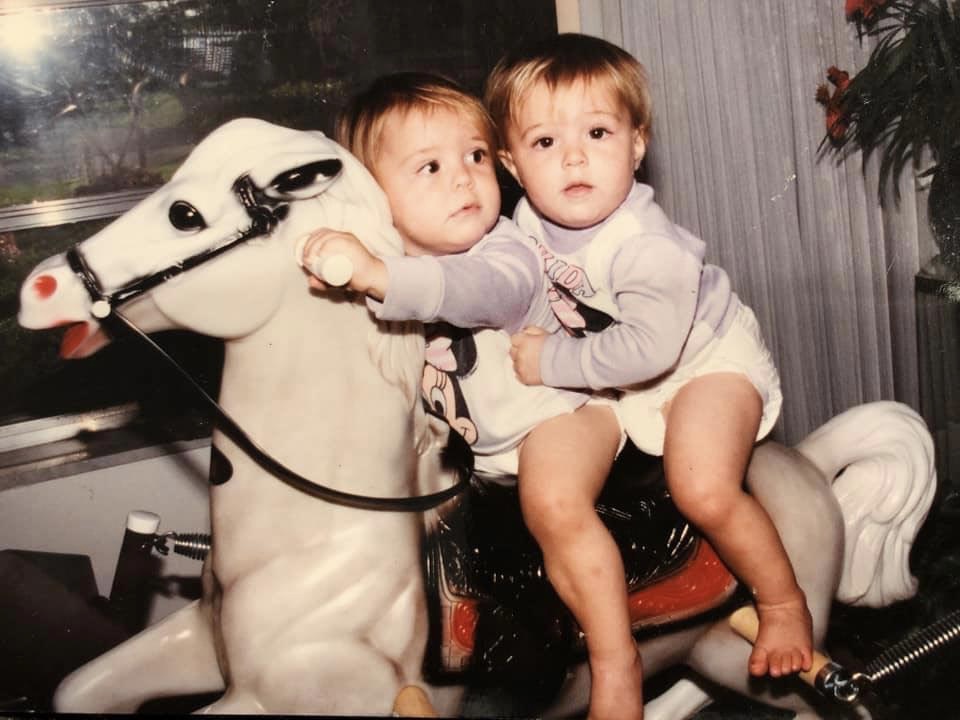
Sierra: Sidney and I have aspired to become equine veterinarians for as long as we can remember. There was no single defining moment that led us to this path; rather, it felt like a natural calling, one we recognized early on as the career we were meant to pursue.
What made you choose PBEC for internship/residency?
Sidney: The long-standing relationship I had with PBEC’s veterinarians and the fact that South Florida is home to me were major draws. I also chose PBEC for an internship because it is one of the most prestigious equine hospitals in North America. The high caseload and the multitude of exceptional veterinarians (including boarded specialists) with diverse backgrounds make it an ideal internship opportunity.
What piece of advice from another vet has stuck with you?
Sidney: Knowledge is power, and you never stop learning in this job.

Dr. Sidney Chanutin
Photo courtesy of NewStyle Digital
What was the process like for passing your boards? Can you tell me what you are board-certified in?
Sidney: The residency was a three-year program that included seeing many sports medicine cases, accumulating hundreds of continuing education hours, publishing a paper in the Journal of the American Veterinary Medical Association, and passing the rigorous board examination this past February to become certified in Veterinary Sports Medicine and Rehabilitation.
Sierra: To achieve ACVS board certification, I completed a rigorous four-year residency program, published original research in a peer-reviewed medical journal, and passed comprehensive board examinations. I completed my surgical residency at the University of Florida, where I had the privilege of learning from internationally recognized surgeons. As part of my training, I spent a year researching blind-end closure techniques for jejunocecostomy, a complex intestinal anastomosis used in colic surgery when ileal resection is necessary.
How does being board-certified affect your work?
Sidney: Board certification in sports medicine and rehabilitation has given me advanced knowledge to diagnose, treat, and manage lameness and poor performance in all types of sport horses.
Sierra: Earning board certification through ACVS has equipped me with the advanced knowledge and technical expertise necessary to practice at the highest standard as a veterinarian and surgeon.
Do you have any further educational goals?
Sidney: For now, I’m just enjoying using my knowledge to help horses and clients achieve their competition goals. Eventually, I would like to have my own resident to continue sharing knowledge.
Sierra: As a valued mentor once said, “The journey does not end with board certification. It has only just begun.” In that spirit, I remain committed to providing the highest standard of care to my patients by continually advancing my knowledge and skills as a veterinarian and surgeon. While I do not plan to pursue additional certifications, I am dedicated to ongoing professional growth through collaboration with colleagues and continuing education to ensure I deliver excellent, effective care.
Why did you choose your specialty?
Sidney: Performance and lameness issues in the sport horse have always been a large part of my day-to-day work. My goal is to help my patients as much as possible, so completing a residency in sports medicine and rehabilitation was the natural choice.
Sierra: Surgery is an exceptionally demanding specialty to pursue; however, it offers a level of professional fulfillment that is truly unparalleled. Whether responding to critical emergencies or helping patients reach peak performance, I take great pride in contributing to their well-being and providing meaningful support to their owners.
What do you enjoy most about working at PBEC?
Sidney: PBEC has given me so many exceptional mentors who have provided me with the knowledge to become the veterinarian I am today. I can’t express enough how grateful I am to each of my mentors and colleagues.
Sierra: What I value most about PBEC is the opportunity to work alongside highly skilled veterinarians across multiple specialties. This collaborative environment enables us to share expertise and consistently deliver the highest standard of care to our patients.
Dr. Sierra Chanutin
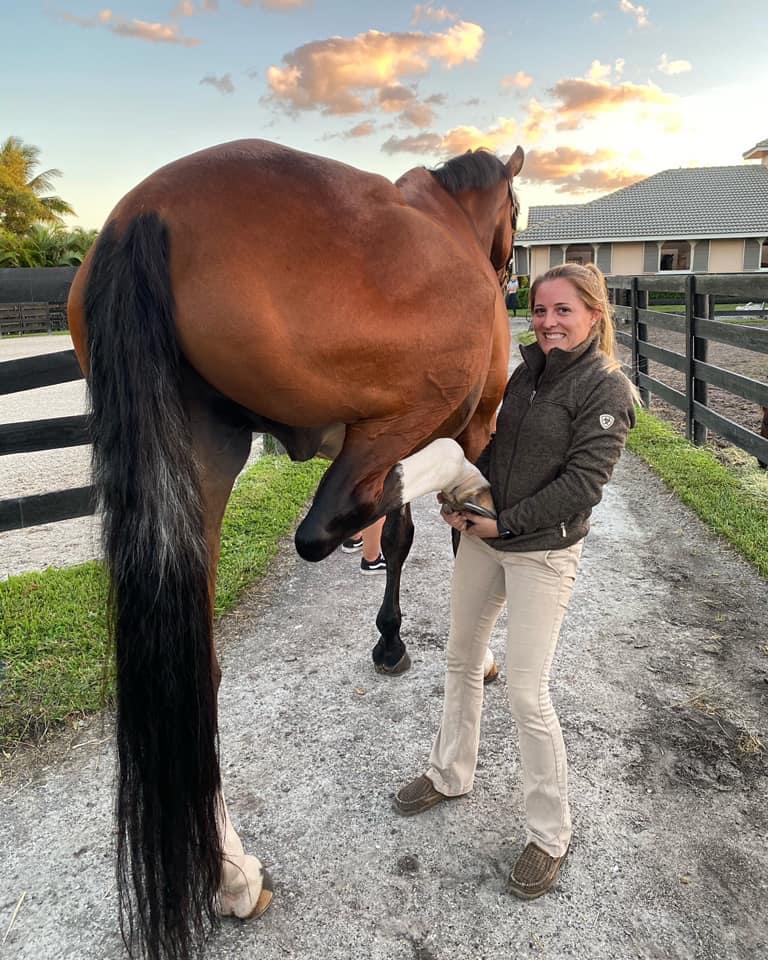
Dr. Sidney Chanutin