
As the summer heat rapidly approaches, the veterinarians of Palm Beach Equine Clinic remind all equine owners to keep their horses well hydrated.
Fresh, Clean Water
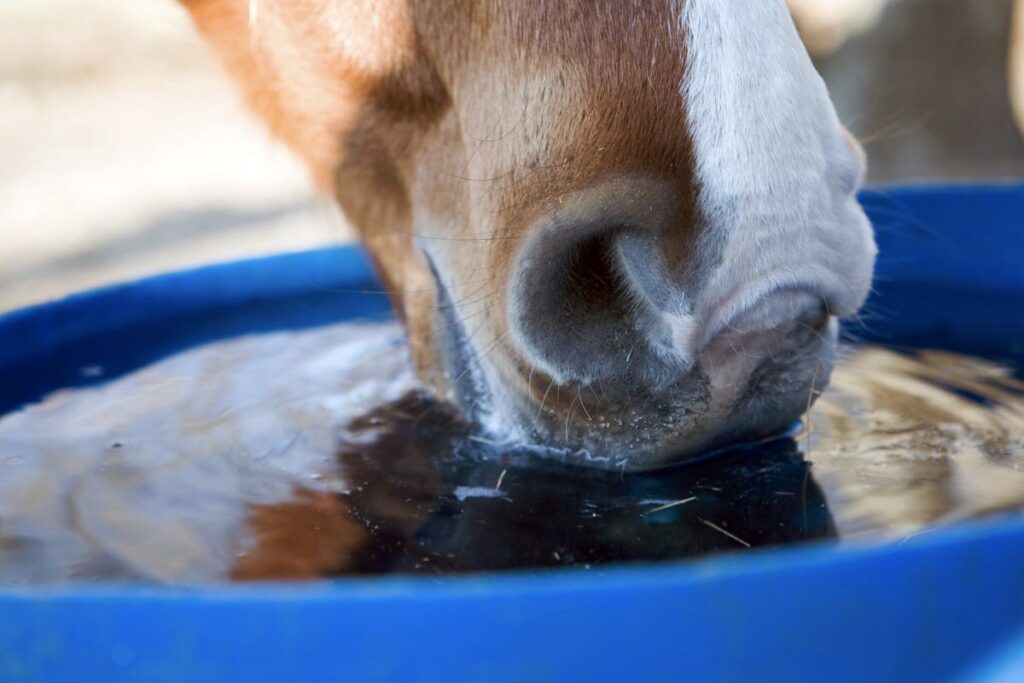
The average horse drinks between five and 10 gallons of water per day. It is important to provide clean, fresh water at all times and be aware of possible increased water consumption during extremely hot days.
Salt
Sodium in a horse’s diet is also very important to maintain proper hydration. Providing a salt block or supplementing with electrolytes can help ensure that a horse is meeting their sodium requirements.
Sweat It Out
Especially in the extreme summer heat, horse owners should pay attention to the amount of sweat their horse is producing. Anhidrosis, or the inability to sweat normally, can be a common challenge during the summer months, particularly in hot, humid climates. A horse with Anhidrosis is often called a “non-sweater.” In addition to lack of sweat, signs of Anhidrosis can include increased respiratory rate, elevated temperature, areas of hair loss, and dry, flaky skin. Presentation of these signs indicates that the horse should be seen by a veterinarian immediately.
Additional Tips
Make sure your horse has…
- Access to shade throughout the day.
- Exercise that is scheduled when the temperatures are lower, usually earlier or later in the day.
- Turnout that is limited to the night or cooler portions of the day.
- Fans indoors during extreme heat.
- Electrolyte supplementation as needed per veterinarian’s recommendation.
Part 1
Advances in equine medicine are enabling horses to perform longer in their athletic careers than ever before. Together with veterinary care from Palm Beach Equine Clinic, educated owners can offer senior horses a happy and pain-free life as they age into their senior years.
Horses from the ages of 12 and older are considered “seniors,” but they often compete successfully into their teenage years. Many horses that are in the prime of their careers may require extra maintenance in order to continue performing at their best, and advances in veterinary care have helped extend careers. An 18-year-old equine athlete would have been rare 10 years ago, but today, there are horses performing at a high level well into their senior years. To maintain these athletes requires more work on the owner’s part, as well as the veterinarian’s part, however, preemptive attention to an aging equine’s needs may help keep your partner performing longer.
Maintain Top Health Over the Years
There are several areas of care that owners should consider in order to maintain their horse’s top health and ensure continued success. It is important to remember that just as the human body changes with age, the horse’s body does the same.
- Owners should contact their veterinarians on a routine basis to have their horse’s overall health and fitness evaluated, no matter what the horse’s job is. All regularly performing senior horses should be evaluated a minimum of twice a year. If it is a pleasure horse, it should be evaluated at least once a year.
- An appropriate fitness program is imperative to the senior horse’s performance. As horses age, it can become increasingly difficult to maintain their fitness. Any exercise that builds your horse’s stamina and muscle mass is essential, and the more your horse gets out of its stall and moves around the better. Anything from riding lessons to trail riding, or even hand walking, can be beneficial. There are new exercise aids available, such as treadmills, which are great for keeping the senior horse in top shape. Owners should talk to their veterinarian to help create a great fitness program that works for both them and their horse.
- Like any athlete, horses can experience physical setbacks, so it is important for owners to have their horse’s gaits evaluated routinely. Veterinarians can suggest appropriate treatments to avoid creating larger issues, whether the horse needs a little assistance with the flexion in their necks or joint injections to ease any discomfort.
- It is important to make sure that the senior horse’s stall is maintained for sanitation purposes and with a nice, deep bed to lay down in. The stall should be out of the direct sunlight and have fans for effective air movement and plenty of freshwater to prevent overheating.
Dr. Selina Passante-Watt traded in the cold winters of Canada for the sunny shores of South Florida and joined the practice at Palm Beach Equine Clinic in the fall of 2013. A veterinarian at just 32 years of age, Dr. Passante-Watt enjoys the team-oriented aspect and vast resources that working at Palm Beach Equine Clinic offers. She now splits her time between winters working at Palm Beach Equine Clinic and running a mobile practice with her husband in Western Canada during the summers.
“There are a lot of specialists and very intelligent people at that practice, so the continual learning is incredibly valuable, especially as a young vet,” she acknowledged. “I learn every day. It is an amazing experience to be able to walk down the hall and knock on the door of one of the best board-certified surgeons or other specialist and say, ‘Hey, can you help me with this?’ You do not realize how beneficial that is until you leave, and you are in the middle of Western Canada and you wish that you had that.”
Originally from Winnipeg, Manitoba, Canada, Dr. Passante-Watt graduated from the Western College of Veterinary Medicine in Saskatoon, SK, in June 2012. After graduation, she moved west to Calgary, Alberta, and completed an internship in equine medicine and surgery at Moore Equine Veterinary Centre. She and her husband, who is also an equine veterinarian, relocated to South Florida in July of 2013 in order to pursue their equine veterinary careers.
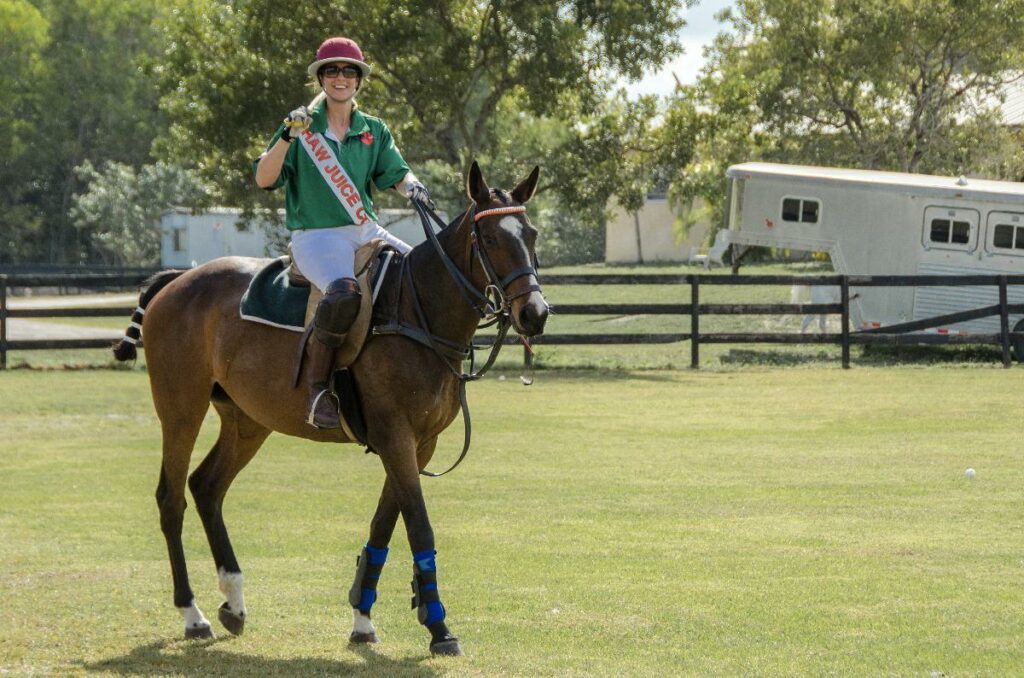
Dr. Passante-Watt started riding when she was 10 years old and was a typical horse-crazy child. She took western riding lessons for a few years before falling in love with polo. When she was in high school, she got a job grooming and exercising polo horses in Winnipeg, which continued for six summers.
After high school, Dr. Passante-Watt was unsure what career path she wanted to take, so she embarked on a backpacking trip in Australia. She picked up small jobs while traveling, one being picking mangos. While on that mango farm, she found a small dog that was wounded from a fight with another dog. Dr. Passante-Watt took the dog, fixed his wounds, and nursed him back to health. It was that experience that inspired her to apply to veterinary school.
While attending vet school in Saskatoon, Dr. Passante-Watt met her husband, Dr. Walker Watt, and the pair got married in October of 2013. During his fourth year of vet school, Dr. Watt attended a conference and met some veterinarians from Teigland, Franklin, and Brokken, a racetrack practice at Gulfstream Park in Florida. He went to visit and did an externship there, later receiving a job offer. Dr. Watt and Dr. Passante-Watt then made the decision to move to Florida, where Dr. Watt took the racetrack job, and Dr. Passante-Watt found a position at Palm Beach Equine Clinic.
“Palm Beach Equine Clinic is a great practice,” Dr. Passante-Watt stated. “I have been working with Dr. Jorge Gomez, who works mainly on sport horses and more specifically on show jumpers, so it has been great getting involved in that world and receiving mentorship from Dr. Gomez. There is a lot of sport horse medicine that we do not see back home in Canada. It is a different world in Wellington; everything is a step ahead.”
The first year Dr. Passante-Watt and her husband moved to Florida, they stayed and worked for the full year. They then decided to split their time between the U.S. and Canada, just traveling to Florida for the winter season. They opened their own mobile practice in Western Canada, which Dr. Watt now runs year-round while his wife soaks up everything she can learn in Wellington throughout the winter.
“There is a lack of equine veterinarians in Southern Alberta where we live,” Dr. Passante-Watt explained. “There are a lot of mixed animal practitioners, but not a lot of specific equine practitioners, let alone in performance horses. That is why we decided to open a practice and just work on horses, and it has been going really well so far.”
Dr. Passante-Watt enjoys being able to draw on the resources of Palm Beach Equine Clinic even when she’s in Canada for the summer. “You can easily email people, send images, and pick up the phone and call someone with questions,” Dr. Passante-Watt stated. “I find everyone at Palm Beach Equine Clinic to be very helpful. As a vet early in my career, I think it is a great thing to work in a practice like that because it definitely pushes you to learn and be your best because you are working with the best.”
Having a state-of-the-art facility and equipment at Palm Beach Equine Clinic at her disposal throughout the winter is also a huge advantage.
“It is an amazing difference,” Dr. Passante-Watt noted. “I see both sides of it, because I am in Canada in the summer in my own small mobile practice with no bells and whistles, and then I come down to Palm Beach Equine Clinic and you have everything you could want at your fingertips. Every sort of pharmaceutical need, every tool, every cutting-edge technology, they just have it all right here. For the hospital, there are technicians and interns to monitor your cases overnight, and the 24-hour Intensive Care Unit is state-of-the-art. It is definitely set up to be successful, and with so many veterinarians, everyone is great about helping one another.”
Dr. Passante-Watt has many different veterinary interests, including diagnostic imaging, ophthalmology, lameness, dentistry and internal medicine. She really enjoys general practice, specializing in a little bit of everything. She is also certified in acupuncture and equine chiropractic from Options for Animals Chiropractic School.
As far as future goals, Dr. Passante-Watt plans to take it year by year, continuing to come to Palm Beach Equine Clinic in the winters, continuing to learn, and being the best veterinarian that she can be.
For Veterinary Technician Brianna Ploskunak, 22, of Royal Palm Beach, FL, horses are a passion. But not in the way you may think. Raised by a mother who rode and competed, Ploskunak found an early infatuation with all things equine that eventually drew her to veterinary medicine. At Palm Beach Equine Clinic, where she has been a part of the team since 2016, Ploskunak is one of 30 veterinary technicians who manage the hands-on care of equine patients and support the veterinarians in all aspects of the day-to-day operations. She works directly under Dr. Bryan Dubynsky, who specializes in sport horse medicine within the bustling competition atmosphere of Wellington, FL.
We caught up with Veterinary Technician Brianna Ploskunak to find out more:
What was your first introduction to horses?
My mom used to be a rider herself, so I grew up constantly surrounded by horses. She [rode] dressage for many years. I quickly followed in my mother’s footsteps and fell in love with the animal and the sport, although I never competed myself. Being around horses my entire life, I felt the need to do whatever I could to advance the health of each and every horse that I see. It means a lot to me to be able to contribute to their fast and healthy recovery.
What do you enjoy most about being a veterinary technician?
The number one thing I enjoy about treating horses is being a part of their journey from start to finish. Nothing brings me more joy than to see a horse that I have been working with through their recovery return to the show ring happy and healthier than ever before. These animals never cease to amaze me with their way of getting back onto their feet after an injury.
What is your average day like at Palm Beach Equine Clinic?
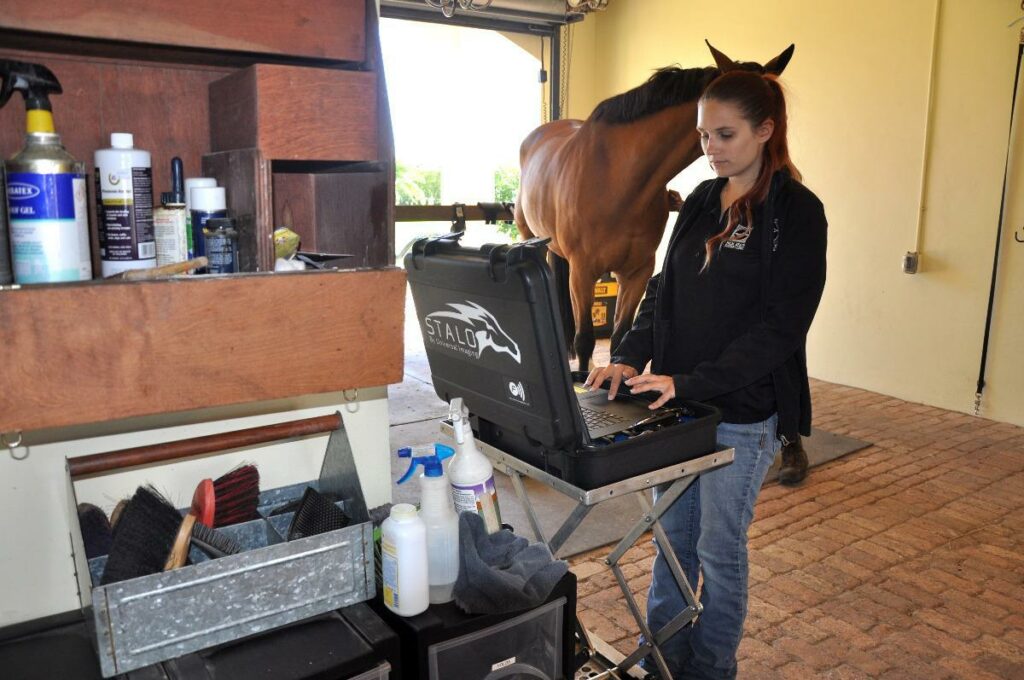
On an average day at Palm Beach Equine Clinic, I first meet Dr. Dubynsky to go over the morning appointments and gather all of the equipment and resources we need for the upcoming day. As we finalize our schedule, I work on completing all open items such as billing and inventory. We then prepare the truck to leave for the day and travel to a variety of different appointments throughout the Palm Beach County territory. Appointments vary depending upon the condition of the patient but often include radiographs and ultrasounds to injections and vaccinations. After we have seen all patients for that day, we return to the clinic and re-stock the inventory we have used that day. Lastly, we prepare for the following day by composing a new schedule of appointments and/or on-call horse show responsibilities.
What is your favorite part about being a member of the Palm Beach Equine Clinic team?
My future goal is to continue to learn from the many experienced veterinarians I work alongside every day and build my experience and knowledge in the industry. That’s probably my favorite part as well; working alongside such talented and genuine people willing to give me multiple opportunities to learn and grow as a professional. It’s very hard to find a group of superiors willing to go the extra mile to teach young employees.
I have been able to experience some amazing things at Palm Beach Equine Clinic, including the intricacy of equine surgery and how the work of equine surgeons can bring a struggling horse back to top health. I really enjoy sports medicine because it’s not always sick horses – there is always something you can do to help the horse get back to peak performance. Whether it be radiographs, ultrasounds, injections etc., there is always something that can be done for the benefit and of the health of the horse.
What can we find you doing when you are not at Palm Beach Equine Clinic?
When I’m not working, you can catch me racing go-karts and spending quality time with my family, especially my one-year-old nephew, Elijah!
The world-renowned Palm Beach Equine Clinic, Official Veterinarian of the Winter Equestrian Festival (WEF) and Adequan® Global Dressage Festival (AGDF) in Wellington, FL, is the proud sponsor of the $391,000 CSI5* Grand Prix during “Saturday Night Lights” at WEF Week 7.
Who: Some of the world’s most accomplished show jumping athletes. Once finalized, the order-of-go will be posted HERE.
What: The $391,000 Palm Beach Equine Clinic CSI5* Grand Prix
When: Saturday, February 23, during “Saturday Night Lights” at 7 pm ET. Gates open at 6 pm. Free admission and $20/car parking.
Where: Palm Beach International Equestrian Center in Wellington, FL. Directions can be found HERE.
In addition to their sponsorship of this week’s CSI5* Grand Prix and of the 3’3″ Amateur-Owner Hunter 36 and Over division throughout WEF, Palm Beach Equine Clinic also provides state-of-the-art veterinary care to the horses of both the year-round residents and visitors of South Florida. Palm Beach Equine Clinic’s technologically advanced clinic is conveniently located at the intersection of Southfields Road and Pierson Road in the heart of Wellington, just minutes from PBIEC, the Equestrian Village, and the International Polo Club Palm Beach.
The expertise and dedication of Palm Beach Equine Clinic veterinarians is also available to all competing horses at WEF and AGDF thanks to an annex office located adjacent to the WEF stabling office on the PBIEC showgrounds as well as at the main Palm Beach Equine Clinic location. Palm Beach Equine Clinic veterinarians are on-call daily at the annex office to assist competitors throughout the shows with diagnostic evaluations and treatments, as well as emergency and standard horse care needs.
The process of breeding sport horses is ever-changing. Whether in an effort to produce the healthiest, most talented foals, to prolong the competition career of a mare, or make the most of a stallion’s longevity, reproductive science in horses has come a long way from the days of the traditional breeding shed.
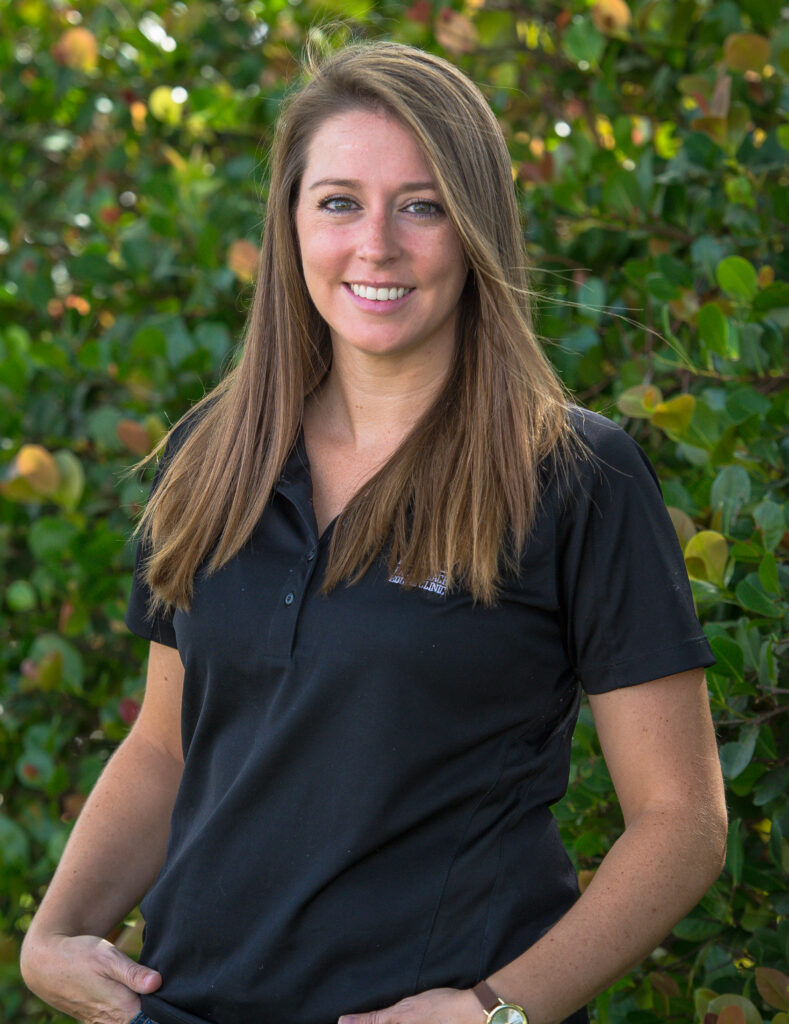
Dr. Katie Atwood is a member of the Palm Beach Equine Clinic team, based in Wellington, FL, with a passion for reproductive work. She has used that passion to help Palm Beach Equine Clinic offer cutting edge breeding options all in the heart of the winter equestrian capital of the world.
“I like the creating of life,” said Dr. Atwood, who is a Florida native and University of Florida graduate and currently pursuing steps to become a board-certified reproductive specialist. “Equine medicine is intriguing, but you’re dealing with sick, unhealthy animals. With reproduction, I am working with healthy animals and making their babies, which I love!”
The Future of Breeding at Palm Beach Equine Clinic
PBEC is a one-stop shop for anyone’s breeding needs, whether it’s a champion polo pony, competing mare, or full-time breeding stallion. Atwood and the team at Palm Beach Equine Clinic work tirelessly to improve their offerings, which currently include a breeding shed covered from the heat and inclement weather just like an indoor arena. Inside the breeding shed, Palm Beach Equine Clinic houses a hydraulic phantom mare.
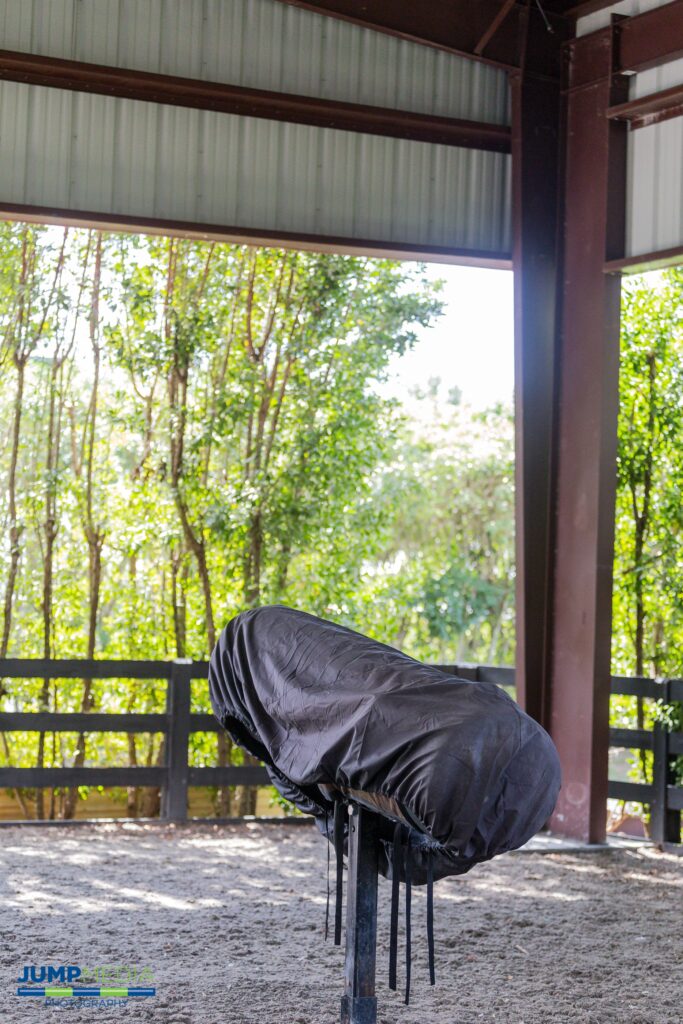
“We can raise or lower our phantom with the push of a button so it can be the appropriate height for the stallion,” said Dr. Atwood. “Previously, we had to bring a tractor in to raise and lower the phantom. We also do not have to take weather into consideration anymore now that the breeding shed is covered. There is enough space and privacy for safe and convenient breeding on-site at Palm Beach Equine Clinic.”
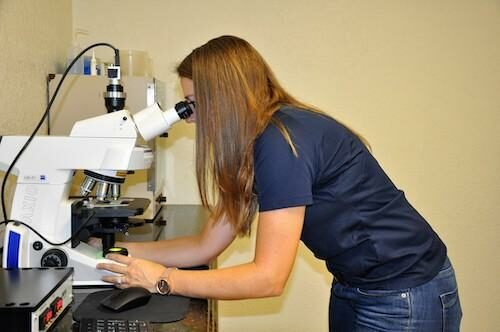
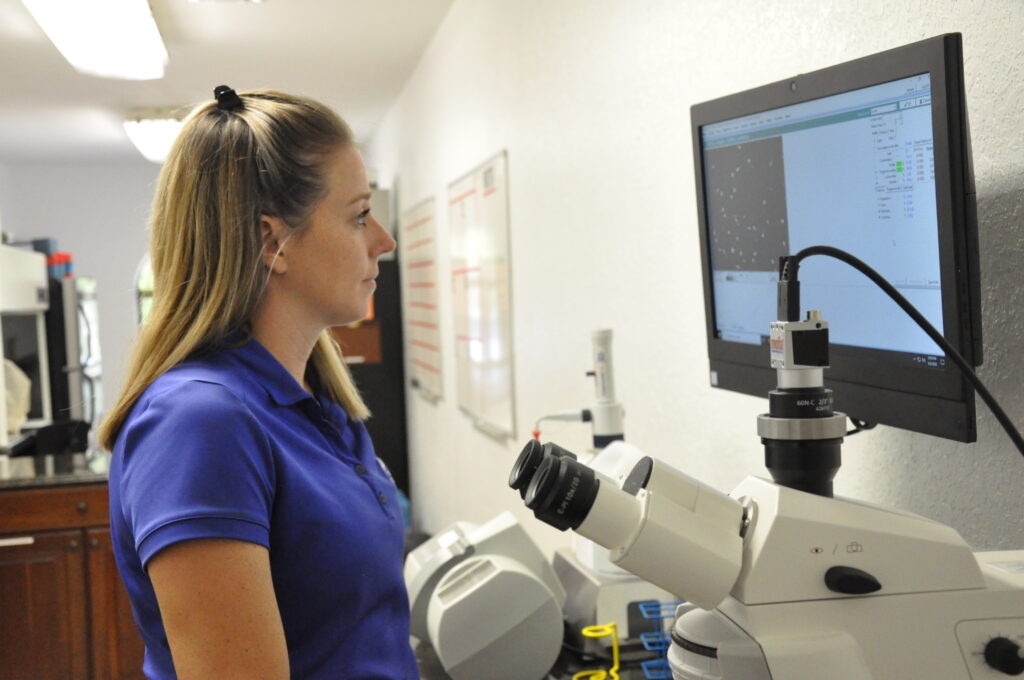
Additionally, Palm Beach Equine Clinic incorporates the use of a SCA® CASA (computer assisted sperm analyzer) system into their reproduction work. An excellent way to improve quality control of a stallion’s sperm, the system evaluates sperm motility (velocity and type of movement), concentration (sperm count), morphology (sperm shape), DNA fragmentation (counting of fragmented sperm), vitality (live and dead count) and acrosome reaction, which is what ultimately allows the sperm to penetrate the egg.
From on-site experience to computer technology, Palm Beach Equine Clinic offers Dr. Atwood the opportunity to be at the forefront of equine reproduction, a place she has always strived to be.
“I wanted to come into a practice that had a developed program in place, but what is even more important to me is mentoring and teaching my technicians and clients about reproduction,” she said. “It is so important to make sure these techniques are shared and promoted for the continued success of veterinarians, owners, and most of all the horses.”
What is Embryo Transfer?
The most popular wave of advancement that has hit the horse sport industry over the past several years is the process of embryo transfer.
Embryo Transfer Process:
- A donor mare and stallion, who hold the genetics of the future foal, are bred.
- At seven or eight days of pregnancy, the embryo is flushed out.
- A catheter is placed through the vagina and cervix, and an inflatable cuff on the catheter provides a fluid-tight seal.
- A lavage fluid with surfactin (added to reduce the “stickiness” of the embryo and allow it to be extracted easily) passes down through a tubing system into the uterine lumen. As the fluid swirls throughout the lumen and drains back out through gravity, it collects the embryo, which is swept back out. The fluid and embryo pass out through the tubing system into and through an embryonic filter.
- When the embryo is identified under a microscope, it is removed into a more enriched medium until the time of transfer.
- The embryo is shipped to a recipient farm where a young and healthy surrogate mare of decent size receives the embryo. That mare carries the foal to term, but it is genetically created from the donor mare and stallion.
Why Breed Through Embryo Transfer?
While the process is fascinating, some may wonder why it’s necessary. According to Dr. Atwood, it relieves much of the concern owners have about sport horse breeding.
Advantages for Mares
“The gestation period for a horse is 11 months, so you’re only getting one foal per year when you breed traditionally,” she said. “This allows a mare to produce multiple foals per year, but it also allows that mare to remain in competition. This process can be done on younger mares with no interruptions to their competition and training schedules.”
Horses are now being bred at an ideal reproductive age while they are still in training, which is made even more valuable by the fact that advances in equine science has prolonged the longevity of horses. While 16 or 17 was once the age of an older horse, now it’s commonly seen as the age when horses are winning in the show ring. Thanks to embryo transfer, these horses can enjoy longer, healthy careers and still produce the talent of the future.
Dr. Atwood has seen embryo transfers become popular in dressage and polo, but she has begun to see it span all disciplines, saying, “At the start of the season, I had one farm and a few mares, but now it has quickly grown to several farms with multiple mares at each. It is really taking off because people now realize it does not remove their mares from competition.”
Advantages for Stallions
The process not only keeps mares competing, but it allows stallions to cross continents. Frozen fertilized embryos from working polo ponies in the U.S. are now being shipped to Argentina where they are carried by mares and then trained by some of the best polo trainers in the world. On the flip side, semen can also be frozen and shipped to the U.S.
“Stallions are collected, the semen is placed with an extender and high nutrient base so the sperm has something to use for energy, and then cooled slowly until it is frozen in liquid nitrogen,” said Dr. Atwood. “Once frozen, it is theoretically good forever. Last year, I bred a mare with 1991 semen and she was successfully pregnant!”
Chinese herbal medicine is a relatively new treatment among equine veterinarians in the western world, but the philosophy of herbals for healing has existed for thousands of years as part of Traditional Chinese Veterinary Medicine (TCVM). Helping to lead the Chinese herbal medicine charge westward, veterinarians at Palm Beach Equine Clinic (PBEC) have incorporated the use of herbs and herbal treatments as an integral part of their alternative therapy options for patients.
Similar to the use of all-natural methods to treat illness in humans, herbal medicine for animals also utilizes ancient Chinese formulas aimed at treating the underlying causes of a disease or illness to help the body heal itself, rather than only temporarily treating the presented symptoms.
One PBEC veterinarian who has found these all-natural methods as a benefit in her treatments is Dr. Janet Greenfield-Davis, who specializes in both acupuncture and Chinese herbal medicine.
“There is an herbal product for anything,” said Dr. Greenfield-Davis, who found herbal medicine six years ago when she started specializing in acupuncture, which joins Chinese herbal medicine as two of the most common forms of TCVM therapies. “Herbals treat a variety of ailments from sore muscles to problems affecting the liver, heart, kidneys, joints, and more. I pair the herbals with my acupuncture, which is traditionally the ancient Chinese way.”
Traditional Chinese Veterinary Medicine (TCVM) Methods

In TCVM, once a symptom of disharmony in the body or disease is identified, treatment proceeds through four possible branches, including acupuncture, food therapy, a form of Chinese medical massage called Tui-na, and Chinese herbal medicine. From topical treatments, including salves and powders, to edible treatments, Chinese herbal medicine not only draws on natural products, but also on the natural tendencies of the horse itself. Being herbivores, horses ingest herbs found in the wild while they are grazing.
While the traditional methods date back thousands of years, the treatments developed within Chinese herbal medicine are ever-evolving. Coupled with modern technology, historical and ancient Chinese wisdoms are still very effective. In addition, the treatments utilize the properties of many common herbs with widely known uses. By utilizing ginseng for fatigue, chamomile for calming, garlic as an antibiotic, and arnica as an anti-inflammatory, the recipes used in herbal medicine draw from only natural sources. This is making herbal treatments more common among sport horses that undergo drug testing for banned substances while competing.
“The competitive world is accepting herbal medicine more and more every year,” said Dr. Greenfield-Davis. “It provides an alternative for horses at high levels, especially in FEI classes, that need a little extra support. They aren’t drugs, they don’t test, and they are a natural product.”
Alternative Options
Dr. Greenfield-Davis believes that offering such alternative treatment options is a sizeable advancement for PBEC, in that herbal medicines provide owners with another option when traditional western medicines may not be their preference.
“It enhances our practice because it gives owners a place to turn,” she said. “There is a lot of stigma to using particular western drugs, and I think this gives people a choice; they don’t have to use the traditional western medicines anymore because they can now turn to eastern medicines.”
While it is a personal choice to use a more holistic or all-natural approach to veterinary care for some horse owners, herbs also represent a practical alternative. According to Dr. Greenfield-Davis, herbal medicine is the perfect choice when treating a horse with an aversion to needles, or for horses that do not respond to particular medicines or therapies.
“We are able to work in a more natural way instead of using steroids and things of that nature,” added Dr. Greenfield-Davis. “In some cases, I will use solely herbals and the treatments produce a lot of wonderful results.”
As PBEC continues to advance its alternative medicine therapies, the equestrian community is also learning to accept new possibilities. For PBEC and Dr. Greenfield-Davis, Chinese herbal medicine is a step into the future with a nod to ancient Chinese history.
About Dr. Janet Greenfield-Davis
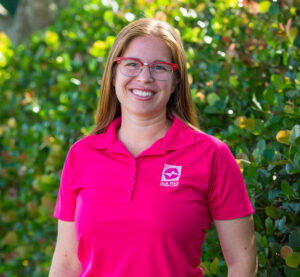
Dr. Greenfield-Davis grew up in Northern California, and her passion for horses started during her time showing hunters on the “A” circuit, which later led her to study veterinary medicine at California Polytechnic State University. She graduated from veterinary school at the University of Glasgow in 2010 and has since specialized in equine acupuncture and herbal medicine. Dr. Greenfield-Davis hopes to continue her studies in holistic medicine by incorporating food therapy into her treatments at Palm Beach Equine Clinic.
Palm Beach Equine Clinic (PBEC), based in Wellington, FL, is home to world-renowned surgeons, board-certified specialists, and state-of-the-art diagnostic technology. In addition, PBEC is home to over 30 veterinary technicians who provide comprehensive support to the veterinarians they work alongside.
PBEC takes pride in the diligence of the technicians who work in collaboration with the veterinarians to maintain the daily functionality of the clinic.
The typical responsibilities of an equine veterinary technician include:
- Manage veterinarians’ schedules
- Stock veterinarians’ mobile unit with supplies, equipment, and medications
- Accompany veterinarians on barn calls and emergency response
- Consult on cases with a veterinarian
- Care for and monitor horses admitted to the on-site clinic hospital
- Plan patient care and follow-up
- Oversee billing and invoices
According to Dr. Marilyn Connor, veterinary technicians are the right hands of the doctors they work with. PBEC employs over 30 technicians and the hands-on experience they have access to gives them invaluable opportunities to learn.
“One thing that is special about PBEC is that we have a full staff of technicians day and night,” said Dr. Connor, who first joined PBEC as an intern and now works as a full-time veterinarian. “They are the ones feeding and caring for horses, administering medications that do not require a doctor, and assisting veterinarians on cases. During the peak of the season, there are roughly 40 doctors with very diverse caseloads for technicians to learn and gain experience from.”
Yessica Arrua is one PBEC technician who has become an accomplice for veterinarian Dr. Natalia Novoa and the clinic in general. Arrua, 22, was born in Buenos Aires, Argentina, but now calls Florida home and is a pivotal part of the PBEC team.
5 Questions for Palm Beach Equine Clinic Yessica Arrua
1. How did you first get involved with horses?
I have been around horses since I was three years old. Both my parents have been working with horses since before I can remember. My dad works with polo ponies and my mom with dressage horses. They both traveled to Florida to pursue work with horses here and that is how I came to be a resident of Wellington and a team member with Palm Beach Equine Clinic.
2. What are your day-to-day responsibilities at PBEC?

I work with Dr. Natalia Novoa, who focuses on both traditional veterinary medicine and alternative therapies like chiropractic adjustments and acupuncture. My day-to-day responsibilities include making sure our truck is stocked with the equipment and medications that we may need. I also look after all the invoices in our system on a monthly basis. Overall, my role is to ensure Natalia has everything she needs and is prepared for our farm call visits.
3. What do you enjoy most about working with equine veterinarians and the horses they treat?
Other than being around horses every day, which is the best part of my job, I really enjoy being able to experience all the different types of cases that come through Palm Beach Equine Clinic. Especially during the winter season, we see so many interesting cases from emergencies to routine exams.
4. Do you have a favorite case?
My favorite cases to work on are the ones where horses have anhidrosis, which we see often in the Florida heat.
There is no universal or proven treatment for anhidrosis, but people often try salts, electrolytes, thyroid supplements, and even beer. But, Dr. Novoa has been able to help these horses with acupuncture. We had one case where the horse didn’t respond to any traditional treatments but started sweating right away during our first acupuncture treatment.
What is Anhidrosis? According to the American Association of Equine Practitioners (AAEP), anhidrosis is a compromised ability to sweat in the face of exercise or high ambient temperatures. This is a potentially dangerous condition for horses, especially working horses, because they thermoregulate (maintain a consistent body temperature) primarily through sweating.
5. What can we find you doing when you aren’t working at PBEC?
You will find me at the beach, reading, and spending time with my family!
Palm Beach Equine Clinic combines the best of conventional and alternative medicine to provide comprehensive, full-body care to both sport and companion horses. Dr. Natalia Novoa specializes in utilizing the best of both approaches to provide unmatched results.
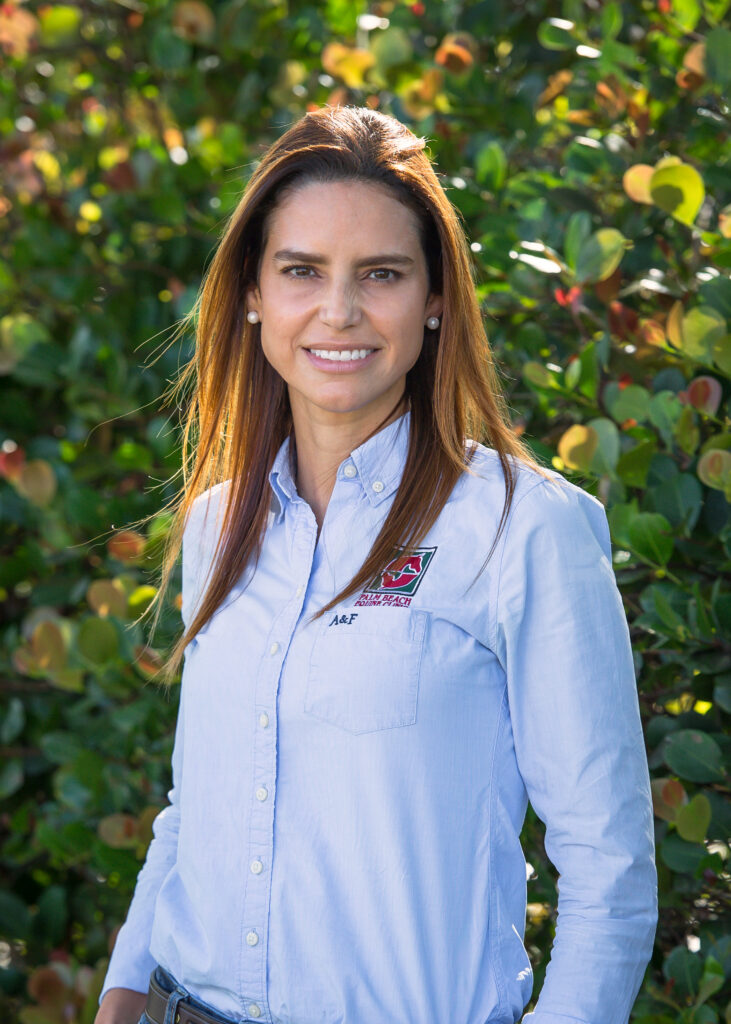
“I believe that treating issues with both alternative therapies and conventional medicine is a perfect approach,” said Dr. Novoa, who has been a full-time member of Palm Beach Equine Clinic since 2011. “We can’t exchange one for other, and the combination usually makes for a great treatment plan.
“A chiropractic adjustment is an alternative therapy that I absolutely recommend,” continued Dr. Novoa. “It’s very useful for a horse that has injuries or soreness issues, but it’s also something that is very important for maintenance. You want to prevent problems instead of treat them. If a misalignment happens, that creates incorrect friction, which then leads to pain in the joints, muscle soreness, and stress on the tendons and ligaments, possibly leading to a soft tissue injury. Another advantage of chiropractic adjustments is that it is useful for FEI competition horses because of the restriction on medications at that level. It’s a way we can effectively treat a problem and stay within the regulations.”
According to Dr. Novoa, veterinarians who incorporate chiropractic adjustments in their treatment options do so with their own style. She has developed a system that she finds most effective, and her secret is out!
Dr. Novoa’s five steps to a chiropractic adjustment:
1. Horse History
Patient history is a pillar of medicine, which provides pivotal information.
“I always want to speak with riders, trainers, and grooms to get an understanding of what they feel and see,” said Dr. Novoa. “They spend the most time with the horse and know it the best. Sometimes, clients ask me to evaluate the horse first and tell them what I see and feel, which is when most people ask me if I have a crystal ball.”
While Dr. Novoa doesn’t travel with a crystal ball, her skill at reading a horse leads her to the second step.
2. Scan Acupuncture Points – “Acuscan”
A scan of the acupuncture points on a horse, which Dr. Novoa calls an “acuscan,” is always her next move. She checks the main acupuncture points from head to tail by using her tool of choice – the round end of a needle cap. This allows her to put firm pressure on a very specific point and then evaluate the horse’s reaction to that pressure.
“A reaction can indicate, for example, left front lameness or a sore neck, etc.,” said Dr. Novoa. “It’s not voodoo; you are piecing together your findings in the exams with the symptoms that the horse is presenting.”
3. Evaluate Horse Movement
After scanning the horse, Dr. Novoa likes to always see the horse move to dig deeper into any reactions she noticed while checking acupuncture points. She starts at the walk and then observes at the trot.
“This is where I incorporate conventional medicine and supplement my evaluation with flexion tests or hoof testers depending on what I see,” said Dr. Novoa. “I want to produce the most detailed picture before moving on to the adjustment.”
4. Make the Adjustments
“I adjust a horse the same way every time,” said Dr. Novoa. “This specific order ensures that I don’t miss anything and the horse receives a thorough adjustment of its entire body with special attention paid to any problem areas that I uncovered earlier in the process.”
Check and adjust these 10 points:
Point 1: TMJ (temporomandibular joint)
Point 2: Poll and neck
See fig. 1 & 2
Point 3: Front limbs, including lower limb joints and carpus (knee)
See fig. 3
Point 4: Shoulder and scapula on both sides to compare one with the other
Point 5: Withers
Point 6: Pelvis and back
See fig. 4


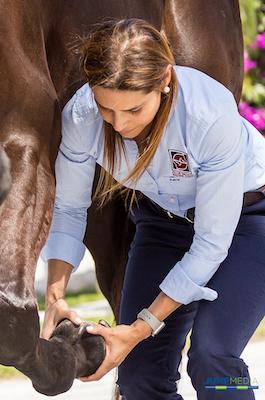

Point 7: Hind limbs, including hocks and stifles
Point 8: Sternum and T1/T2 vertebrae
Point 9: Tongue release
Point 10: Myofascial release if muscles spasm or a tense back and neck are indicated
5. Secondary Acupuncture Point Scan
“The final piece of the puzzle is to scan the acupuncture points again to compare what we had before versus what we have after the adjustment,” said Dr. Novoa. “If there are still reactions, I may do acupuncture or electro-acupuncture and utilize a class four regenerative laser.”
After her secondary scan, Dr. Novoa formulates a short and long-term treatment plan. In her experience, adjustments last for four to six weeks before a follow-up adjustment is indicated. If certain chronic injuries are flaring up, a horse may need an earlier follow-up.
“It’s all about listening to the horse. They will always tell you what they need; you just have to listen!”
Dr. Novoa
Official Veterinarians of 2019 WEF and AGDF Circuits
World-renowned veterinary facility Palm Beach Equine Clinic (PBEC) will return as the Official Veterinarians of the 2019 Winter Equestrian Festival (WEF) and Adequan Global Dressage Festival (AGDF) running January 9 through March 31 at the Palm Beach International Equestrian Center (PBIEC) in Wellington, FL.
A proponent and supporter of horse sport in Wellington and throughout the world, Palm Beach Equine Clinic has served both the year-round residents and visiting horses of south Florida for more than three decades. PBEC’s state-of-the-art clinic is conveniently located at the intersection of Southfields Road and Pierson Road in the heart of Wellington, just minutes from PBIEC, the Equestrian Village, and the International Polo Club Palm Beach. PBEC’s talented team of veterinarians offers its clients and the horses of referring veterinarians unmatched care and an innovative approach to standard and emergency services.
Palm Beach Equine Clinic’s goal is to provide a definite diagnosis and never have to refer a case. In other words, PBEC is the equivalent of the Mayo Clinic for horses.
“Combining the tools of our imaging department, surgical talent, and overall standard of treatment allows us to provide services far beyond what other facilities can provide,” said PBEC President Dr. Scott Swerdlin, who leads a team of more than 40 veterinarians at PBEC. “But even with all the technology we provide, we need the people to make it all happen. That is exactly what we have; veterinarians skilled in diagnostics, technicians dedicated to caring for the horses before, after, and during any procedure, and world-renowned surgeons who can take a diagnosis and treat the problem with positive results for horse and owner. It takes a team and we have one of the best in the world at Palm Beach Equine Clinic.”
PBEC’s services available to new, returning, and referred clients include:
Advanced Diagnostic Offerings
- Computed Tomography (CT)
- Standing Magnetic Resonance Imaging (MRI)
- Nuclear Scintigraphy (bone scan)
- Board-Certified Radiologist on Staff
- Digital Radiography and Ultrasonography
Surgical Offerings
- Three boarded surgeons skilled in performance-related injuries
- Standing surgery pit
- Surgical residency program
- State-of-the-art surgical suite
- Quarantine facilities with secure isolation and individual air flow systems
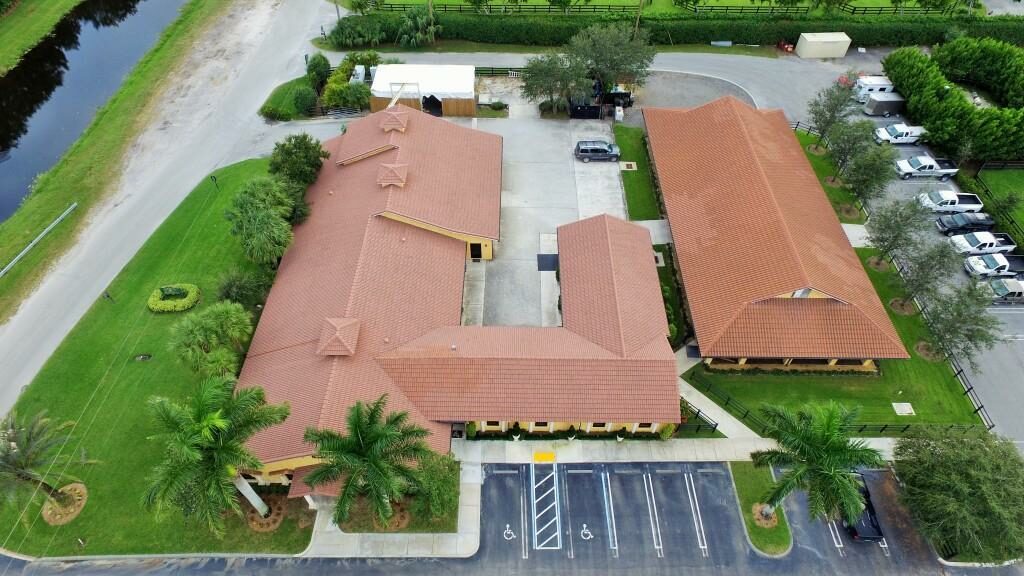
The expertise and dedication of PBEC veterinarians will be available to all competing horses at WEF and AGDF thanks to an annex office located adjacent to the WEF stabling office on the PBIEC showgrounds as well as at the main PBEC clinic location. PBEC veterinarians are on-call daily at the annex office to assist competitors throughout the shows with diagnostic evaluations and treatments, as well as emergency and standard horse care needs.
“Our location, talents, and dedication to the Wellington community and beyond have helped Palm Beach Equine Clinic to offer the best possible care to some of the world’s top equines during the winter show season,” continued Dr. Swerdlin. “Additionally, our annex office places us in the heart of it all, making advanced veterinary care convenient to equestrians competing at Palm Beach International Equestrian Center. We are very proud of both facilities and the veterinarians who work there, but we are even more proud to be trusted with the care of such special animals!”
For more information on what PBEC has to offer horses competing at WEF and AGDF, stop by the annex office located next to the stabling office on the WEF showgrounds, visit www.EquineClinic.com, or call 561-793-1599.
Save The Date
In addition to being named the Official Veterinarians of WEF and AGDF, PBEC’s own veterinarians will again participate in WEF’s popular Lunch & Learn education series during the 2019 season. Mark your calendars for a presentation on Sport Horse Health on Thursday, March 7, at 11:30 a.m. in The Wellington Club at the WEF showgrounds. Admission to the Lunch & Learn series is free for riders, trainers, and owners and includes a buffet lunch and a chance to win exciting prizes from 2019 Lunch & Learn sponsors.