Palm Beach Equine Clinic (PBEC) returns as the Official Veterinarian of the Winter Equestrian Festival (WEF) and Adequan® Global Dressage Festival (AGDF) for the 2023 show season. The veterinarians of Palm Beach Equine Clinic will be on-site to provide excellent care to all of the competing sport horses as well as those in the surrounding Wellington area.
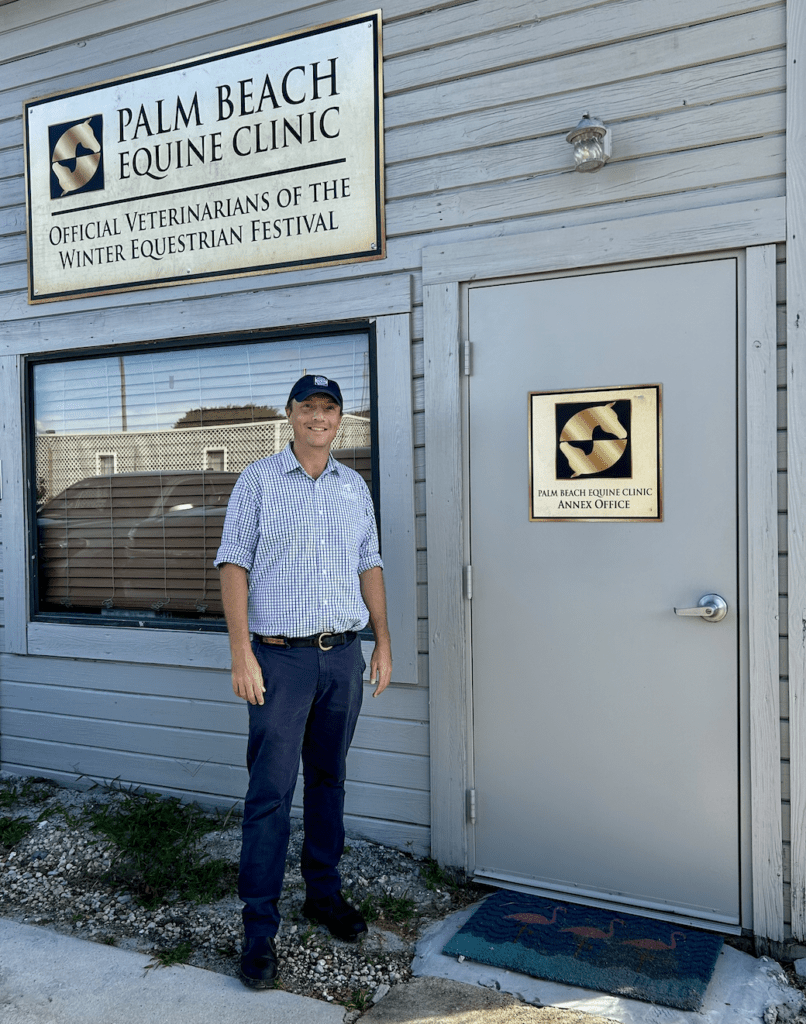
Although we all hope emergencies will never occur, owners and riders can rest easy knowing that top sport horse veterinarians will be immediately available to help resolve equine medical emergencies. Palm Beach Equine Clinic veterinarians will provide veterinary services at the Annex Office located on the Wellington International showgrounds. Dr. Christopher Elliott, board certified in Sport Horse Medicine and Rehabilitation, will be the lead veterinarian at the showgrounds. Veterinarians will be available at the show to provide diagnostic evaluations, treatment, emergency care, and regular veterinary needs. At AGDF showgrounds at Equestrian Village, PBEC vets are on-site to help with any problems that arise during competition days.
Dr. Christopher Elliott at Palm Beach Equine Clinic’s Annex Office located on the Wellington International showgrounds. Photo by Jump Media
At its main facility, Palm Beach Equine Clinic has an extensive team of more than 30 veterinarians offering a wide variety of services and remedies including internal medicine, emergency care, reproduction and fertility, alternative medicine, regenerative medicine, dentistry, podiatry, and more. From sport horse evaluations to non-traditional alternative medicine therapies such as equine medical manipulation and acupuncture, Palm Beach Equine Clinic veterinarians think outside of the box to prevent and treat injuries.
At the main facility, Palm Beach Equine Clinic has a team of more than 30 veterinarians offering a wide variety of services. Photo by Erin Gilmore
Offering exceptional knowledge, capabilities, and commitment, the team at Palm Beach Equine Clinic is thrilled to be part of equine athletes’ success during the Wellington winter show season and beyond.
What Does Palm Beach Equine Clinic Offer?
Cutting-Edge Technology The modern medical imaging modalities at Palm Beach Equine Clinic allow veterinarians to gather all the information they need to make a timely diagnosis and are available for all equine patients, even if their primary veterinarian is not at Palm Beach Equine Clinic.
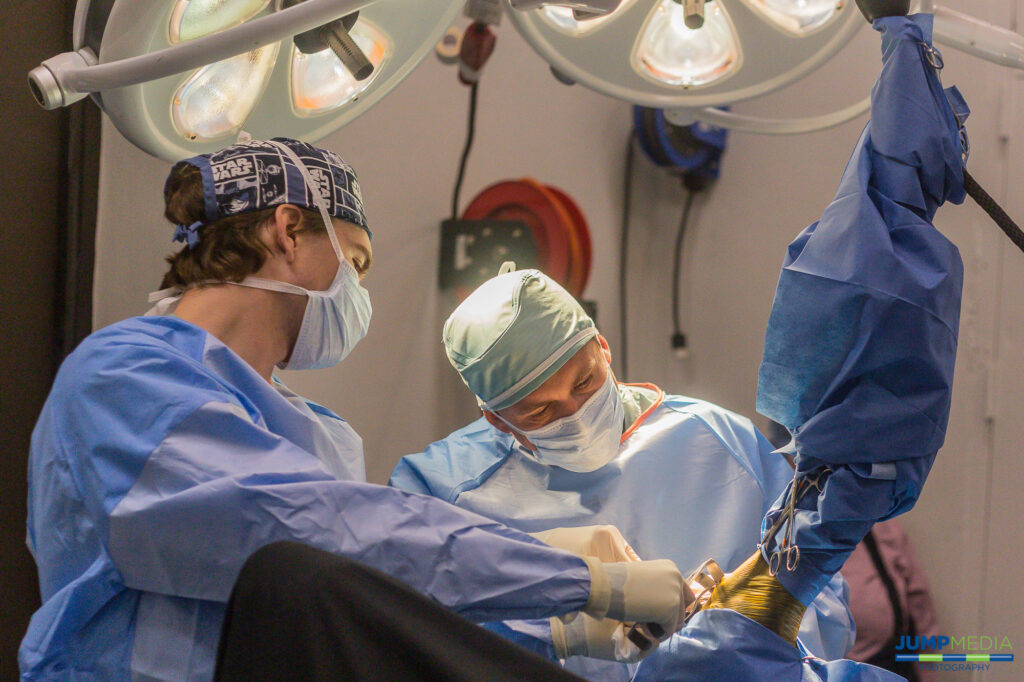
Surgical Center Palm Beach Equine Clinic’s 24/7 emergency services are led by three board-certified surgeons, who perform some of the most advanced and least invasive surgeries in the world. Head of surgery Dr. Robert Brusie, as well as Dr. Weston Davis and Dr. Jorge Gomez, make up the team of surgeons who are adept in many procedures from colic cases to injuries that require high levels of expertise and advanced equipment.
Palm Beach Equine Clinic is home to three board-certified surgeons. Photo by Jump Media
Internal Medicine Understanding why a talented prospect may be coming up short makes Palm Beach Equine Clinic veterinarians determined to find the answers and develop solutions. PBEC proudly offers internal medicine services led by board-certified internal medicine specialist Dr. Peter Heidmann. Going beyond standard veterinary care, the staff at Palm Beach Equine Clinic can identify the root of subtle changes in a horse’s health or performance with internal medicine evaluations and diagnostic procedures. Comprehensive internal medicine offerings include respiratory, cardiac, gastrointestinal, and neuromuscular evaluations.
Alternative Medicine
Employing a holistic approach to treating patients, Palm Beach Equine Clinic considers all the available avenues for health care. Alternative medicine therapies are often used in conjunction with traditional medicine and can be uniquely tailored to enhance a horse’s performance and overall health. Alternative medicine offerings include acupuncture, equine medical manipulation adjustments, Chinese herbal medicine, laser therapy (photobiomodulation), and extracorporeal shockwave.
Palm Beach Equine Clinic often uses alternative medicine in conjunction with traditional medicine therapies to enhance a horse’s overall health. Photo by Jump Media
Reproduction and Fertility
Palm Beach Equine Clinic offers a broad array of reproductive and fertility services for stallions and mares, available at the equine hospital or in the barn. With expert care and advanced practices, PBEC maximizes the likelihood of a successful pregnancy. As the process of breeding sport horses is ever changing, Palm Beach Equine Clinic proudly offers clients modern reproductive services to produce the talent of the future.
Palm Beach Equine Clinic is partnered with Hagyard Equine Medical Institute (HEMI), one of the leading equine medical centers in advanced reproductive medicine. Through the partnership, equine reproductive specialists work collaboratively with Palm Beach Equine Clinic to expand upon the traditional reproductive services currently being offered.
Palm Beach Equine Clinic has provided the highest quality of equine health care for 41 years. With a world-class facility, state-of-the-art technology, and great compassion for the horses, Palm Beach Equine Clinic is committed to providing the best possible service for both patients and owners.
Equine ulcers have long been a common concern for horse owners. Our understanding of ulcers has dramatically improved over time through medical advancement, and there is currently more nuance to the diagnostics, treatment, and management of horses suffering from these internal sores. Gastroscopy and ultrasound have become more readily available, and their increased accessibility have allowed non-specialty practitioners more experience and a greater comfort level with these tools. These developments throughout the industry have led to more animals being correctly diagnosed and appropriately treated.
Jordan Lewis, DVM of Palm Beach Equine Clinic (PBEC) sees a variety of equine ulcer cases. She breaks them down into three categories: gastric ulcer disease of the squamous mucosa, gastric ulceration of the glandular mucosa, and colon ulcers of the right dorsal colon.
Equine gastric ulcer disease of the squamous mucosa refers to the ulcers found on the stomach’s inner lining closer to the esophagus. They are primarily caused by exposure to stomach acid and vary in severity depending on the amount of time the stomach’s lining has been in contact with the stomach acid.
“We often see this increased stomach acid exposure with the squamous mucosa in performance horses due to the mechanical aspects of exercise and abdominal pressure,” Dr. Lewis described. “The increase in acid production and contact time can also be seen in fasting animals and animals with delayed gastric emptying or slowed motility.”
Glandular mucosa describes the stomach lining around the pyloric region closer to the intestines. Ulcers found here are typically caused by a decrease in mucosal blood-flow as well as a decrease in mucus production, which normally serves as a protective barrier for the stomach lining. Stress and non-steroidal anti-inflammatory drugs (NSAIDS) such as phenylbutazone (“bute”) or flunixin meglumine (“Banamine®”) are the usual culprits in this case.
Similarly, ulcers found in the colon are also usually caused by stress and NSAID administration, leading to a decrease in the mucosal wall protection resulting in ulceration and inflammation.
“In some cases with colon ulcers of the right dorsal colon, we see minimal thickening noted on the right abdominal wall, but other times it can be more severe thickening with more ominous clinical signs of colic, fever, hypoalbuminemia (protein loss), ventral and limb edema, and diarrhea,” detailed Dr. Lewis.
The tricky thing about ulcers is that they do not always present with the same symptoms in every horse. It can be difficult to know when it’s time to be a little more invasive in order to take a closer look at a horse’s digestive system. At a minimum, persistent symptoms warrant a veterinarian consultation.
“The range of symptoms can vary from mild to severe,” Dr. Lewis explained. “The horse might be being a picky eater, or they might exhibit moderate to severe colic symptoms like signs of abdominal discomfort such as pawing or rolling. Even still, some horses present with the only outward sign being poor performance.”
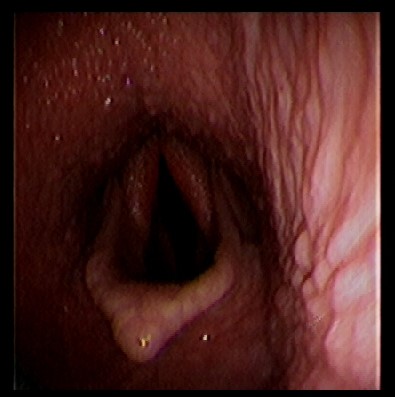
Dr. Lewis uses varying diagnostic tools for a complete understanding of the affliction. Sometimes she will perform the Succeed test, which is a fecal test that generally helps indicate the presence of ulcers. Another option is to perform a gastroscopy with a three-meter endoscope to see the stomach where both forms of gastric ulcers are found. Ultrasound is the primary diagnostic tool to look for thickening of the right dorsal colon wall indicating ulceration in the colon. Basic bloodwork to determine total albumin, a protein made by the liver, also helps indicate more severe cases of colon ulcers.
Once a horse has been diagnosed with ulcers of any variety it’s important to begin treatment, especially since horses suffering from ulcers are predisposed to colic. Because each type of ulcer disease has a different underlying cause, the treatment protocol and medications are also different.
Though omeprazole paste used to be thought of as the cure-all, today we know that it is only part of the puzzle. Dr. Lewis recommends an omeprazole paste for at least a four-week period and uses other medications in conjunction with this depending on what type of ulcer she is treating. For horses that have ulcers of the squamous mucosa experiencing more severe, colic-like symptoms, Dr. Lewis adds a dose of sucralfate before meals to the protocol. If she finds ulcers in the glandular and pyloric region of the stomach, misoprostol and prostaglandin analog is used. For ulcers of the right dorsal colon, sucralfate is used as a coating agent while misoprostol is used as a treatment.
In addition to medication, some lifestyle adjustments can aid in maintaining an ulcer-free digestive tract. “It’s helpful if we can provide a more natural, less stressful environment for these horses with continuous grazing on pasture or hay as well as more turnout,” stated Dr. Lewis.
She continued, “Horses with gastric ulcers do well on adding alfalfa hay as a buffering agent before a grain meal, while horses with colon ulcers do well on a low-bulk diet, meaning less forage and a more complete feed-based pellet. Adding a psyllium-based supplement can be helpful for these horses too.”
Even with the best curative efforts, some horses can continue to suffer from ulcers, underscoring the importance of monitoring your horse for any changes even after treatment. Because sport horses have an increased likelihood of developing gastric ulcers due to exercise, their constant work also increases the odds of them have recurring ulcers. Personality and demeanor also play a part.
“Horses that have recurrent ulcer disease tend to be horses that internalize more and are stressed easily,” said Dr. Lewis.
She highlighted some additional measures that can be taken to help continuously protect the stomach’s lining, noting the importance of a regulated diet and more opportunity to relax, as well as treatment with a prophylactic dose of omeprazole paste.
If you think your horse feels a little off from their normal behavior, it might be time to discuss different diagnostic options with your veterinarian. Trust your gut – it might just help your horse’s too.
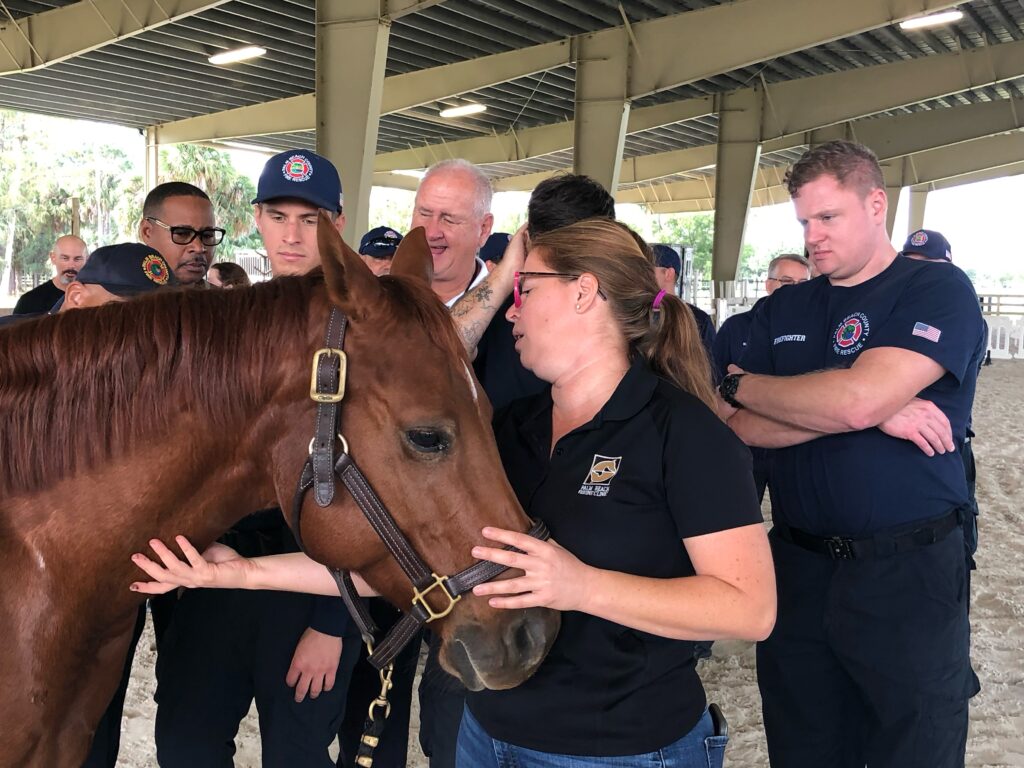
Vinceremos Therapeutic Riding Center hosted area first responders at its facility in Loxahatchee, FL, on December 6, 2021. The annual event provides training by veterinarians from PBEC for first responders in handling horses during an emergency. The Winter Equestrian Festival season sees the influx of thousands of horses each winter. These sessions have successfully educated area first responders in equine care during a crisis to create a safer community for the horses.
Dr. Janet Greenfield-Davis giving the demonstration to the area first responders. Photos courtesy of Vinceremos Therapeutic Riding Center.