
Tag: official veterinarians
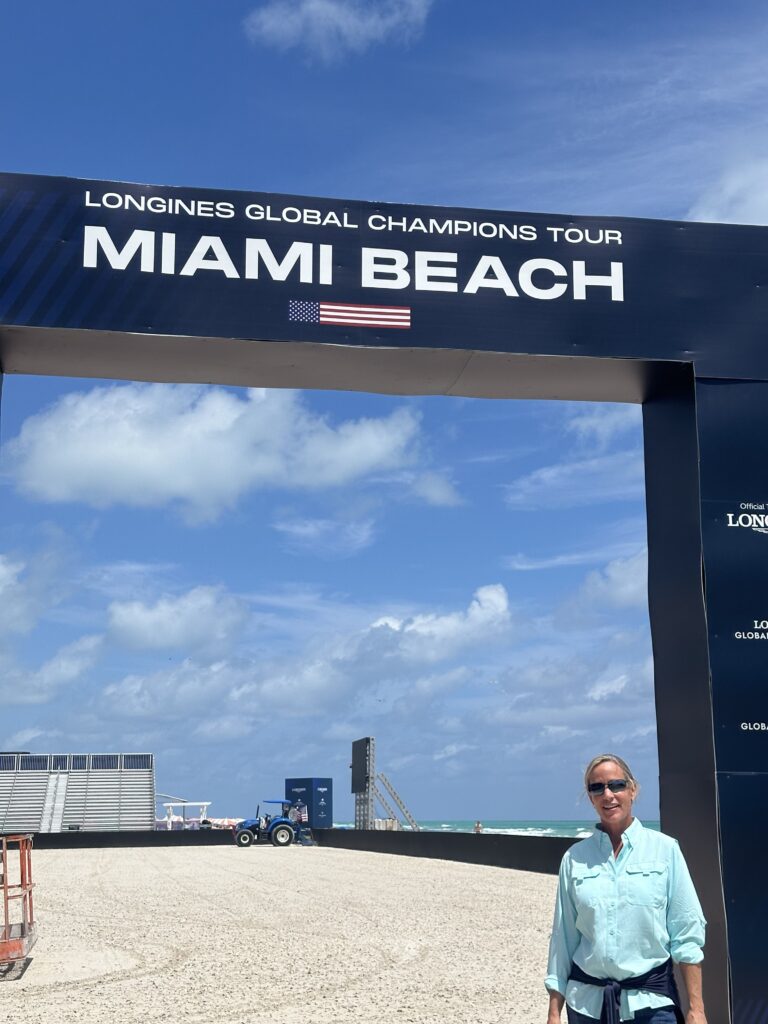
Dr. Kathleen Timmins at LGCT Miami Beach.
Photo courtesy of Palm Beach Equine Clinic.
As the foremost equine clinic in South Florida, Palm Beach Equine Clinic is often called upon for its veterinary services at the most prestigious equestrian competitions. Having just finished the renowned World Equestrian Festival and Adequan® Global Dressage Festival – where PBEC serves as the Official Veterinarian – a team of PBEC veterinarians is moving south to assist at the Longines Global Champions Tour (LGCT) Miami CSI5* on April 1-4, 2026.
Dr. Kathleen Timmins, Dr. Sarah Allendorf, Dr. Rachael Davis, and Dr. Christopher Elliott provide around- the-clock veterinary supervision for European and North American contenders from the moment they arrive for the Miami leg of the LGCT. Dr. Kathleen Timmins is a 1993 graduate of the Ohio State University School of Veterinary Medicine and completed an internship in equine medicine and surgery at the Illinois Equine Hospital near Chicago. She began practicing equine veterinary medicine in Aiken, South Carolina.
Dr. Timmins joined Palm Beach Equine Clinic in 1996. She was a member of the United States Polo Association (USPA) Equine Welfare Committee and the Drugs and Medication Sub-Committee, which authored the USPA Drugs and Medications Rules Book. Dr. Timmins is an Official FEI Veterinary Delegate for jumping, dressage, and para dressage, and she treats patients from all riding disciplines.
Dr. Timmins enjoys cooking and cheering on her daughter, Schuyler, as she follows in her footsteps competing in the jumper ring.
What are your responsibilities at LGCT Miami?
We oversee U.S. Department of Agriculture (USDA) regulations for horses from Europe with a Contagious Equine Metritis (CEM) waiver. These horses are kept in a quarantine bubble to prevent contact with North American horses and to maintain our disease-free status. We oversee the movement of horses as they arrive and during their activities at the facility throughout the event. We also ensure the facilities meet USDA standards and that everything is properly recorded. I will act as a treating vet as needed and help with the FEI horse arrival exams.
What is the arrival process for horses that compete at LGCT Miami, and how do you interact with them?
The horses from Europe flew in on Monday, March 30, and arrived at the beach on Tuesday and Wednesday. The European horses arrive at the showgrounds from the airport and quarantine facility in Miami. The U.S.-based horses arrived on Tuesday and Wednesday. The FEI Veterinary Delegate, the LGCT vets, and I act on behalf of the USDA to check in all of the horses.
How many times have you worked at LGCT Miami?
This is my first year! It is beautiful and looks pretty fun. I’ve been to Miami Beach for polo tournaments before, so it will be great to see jumpers here too.
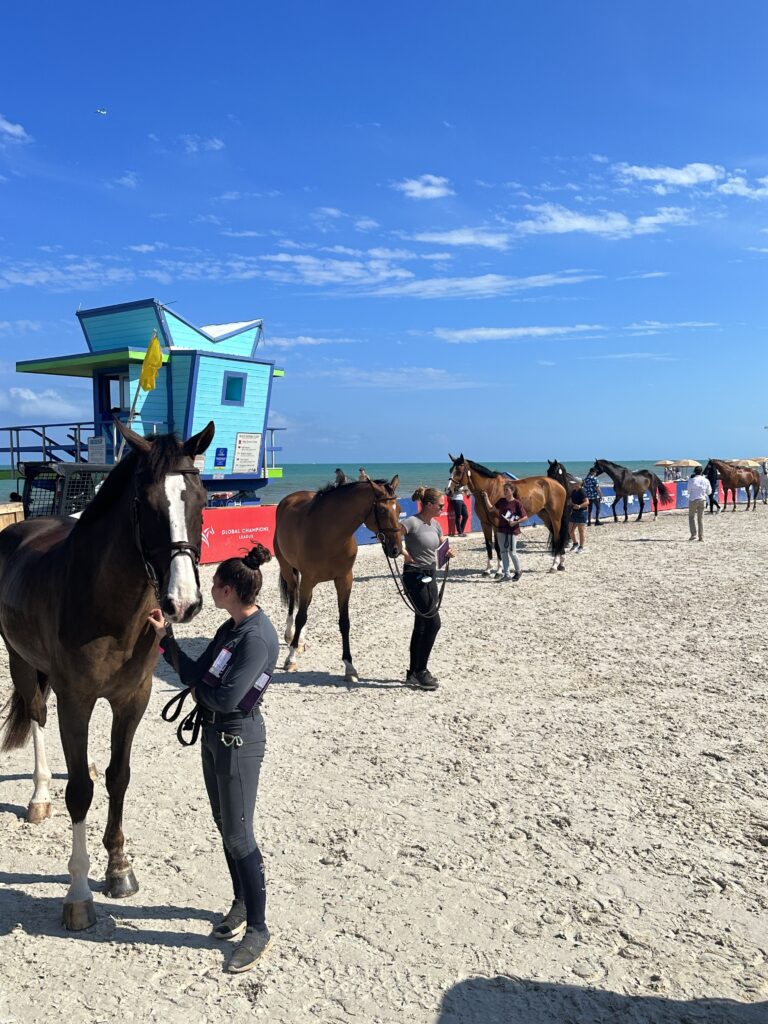
LGCT Miami Beach Jog.
Photo courtesy of Palm Beach Equine Clinic.
What is your typical day like at the show?
Although I haven’t worked at this particular show before, it will be similar to previous competitions. The days are long and start early. Between the stewards and I, we are assigned to observe the CEM horses at all times to ensure that the European horses and the American horses don’t commingle. As a treating vet, I can also handle minor needs, such as giving fluids to a horse. We also administer medications such as Legend or Adequan as requested. Dr. Sarah Allendorf will be here each day to attend to clients as well.
Do you stay in Miami for the week?
I will be staying there. That’s part of the requirement; you must be able to reach the venue quickly if necessary, in case a horse has an overnight emergency. Plus, who wants to be commuting to Miami at 5 a.m., or anytime, frankly!
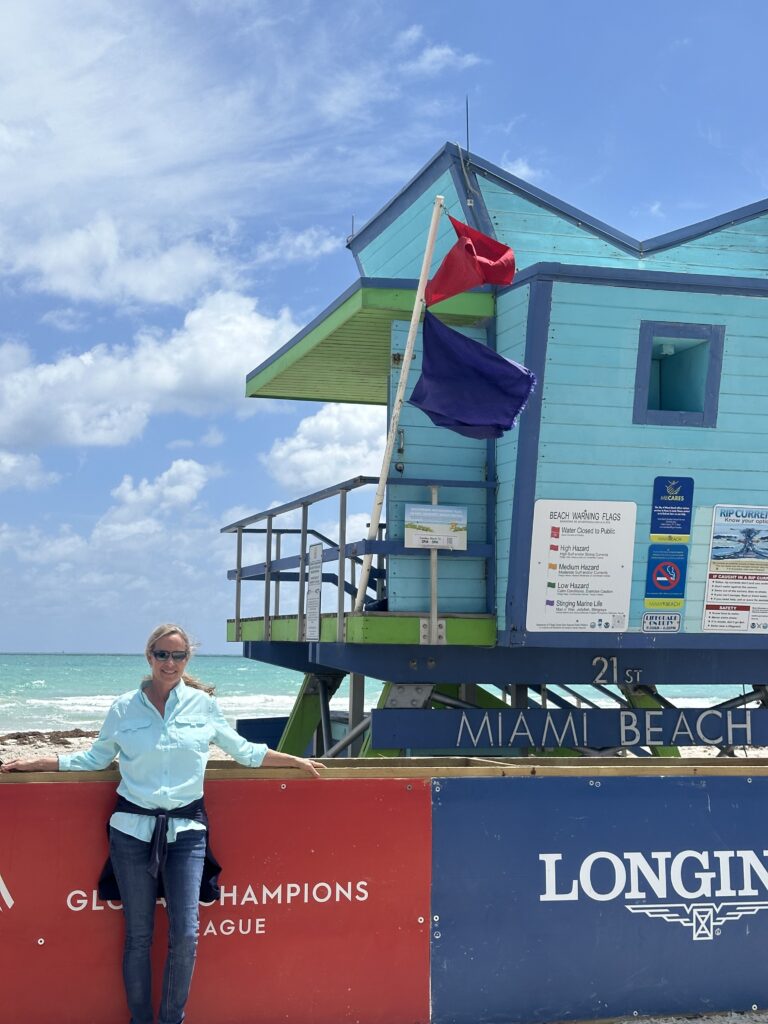
Dr. Kathleen Timmins at LGCT Miami Beach.
Photo courtesy of Palm Beach Equine Clinic
What is the most challenging part of the job at a show like this?
I think the most challenging thing at this show is the logistics. There are a lot of moving parts between the horses flying in and those trailering in. It’s very tight driving in Miami Beach, too. There is a lot of traffic, and the roads are small.
What are you looking forward to?
I’m really looking forward to seeing the competition and the beautiful venue.
To see more about PBEC’s experience at Longines Global Champions Tour Miami, visit our Instagram page at @pbequineclinic. Learn more about Palm Beach Equine Clinic and our team of veterinarians at www.EquineClinic.com.
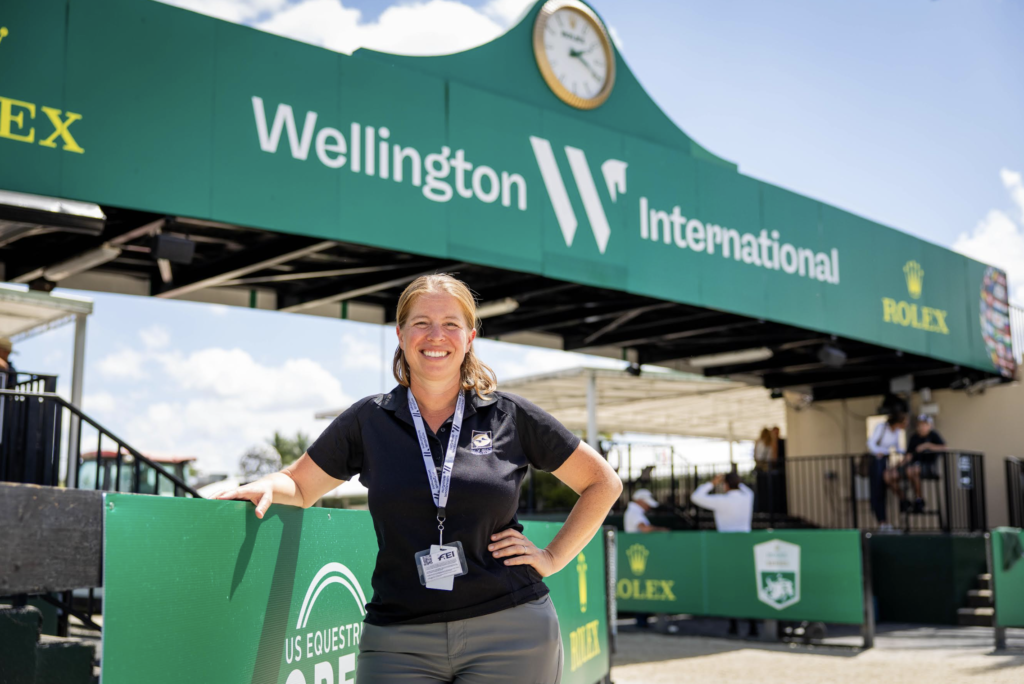
Dr. Janet Greenfield at WEF
© Devyn Ivy Media
Originally from northern California, Dr. Janet Greenfield-Davis grew up competing on the hunter circuit, which sparked her interest in equine veterinary medicine. She completed her undergraduate degree at California Polytechnic State University and then attended veterinary school at the University of Glasgow.
After completing an internship at Palm Beach Equine Clinic in 2010, she studied traditional Chinese veterinary medicine at the Chi Institute. In addition to providing Western medicine, Dr. Greenfield-Davis uses Eastern medicine as a certified veterinary acupuncturist and Chinese herbal medicine expert. Dr. Greenfield-Davis is certified in equine rehabilitation and performance medicine.
When not seeing patients, Dr. Greenfield-Davis enjoys enthusiastically cheering on her clients at competitions, swing dancing, and spending quality time with her husband and two daughters.
What are your official duties at WEF for Rolex Series week?
My official duties this week are monitoring the CEM waiver tent for WEF week 12. I make sure the participants abide by the U.S. Department of Agriculture (USDA) guidelines set to keep our country CEM free.
Contagious Equine Metritis (CEM) is a sexually transmitted bacterial infection that can cause infertility in mares and is carried by stallions. While endemic in Europe, the disease is not currently in the U.S., so testing and quarantine for horses entering the country from areas with confirmed cases are essential to maintain that disease-free status.
Are any other PBEC vets working with you that week?
The PBEC veterinarians who are on show duty will help me, along with the FEI Veterinary Delegate, the FEI stewards, and our local USDA veterinarian. I have lots of help! I am a very small piece of a very big event, and I enjoy the part I get to play in making it happen.
Can you describe your typical day at the show?
I like to pop in to the show in the morning to ensure everything is running smoothly with the FEI steward and security. I note which of the monitored horses are showing and whether there is enough staff to walk the horses to the arena. It is quite a distance from the FEI stabling to the International Arena, and the horses must be accompanied to and from the ring. I always wear my sneakers during week 12. I will also check in the evening to make sure everyone is happy. Meeting with the USDA and addressing any concerns is also part of my job.
How many years have you been working at WEF for PBEC?
I have been at PBEC for 15 years and have been participating at the show in one veterinary capacity or another the entire time.
What makes Rolex Series week at WEF special?
The fanfare, horses, and the competitors make it very special. You can feel the crowd’s excitement to see all the big names, and the competition is always electric.
What are you looking forward to?
Saturday night, of course!
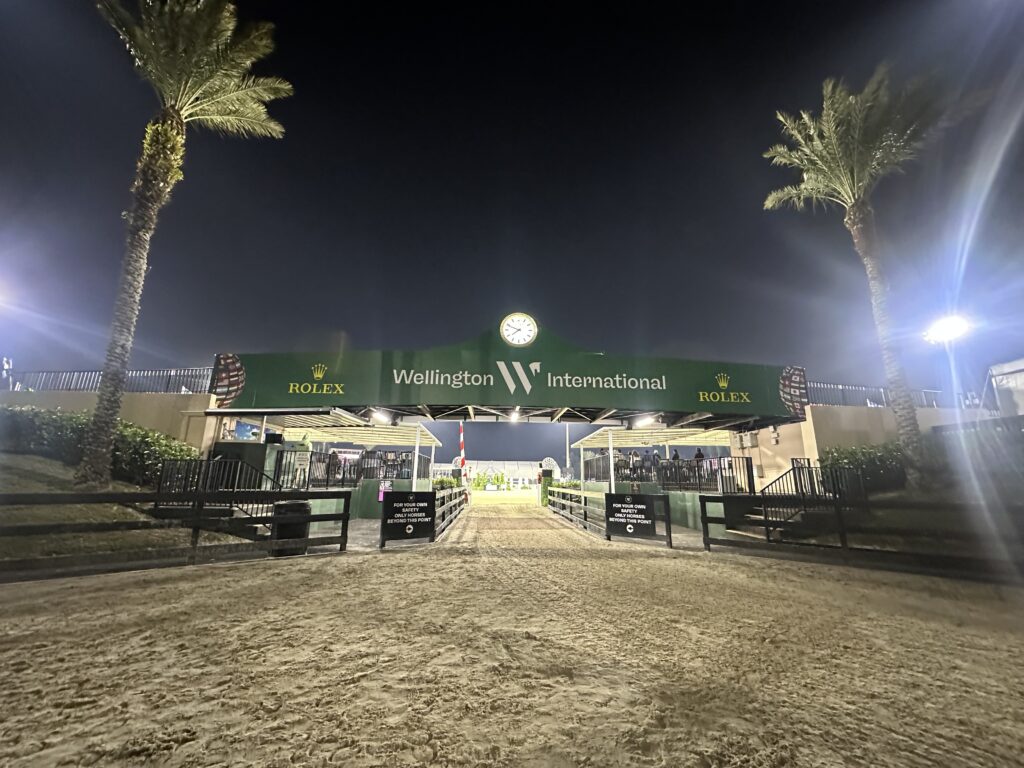
WEF Bridge at Night
Photo courtesy of Palm Beach Equine Clinic
This spring, Palm Beach Equine Clinic in Wellington, FL, isn’t just attending the biggest stages in North American sport; it’s caring for the best equine athletes in the game.
From Winter Equestrian Festival Rolex CSI5* Week (March 23–29) to the electric beachfront setting of the Longines Global Champions Tour Miami (April 1–4), and culminating at the prestigious FEI World Cup™ Finals (April 8–13), PBEC veterinarians are at the center of the action, ensuring the world’s top equine athletes perform at their best.
The momentum begins in Ocala during the Longines League of Nations Ocala, where the sport’s elite converge. As international horses transition from USDA CEM quarantine in Ocala to Wellington, PBEC plays a critical role in their care. Under the leadership of Dr. Janet Greenfield, the team oversees the veterinary needs of these elite athletes within Wellington’s tightly managed competition “bubble,” as they prepare for the Winter Equestrian Festival’s Rolex CSI5* week, which hosts the US Equestrian Open Jumping Final.
While fans focus on the spotlight in the arena, PBEC works tirelessly behind the scenes. As horses arrive for the Miami leg of the Longines Global Champions Tour, Dr. Kathleen Timmins and Dr. Sarah Allendorf provide around-the-clock veterinary supervision for European and North American contenders from the moment they arrive.
The circuit doesn’t stop there. Dr. Christopher Elliott heads to Fort Worth, TX, to serve as the veterinary service manager at the FEI World Cup™ Finals, one of the sport’s most prestigious international championships. PBEC’s expertise extends into the dressage arena, where Dr. Weston Davis and Dr. Sidney Chanutin support top horses, including those representing Zen Elite Equestrian Center, title sponsor of the FEI Dressage World Cup™ Final.
Across disciplines and every level of elite competition, PBEC is a constant — trusted by the best, present at the biggest moments, and integral to the success of world-class equestrian sport.
This spring, when the stakes are highest, Palm Beach Equine Clinic is exactly where you’d expect to find them: at the epicenter of excellence.
LGCT Miami Beach Jog.
Photo courtesy of Palm Beach Equine Clinic.
Palm Beach Equine Clinic (PBEC), an exceptional equine healthcare facility, will return as the Official Veterinarian of the 2022 Winter Equestrian Festival (WEF) and Adequan® Global Dressage Festival (AGDF) running through April 3, 2022, at the Palm Beach International Equestrian Center (PBIEC) and Equestrian Village in Wellington, FL. PBEC also provides Official Veterinarian services for the 2022 season at the International Polo Club Palm Beach.
Palm Beach Equine Clinic is celebrating its 40th anniversary of providing top equine health care to both the year-round residents as well as horses coming for the winter season. The state-of-the-art facility is located at the intersection of Southfields and Pierson Roads in the center of Wellington, right down the road from PBIEC, the Equestrian Village, and the International Polo Club Palm Beach.

The team at Palm Beach Equine Clinic includes more than 35 veterinarians and provides expertise in almost all areas of equine health and treatment. Palm Beach Equine Clinic offers specialized sports medicine with trusted veterinarians and staff that understand the commitment it takes to care for a high-level equine competitor. The talented team offers a wide variety of services such as internal medicine, emergency care, reproduction and fertility, alternative medicine, regenerative medicine, dentistry, podiatry, and more.
Palm Beach Equine Clinic provides cutting-edge technology paired with knowledgeable and dedicated staff. The facility offers advanced diagnostic imaging with board-certified radiologists on staff as well as surgical services with three board-certified surgeons. Additionally, all primary veterinarians can refer clients to Palm Beach Equine Clinic for their innovative imaging technologies and surgical center.
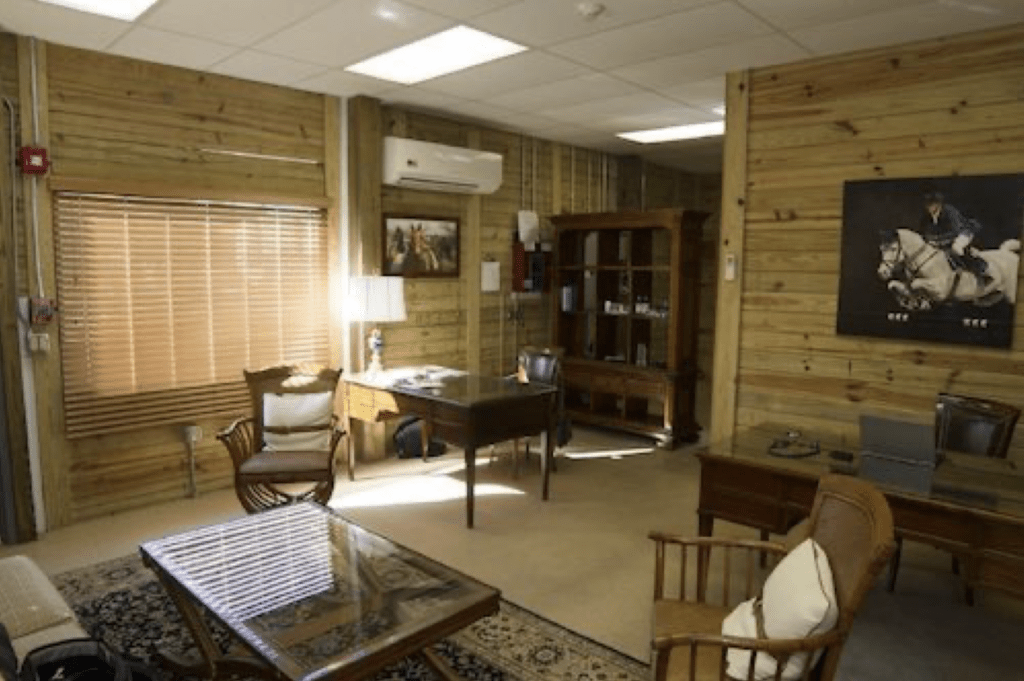
In addition to the full-service equine clinic, Palm Beach Equine Clinic veterinarians will be on the showgrounds at the annex office located adjacent to the WEF stabling office on the PBIEC showgrounds. Palm Beach Equine Clinic veterinarians will be onsite daily during WEF and AGDF to assist all competing horses throughout the shows with performance evaluations, diagnostics, and treatments, as well as emergency care and standard horse care needs.
“It’s always an honor to take care of the best horses in the world that come to Wellington each winter,” said Palm Beach Equine Clinic President Dr. Scott Swerdlin. “Being on-site at the showgrounds really allows us to provide high- quality and immediate veterinary care for all of the horses competing.”
Offering exceptional knowledge, capabilities, and commitment, the team at Palm Beach Equine Clinic is thrilled to once again help equine athletes perform to the best of their abilities during the Wellington winter show season and beyond.
What To Expect After the Unexpected Strikes
Featured on Horse Network
Every owner dreads having to decide whether or not to send their horse onto the surgical table for colic surgery. For a fully-informed decision, it is important that the horse’s owner or caretaker understands what to expect throughout the recovery process.
Palm Beach Equine Clinic (PBEC) veterinarian Weston Davis, DVM, DACVS, assisted by Sidney Chanutin, DVM, has an impressive success rate when it comes to colic surgeries, and the PBEC team is diligent about counseling patients’ owners on how to care for their horse post-colic surgery.

“After we determine that the patient is a strong surgical candidate, the first portion of the surgery is exploratory so we can accurately define the severity of the case,” explained Dr. Davis. “That moment is when we decide if the conditions are positive enough for us to proceed with surgery. It’s always my goal to not make a horse suffer through undue hardship if they have a poor prognosis.”
Once Dr. Davis gives the green light for surgical repair, the surgery is performed, and recovery begins immediately.
“The time period for the patient waking up in the recovery room to them standing should ideally be about 30 minutes,” continued Dr. Davis. “At PBEC, we do our best to contribute to this swift return by using a consistent anesthesia technique. Our team controls the anesthesia as lightly as we can and constantly monitors blood pressure. We administer antibiotic, anti-inflammatory, anti-endotoxic drugs, and plasma to help combat the toxins that the horse releases during colic. Our intention in the operating room is to make sure colic surgeries are completed successfully, but also in the most time-efficient manner.”
Colic surgery recovery often depends on the type and severity of the colic. At the most basic level, colic cases can be divided into two types – large intestine colic and small intestine colic – that influence the recovery procedures and outlook.
Large intestinal colic or impaction colic is characterized by the intestine folding upon itself with several changes of direction (flexures) and diameter changes. These flexures and diameter shifts can be sites for impactions, where a firm mass of feed or foreign material blocks the intestine. Impactions can be caused by coarse feeds, dehydration, or an accumulation of foreign materials such as sand.
Small intestinal colic or displacement colic can result from gas or fluid distension that results in the intestines being buoyant and subject to movement within the gut, an obstruction of the small intestine, or twisting of the gut. In general, small intestinal colics can be more difficult than large intestinal colics when it comes to recovery from surgery.
“Many people do assume that after the colic surgery is successfully completed their horse is in the clear,” said Dr. Chanutin. “However, during the first 24 to 48 hours after colic surgery, there are many factors that have to be closely monitored.
“We battle many serious endotoxic effects,” continued Dr. Chanutin. “When the colon isn’t functioning properly, microbial toxins are released inside the body. These microbials that would normally stay in the gastrointestinal tract then cause tissue damage to other bodily systems. We also need to be cognizant of the possibility of the patient developing laminitis, a disseminated intervascular coagulation (overactive clotting of the blood), or reflux, where a blockage causes fluids to back up into the stomach.”
Stages after surgery
Immediately Post-Surgery
While 30 minutes from recumbent to standing is the best-case scenario, Dr. Davis acknowledges that once that time period passes, the surgical team must intervene by encouraging the horse to get back on its feet.
Once a horse returns to its stall in the Equine Hospital at PBEC, careful monitoring begins, including physical health evaluations, bloodwork, and often, advanced imaging. According to Dr. Davis, physical exams will be conducted at least four times per day to evaluate the incision and check for any signs of fever, laminitis, lethargy, and to ensure good hydration status. An abdominal ultrasound may be done several times per day to check the health of the gut, and a tube may be passed into the stomach to check for reflux and accumulating fluid in the stomach.
“The horse must regularly be passing manure before they can be discharged,” said Dr. Chanutin. “We work toward the horse returning to a semi-normal diet before leaving PBEC. Once they are at that point, we can be fairly confident that they will not need additional monitoring or immediate attention from us.”
Returning Home
Drs. Davis and Chanutin often recommend the use of an elastic belly band to support the horse’s incision site during transport from the clinic and while recovering at home. Different types of belly bands offer varying levels of support. Some simply provide skin protection, while others are able to support the healing of the abdominal wall.
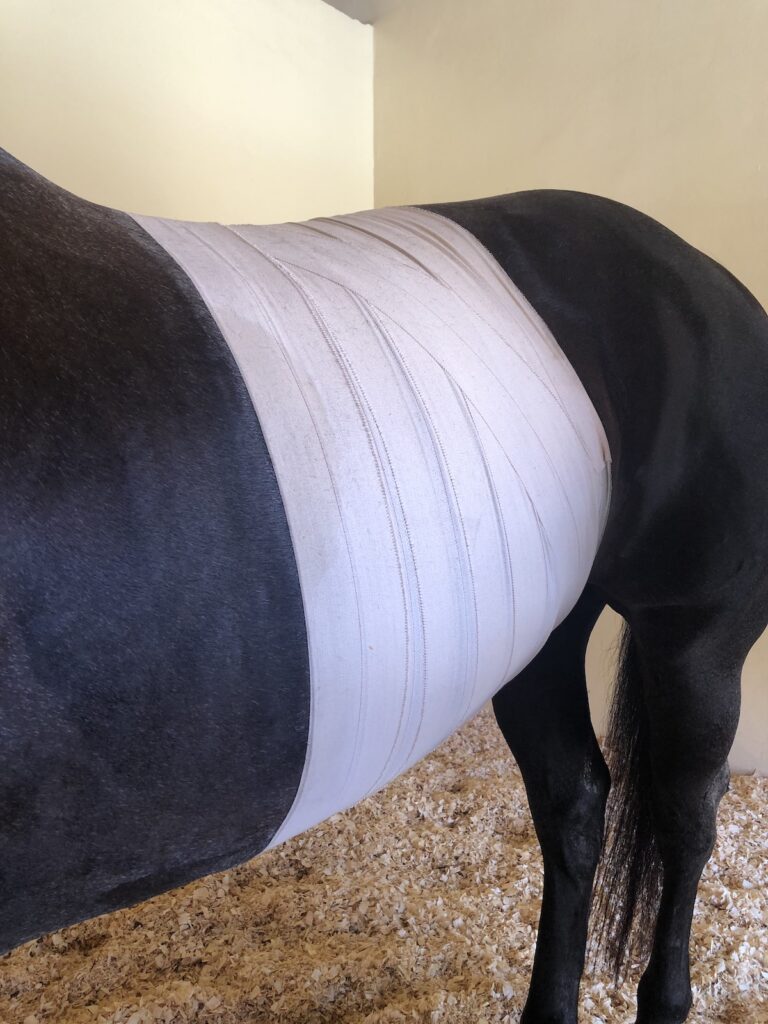
Two Weeks Post-Surgery
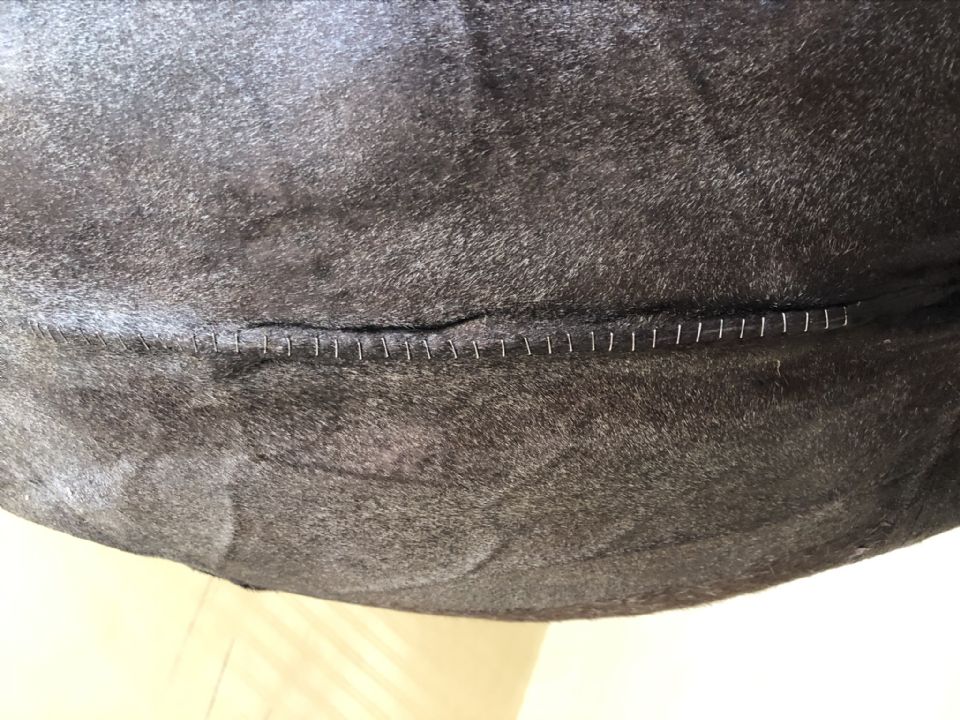
At the 12-to-14-day benchmark, the sutures will be removed from the horse’s incision site. The incision site is continuously checked for signs of swelling, small hernias, and infection.
At-Home Recovery
Once the horse is home, the priority is to continue monitoring the incision and return them to a normal diet if that has not already been accomplished.
The first two weeks of recovery after the horse has returned home is spent on stall rest with free-choice water and hand grazing. After this period, the horse can spend a month being turned out in a small paddock or kept in a turn-out stall. They can eventually return to full turnout during the third month. Hand-walking and grazing is permittable during all stages of the at-home recovery process. After the horse has been home for three months, the horse is likely to be approved for riding.
Generally, when a horse reaches the six-month mark in their recovery, the risk of adverse internal complications is very low, and the horse can return to full training under saddle.
When to Call the Vet?
Decreased water intake, abnormal manure output, fever, pain, or discomfort are all signals in a horse recovering from colic surgery when a veterinarian should be consulted immediately.
Long-Term Care
Dr. Davis notes that in a large number of colic surgery cases, patients that properly progress in the first two weeks after surgery will go on to make a full recovery and successfully return to their previous level of training and competition.
Depending on the specifics of the colic, however, some considerations need to be made for long-term care. For example, if the horse had sand colic, the owner would be counseled to avoid sand and offer the horse a selenium supplement to prevent a possible relapse. In large intestinal colic cases, dietary restrictions may be recommended as a prophylactic measure. Also, horses that crib can be predisposed to epiploic foramen entrapment, which is when the bowel becomes stuck in a defect in the abdomen. This could result in another colic incident, so cribbing prevention is key.
Generally, a horse that has fully recovered from colic surgery is no less healthy than it was before the colic episode. While no one wants their horse to go through colic surgery, owners can rest easy knowing that.
“A lot of people still have a negative association with colic surgery, in particular the horse’s ability to return to its intended use after surgery,” said Dr. Davis. “It’s a common old-school mentality that after a horse undergoes colic surgery, they are never going to be useful again. For us, that situation is very much the exception rather than the rule. Most, if not all, recovered colic surgery patients we treat are fortunate to return to jumping, racing, or their intended discipline.”
For Immediate Release
Wellington, FL – March 21, 2022 – Palm Beach Equine Clinic (PBEC) announced the addition of the innovative care program AcutePlus™ to its cutting-edge suite of client services. A long-time leader in equine veterinary care, PBEC is the first veterinary clinic in the United States to offer the service designed to help eliminate barriers to treatment and minimize risk of ownership related to veterinary care.
AcutePlus™ is a wellness-centric preventative care membership program focused on delivering excellence in horse health through preemptive treatments, essential care, and access to acute care.

“We believe that AcutePlus™ is a game-changer for horse owners,” said Palm Beach Equine Clinic President Dr. Scott Swerdlin. “With this innovative program, they can be assured that they have the ability to make the best heath care choices for their horse.”
“We are innovators at VenturePlus™,” said Ghen Sugimoto CEO of AcutePlus™. “It has been a great pleasure to work with such like-minded individuals at the top of their field at Palm Beach Equine Clinic to help them develop a program that further allows them take the very best care of their patients. AcutePlus™ puts Palm Beach Equine clients in the best position to care for their horses particularly on the worst days, when it matters the most. Additionally, we are proud to be able support Palm Beach Equine Clinic’s efforts to mentor up-and-coming veterinarians through donations from our AcutePlus Foundation™.”
PBEC will offer four tiers of AcutePlus™ membership protection to meet the level of coverage needed by each client. AcutePlus™ plans provide a range of concierge member support, customary care benefits, acute medical benefits, and mortality benefits along with exclusive member opportunities, loyalty points, and more.

Signing up is simple at AcutePlus.com.
The AcutePlus™ membership plans have two categories of benefits: customary care and acute medical care and mortality. Customary care benefits cover routine care costs like farm calls, routine vaccinations, dental floats, physical exams, microchips, complete blood counts, and Coggins tests.
Acute medical care is an important component of the extensive benefits offered through AcutePlus™. A platinum membership provides up to $10,000 per year in financial support for acute care medical bills such as surgical and non-surgical colic, choke, lacerations, eye injuries, acute onset laminitis, bowed tendons, fractured leg, and other urgent medical issues. Advanced diagnostics such as MRI and CT scan benefits are also included under the acute medical benefits portion of the plan. If the unthinkable happens and a member horse’s life is lost, AcutePlus™ can also provide up to $150,000 in equine mortality benefits.

Palm Beach Equine Clinic clients enrolled in AcutePlus™ can utilize their benefits with any licensed veterinarian anywhere in the world, not only when using PBEC’s services directly. After enrolling in AcutePlus™, when you use Palm Beach Equine Clinic for services, you maximize your benefits, and they will automatically apply a credit directly to your bill. Your membership benefits will travel with your horse around the globe, no matter how far away from Wellington you travel – extending your world-class veterinary care anywhere in the world.
Please visit AcutePlus.com for additional information or to activate your membership. Whether your horse is a competitor, a companion, or a world champion, there is an AcutePlus™ plan designed for you.
For questions regarding AcutePlus™ at Palm Beach Equine Clinic, call Dr. Scott Swerdlin at 561-793-1599.
About Palm Beach Equine Clinic
Palm Beach Equine Clinic is a full-service medical facility offering care 24 hours a day, 365 days a year. Equipped with a surgical center, advanced diagnostic imaging units, laboratory, pharmacy, reproductive station and breeding shed, recovery stalls, and isolation unit, Palm Beach Equine Clinic has the necessary tools for diagnosing and treating a variety of cases. Palm Beach Equine Clinic is ideally based in the international hub of elite equestrian competition, Wellington, Florida, and is within riding distance of the Winter Equestrian Festival, Global Dressage Festival, and International Polo Club. Palm Beach Equine Clinic is proud to care for all horses, whether they are an Olympic level athlete, trusted show pony or reliable trail horse.
Visit EquineClinic.com to learn more about Palm Beach Equine Clinic and follow them on Facebook, Twitter, and Instagram.
AcutePlus™ benefits vary by membership plan. Benefits referenced in this article reflect the AcutePlus™ Platinum Membership offered through Palm Beach Equine Clinic. Terms and conditions apply. Please visit AcutePlus.com to review all terms and conditions.
Equine Veterinary Care Available at PBIEC Showgrounds Annex Office
One of the world’s premier veterinary facilities, Palm Beach Equine Clinic, will return as the Official Veterinarians of the 2020 Winter Equestrian Festival (WEF) and Adequan® Global Dressage Festival (AGDF) running January 8 through March 29 at the Palm Beach International Equestrian Center (PBIEC) in Wellington, FL.
With the health and welfare of equine athletes a top priority for the upcoming winter show jumping and dressage competition seasons, Palm Beach Equine Clinic will continue more than three decades of service to both the year-round residents and visiting horses of south Florida. The clinic’s world-renowned facility is conveniently located at the intersection of Southfields Road and Pierson Road in the heart of Wellington, just minutes from PBIEC, the Equestrian Village, and the International Polo Club Palm Beach. Palm Beach Equine Clinic comprises over 35 veterinarians, with board-certified surgeons and internists, and robust support by knowledgeable technicians and staff. Palm Beach Equine Clinic offers exceptional veterinary care and an innovative approach to help each horse achieve their full potential in and outside of the show ring.
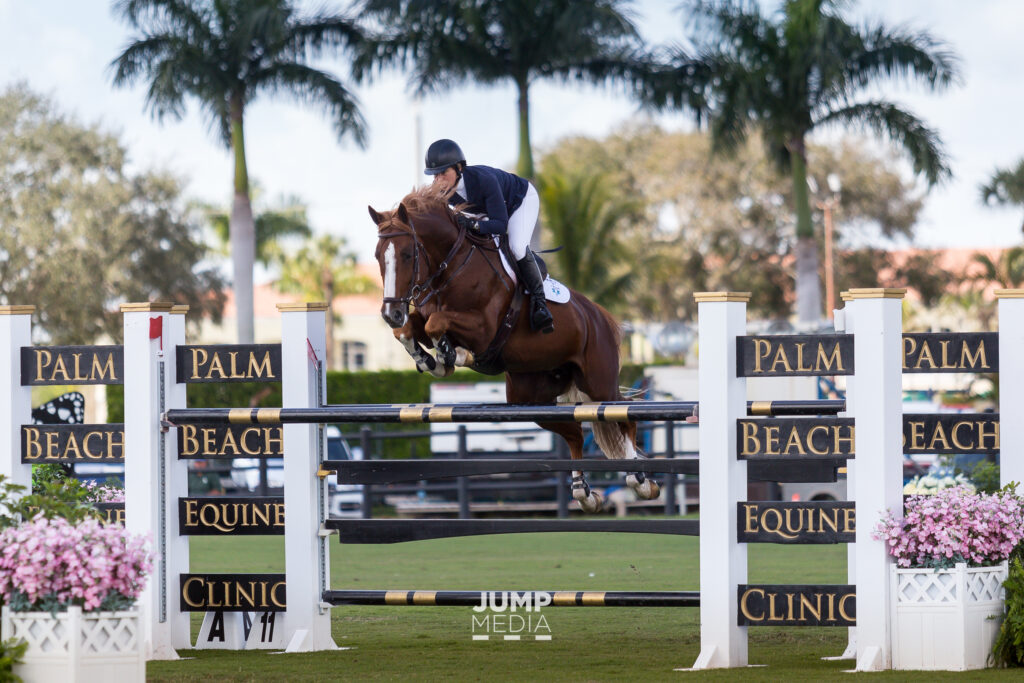
In addition to at the full-service equine hospital, Palm Beach Equine Clinic veterinarians will be available each week to all competing horses at WEF and AGDF thanks to an annex office located adjacent to the WEF stabling office on the PBIEC showgrounds. Palm Beach Equine Clinic veterinarians are on call daily at the annex office to assist competitors throughout the shows with diagnostic evaluations and treatments, as well as emergency and standard horse care needs. Equestrians are always welcome at the annex, where they have the opportunity to discuss their horse health needs with Palm Beach Equine Clinic.
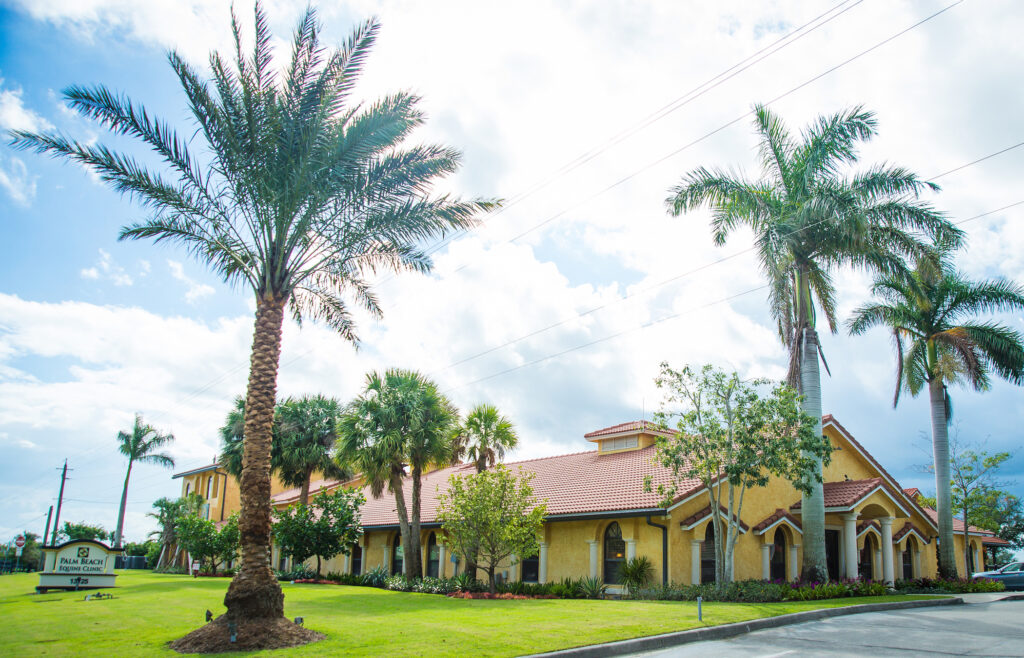
“Combining the unique offerings of our imaging department, renowned surgical talent, diverse veterinary expertise, and overall high standard of treatment allows us to provide services and care that are akin to the Mayo Clinic for human patients,” said Palm Beach Equine Clinic President Dr. Scott Swerdlin. “The Winter Equestrian Festival and [Adequan®] Global Dressage Festival attract some of the world’s top horses to south Florida. Whether we are treating Olympic level athletes or a trusted companion pony, they will receive the most advanced, dedicated healthcare. It takes a team to achieve success in the competitive arena, and we provide one of the best in the world at Palm Beach Equine Clinic.”
Palm Beach Equine Clinic veterinary advances – available to new, returning, and referred clients – include:
Advanced Diagnostic Offerings
- Computed Tomography (CT) Machine
- Standing Magnetic Resonance Imaging (MRI)
- Nuclear Scintigraphy (bone scan)
- Board-Certified Radiologist on Staff
- Digital Radiography and Ultrasonography
Surgical Offerings
- Three boarded surgeons skilled in performance-related injuries
- Standing surgery pit
- Surgical residency program
- Advanced surgical suite
Specialty Offerings
- Internal medicine specialists
- Quarantine facilities with secure isolation and individual airflow systems
- Alternative medicine specialists focused on chiropractic, acupuncture, and Chinese herbals
- Renowned sports medicine specialists
- On-site hospital with 24-hour staff
- Dentistry, ophthalmology, and farriery expertise

In addition to being the Official Veterinarians of WEF and AGDF, Palm Beach Equine Clinic will again participate in WEF’s popular Lunch & Learn education series during the 2020 season. Mark your calendars for a presentation entitled “Modern Medicine for the Competitive Sport Horse: How to Gain and Maintain a Healthy and Sound Show Horse” on Thursday, March 12, at 11:30 a.m. in The Wellington Club at the WEF showgrounds. Admission to the Lunch & Learn series is free for riders, trainers, and owners and includes the opportunity to learn how to help the competitive sport horse achieve and maintain optimal health through advanced technology, innovative approaches, and specialty therapies; a buffet lunch; and a chance to win exciting prizes.
For more information on what Palm Beach Equine Clinic has to offer horses competing at WEF and AGDF, stop by the annex office located next to the stabling office on the WEF showgrounds, visit www.EquineClinic.com, or call 561-793-1599.
The world-renowned Palm Beach Equine Clinic, Official Veterinarian of the Winter Equestrian Festival (WEF) and Adequan® Global Dressage Festival (AGDF) in Wellington, FL, is the proud sponsor of the $391,000 CSI5* Grand Prix during “Saturday Night Lights” at WEF Week 7.
Who: Some of the world’s most accomplished show jumping athletes. Once finalized, the order-of-go will be posted HERE.
What: The $391,000 Palm Beach Equine Clinic CSI5* Grand Prix
When: Saturday, February 23, during “Saturday Night Lights” at 7 pm ET. Gates open at 6 pm. Free admission and $20/car parking.
Where: Palm Beach International Equestrian Center in Wellington, FL. Directions can be found HERE.
In addition to their sponsorship of this week’s CSI5* Grand Prix and of the 3’3″ Amateur-Owner Hunter 36 and Over division throughout WEF, Palm Beach Equine Clinic also provides state-of-the-art veterinary care to the horses of both the year-round residents and visitors of South Florida. Palm Beach Equine Clinic’s technologically advanced clinic is conveniently located at the intersection of Southfields Road and Pierson Road in the heart of Wellington, just minutes from PBIEC, the Equestrian Village, and the International Polo Club Palm Beach.
The expertise and dedication of Palm Beach Equine Clinic veterinarians is also available to all competing horses at WEF and AGDF thanks to an annex office located adjacent to the WEF stabling office on the PBIEC showgrounds as well as at the main Palm Beach Equine Clinic location. Palm Beach Equine Clinic veterinarians are on-call daily at the annex office to assist competitors throughout the shows with diagnostic evaluations and treatments, as well as emergency and standard horse care needs.
Official Veterinarians of 2019 WEF and AGDF Circuits
World-renowned veterinary facility Palm Beach Equine Clinic (PBEC) will return as the Official Veterinarians of the 2019 Winter Equestrian Festival (WEF) and Adequan Global Dressage Festival (AGDF) running January 9 through March 31 at the Palm Beach International Equestrian Center (PBIEC) in Wellington, FL.
A proponent and supporter of horse sport in Wellington and throughout the world, Palm Beach Equine Clinic has served both the year-round residents and visiting horses of south Florida for more than three decades. PBEC’s state-of-the-art clinic is conveniently located at the intersection of Southfields Road and Pierson Road in the heart of Wellington, just minutes from PBIEC, the Equestrian Village, and the International Polo Club Palm Beach. PBEC’s talented team of veterinarians offers its clients and the horses of referring veterinarians unmatched care and an innovative approach to standard and emergency services.
Palm Beach Equine Clinic’s goal is to provide a definite diagnosis and never have to refer a case. In other words, PBEC is the equivalent of the Mayo Clinic for horses.
“Combining the tools of our imaging department, surgical talent, and overall standard of treatment allows us to provide services far beyond what other facilities can provide,” said PBEC President Dr. Scott Swerdlin, who leads a team of more than 40 veterinarians at PBEC. “But even with all the technology we provide, we need the people to make it all happen. That is exactly what we have; veterinarians skilled in diagnostics, technicians dedicated to caring for the horses before, after, and during any procedure, and world-renowned surgeons who can take a diagnosis and treat the problem with positive results for horse and owner. It takes a team and we have one of the best in the world at Palm Beach Equine Clinic.”
PBEC’s services available to new, returning, and referred clients include:
Advanced Diagnostic Offerings
- Computed Tomography (CT)
- Standing Magnetic Resonance Imaging (MRI)
- Nuclear Scintigraphy (bone scan)
- Board-Certified Radiologist on Staff
- Digital Radiography and Ultrasonography
Surgical Offerings
- Three boarded surgeons skilled in performance-related injuries
- Standing surgery pit
- Surgical residency program
- State-of-the-art surgical suite
- Quarantine facilities with secure isolation and individual air flow systems
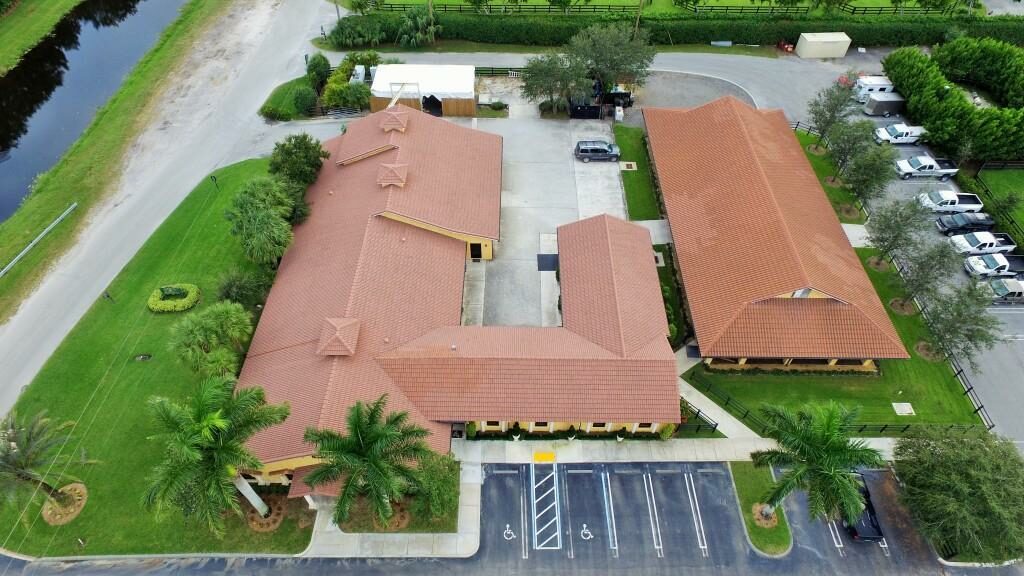
The expertise and dedication of PBEC veterinarians will be available to all competing horses at WEF and AGDF thanks to an annex office located adjacent to the WEF stabling office on the PBIEC showgrounds as well as at the main PBEC clinic location. PBEC veterinarians are on-call daily at the annex office to assist competitors throughout the shows with diagnostic evaluations and treatments, as well as emergency and standard horse care needs.
“Our location, talents, and dedication to the Wellington community and beyond have helped Palm Beach Equine Clinic to offer the best possible care to some of the world’s top equines during the winter show season,” continued Dr. Swerdlin. “Additionally, our annex office places us in the heart of it all, making advanced veterinary care convenient to equestrians competing at Palm Beach International Equestrian Center. We are very proud of both facilities and the veterinarians who work there, but we are even more proud to be trusted with the care of such special animals!”
For more information on what PBEC has to offer horses competing at WEF and AGDF, stop by the annex office located next to the stabling office on the WEF showgrounds, visit www.EquineClinic.com, or call 561-793-1599.
Save The Date
In addition to being named the Official Veterinarians of WEF and AGDF, PBEC’s own veterinarians will again participate in WEF’s popular Lunch & Learn education series during the 2019 season. Mark your calendars for a presentation on Sport Horse Health on Thursday, March 7, at 11:30 a.m. in The Wellington Club at the WEF showgrounds. Admission to the Lunch & Learn series is free for riders, trainers, and owners and includes a buffet lunch and a chance to win exciting prizes from 2019 Lunch & Learn sponsors.
Palm Beach Equine Clinic is proud to serve as the local headquarters for emergency services and equine diagnostics during the winter show season in Wellington, FL. As the official veterinary hospital of the Winter Equestrian Festival (WEF) and the Adequan® Global Dressage Festival (AGDF), Palm Beach Equine Clinic has been the premier surgical facility in Wellington for over three decades.
While competing in South Florida, horses and riders from around the globe have access to Palm Beach Equine Clinic’s state-of-the-art hospital for all of their sport horse needs. Palm Beach Equine Clinic has a team of over 30 veterinarians, which includes three Board-Certified Surgeons, a Board-Certified equine Radiologist, and numerous other experts in their fields. All competitors and their traveling veterinarians are welcome for the support of services and collaboration throughout the season.
Referral Veterinarians Welcome
The referring relationship between veterinarians is most commonly seen in the specialty departments of surgery, internal medicine, ophthalmology, and advanced diagnostic imaging. At Palm Beach Equine Clinic, the advanced diagnostic imaging and surgical technology is unmatched, and the three Board-Certified Surgeons are skilled in many procedures that require high levels of expertise and advanced current equipment. As a result, many veterinarians refer their clients to the facility for specialty services.

Dr. Weston Davis, one of the Board-Certified Surgeons on the staff at Palm Beach Equine Clinic, works with many referral cases. Throughout the year, veterinarians from all over Florida frequently refer their clients to Palm Beach Equine Clinic for surgical procedures and advanced diagnostic imaging. The referring veterinarians may range anywhere from general practitioners to other surgeons that do not have access to surgical facilities or the most modern diagnostic imaging modalities while on the road.
“As a rule, we are friendly with referring doctors and take care of their clients with as much high-level care and professionalism as possible,” Dr. Davis stated. “It is important to us to maintain good relationships with the veterinarians that refer to us for specialty work. We always try to facilitate whatever level of involvement they desire. If they want to come and be there for the surgical procedure, we make that happen, and if they just want to send the case and not be as involved, we can do that as well. However, we also always collaborate with the referring veterinarian and the client as a team. If they send a horse in for a surgical procedure, we are going to do the procedure and then connect the client with the referring physician for the follow-up.”
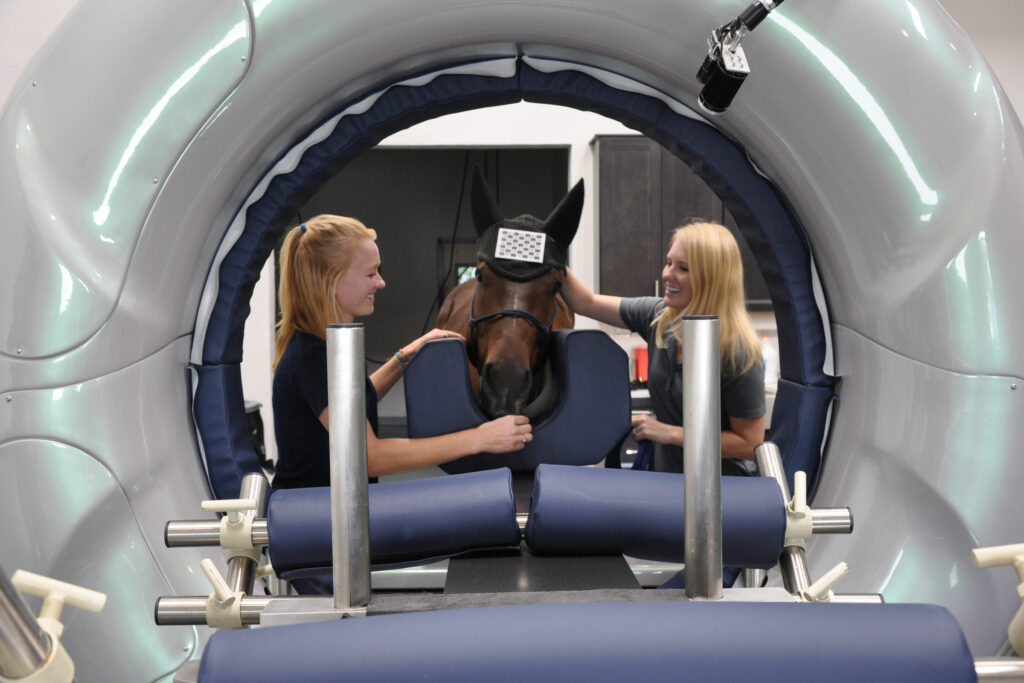
Talented Surgeons and Advanced Diagnostic Imaging
The cutting-edge services available at Palm Beach Equine Clinic are made possible by the expertise of the hospital’s talented surgeons, along with the assistance of state-of-the-art diagnostic imaging and comprehensive surgical and medical resources. The combination brings many of the best veterinarians in the world to Palm Beach Equine Clinic for assistance with their most complex cases.
Among the hospital’s features, the latest in surgical technology enables less invasive operations that result in faster recovery times for the horse. Dr. Davis explained how diagnostic imaging is used during surgery to help guide procedures and assure the best possible result.
“Magnetic Resonance Imaging (MRI) and other advanced diagnostic imaging modalities can often be used for three-dimensional mapping to help enhance the surgical technique,” he noted. “There are some fractures in particular where the surgeon can map out the exact configuration of the fracture off of the MRI scan. We are then able to place markers with the MRI to guide a more exact, refined surgery.
“Intra-operatively, x-rays are taken to view progress, particularly for fracture repairs,” Dr. Davis continued. “The digital radiographs allows us to view the fracture in two planes to ensure optimal screw placement and fracture repair. Ultrasound is also frequently used in surgery for some of the more delicate procedures, specifically with soft tissue.”
Other surgical procedures may be guided with Arthroscopy, which aids in visualization of a joint; Laparoscopy, which uses a camera inserted into the abdomen; or Endoscopy, which is used in upper airway procedures. With the most advanced diagnostic imaging technology onsite, Palm Beach Equine Clinic is the go-to hospital for equine owners and referral veterinarians from around the world during the winter season in Wellington.
Palm Beach Equine Clinic provides experience, knowledge, availability, and the very best care for its clients. Make Palm Beach Equine Clinic a part of your team! To find out more, please call 561-793-1599.